Boiler cost: what a new boiler costs in the US
A replacement boiler runs $4,000 to $8,000, or $6,000 to $12,000 for high-efficiency condensing. Here is the line-by-line arithmetic and what moves it.
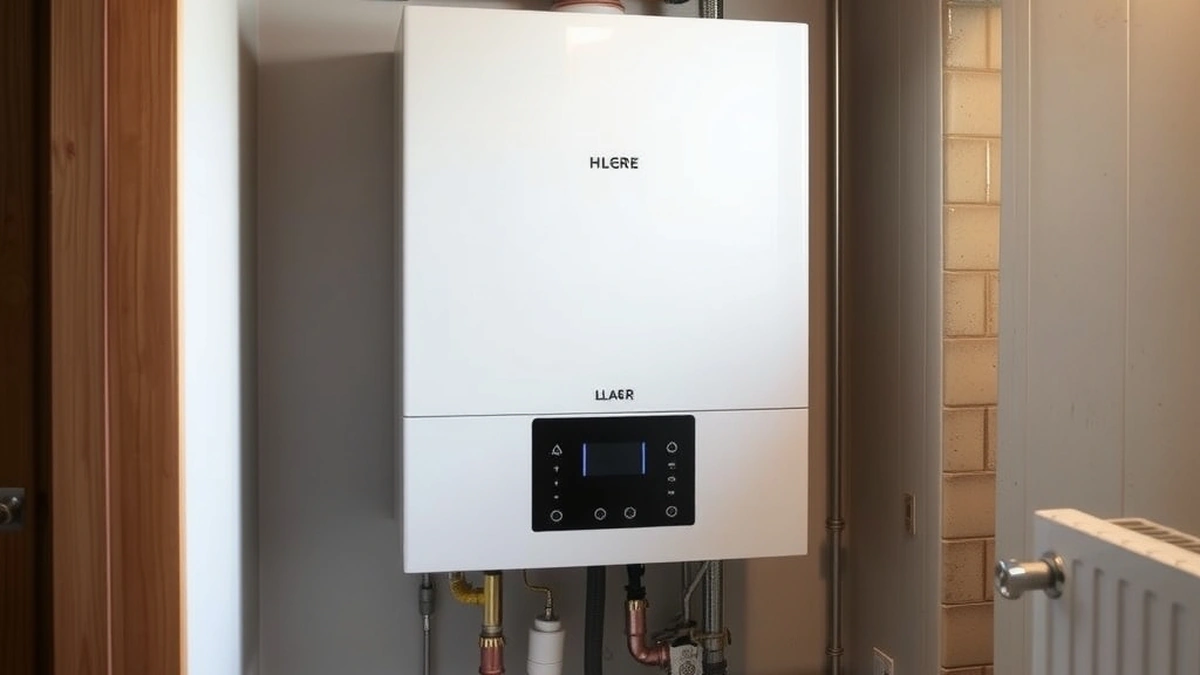
A replacement gas boiler costs about $4,000 to $8,000 installed in the US, and a high-efficiency condensing model runs $6,000 to $12,000. An oil boiler sits around $5,000 to $10,000. Venting and piping work cause most of the spread.
- Standard gas boiler
- $4,000–$8,000
- Condensing boiler
- $6,000–$12,000
- Annual service
- $150–$350
- Emergency call-out
- $200–$500
Some links on this page are affiliate links.If you buy through them we may earn a commission at no extra cost to you. We do not accept payment for rankings. Read the full disclosure.
A replacement gas boiler costs about $4,000 to $8,000 installed in the US. A high-efficiency condensing model runs $6,000 to $12,000, and an oil boiler sits around $5,000 to $10,000. Those are typical estimates, not quotes — the spread inside each band is driven by venting, piping, and how much of the old system can be reused.
A boiler heats water rather than air, and distributes it through radiators, baseboard, or radiant floors. That piping is why a boiler costs more to replace than a furnace of similar output: the appliance is only part of the job.
Where the money goes
| Line item | Typical estimate | What drives it |
|---|---|---|
| Boiler appliance | $2,800–$5,000 | Output in BTU, condensing or not, controls |
| Labour and near-boiler piping | $1,200–$2,800 | Access, pipe material, zone count |
| Venting or chimney liner | $300–$1,500 | Condensing units vent through PVC sidewall |
| Circulators, expansion tank, valves | $300–$900 | Number of zones, existing condition |
| Permit and inspection | $150–$500 | Local fees |
| Removal and disposal | $150–$400 | Cast iron weight, asbestos checks |
Add the low ends: $2,800 + $1,200 + $300 + $300 + $150 + $150 = $4,900. Add the high ends: $5,000 + $2,800 + $1,500 + $900 + $500 + $400 = $11,100.
The gap between those two totals — $6,200 — is not the boiler. It is the building around it.
Cost by type
| Boiler type | Typical installed estimate | Best fit |
|---|---|---|
| Standard gas, cast iron | $4,000–$8,000 | Reliable replacement, existing chimney |
| High-efficiency condensing gas | $6,000–$12,000 | Radiant floors, low-temperature systems |
| Oil-fired | $5,000–$10,000 | No gas service, existing oil tank |
| Combi (heat and hot water) | $5,500–$11,000 | Small homes, no separate water heater |
| Steam | $5,000–$9,000 | Older homes with steam radiators |
A combi boiler removes the storage water heater, which offsets part of its price. A steam boiler is a different animal with different piping rules, and it should never be priced as a hot water boiler with a different label.
The arithmetic on a mid-range job
A 1,800-square-foot house with baseboard zones, replacing a 22-year-old cast-iron boiler:
- Condensing boiler, 100,000 BTU output, installed: $8,200
- Less the water heater it replaces, if combi: $1,600
- Net: $6,600
If the existing boiler is kept and only the appliance is swapped, with the chimney reused and no zone changes, the same house can land near $5,200. The difference is scope, not brand.
Divide $6,600 across 18 years of service life: $367 per year of capital cost before fuel.
What pushes the price toward $12,000
- A chimney liner. An old masonry chimney serving a new condensing boiler often needs a liner or a sidewall vent, adding $600 to $1,500.
- Zone conversion. Going from one zone to three adds circulators, valves, and thermostat wiring.
- Radiator or baseboard replacement. Old cast-iron radiators are worth keeping; corroded baseboard is not.
- Asbestos or oil tank removal. Both are regulated, and both are billed separately.
- Difficult access. A basement boiler that must be disassembled to leave costs more in labour than the appliance.
Boiler against the alternatives
| Boiler | Gas furnace | Heat pump | |
|---|---|---|---|
| Installed cost | $4,000–$8,000 | $3,000–$8,000 | $5,000–$12,000 |
| Distribution | Water, radiators | Ducted air | Ducted air or ductless |
| Cooling | Needs separate system | Needs separate AC | Included |
| Fuel | Gas, oil, propane | Gas, propane | Electricity |
| Retrofit friction | High if no pipes exist | High if no ducts exist | High without ducts or pipes |
The furnace and heat pump columns come from our heat pump cost guide. The important point is that a house already plumbed for radiators has a large sunk investment in the boiler route. Converting to forced air means paying for ducts, which is why most hydronic homes replace like with like.
Five steps before you sign
- Get a heat loss calculation, not a like-for-like swap based on the old boiler’s label. Old boilers are frequently oversized.
- Ask whether condensing actually helps your emitters. It needs return water below roughly 130 degrees Fahrenheit to condense.
- Confirm the venting plan in writing — chimney liner, sidewall PVC, or existing flue.
- Get the zone count and controls itemized. A cheap quote with one zone and no outdoor reset is a different job.
- Compare the annual service contract price before signing. Expect $150 to $350 a year, and confirm what it includes.
Repair or replace
A $200 to $500 emergency call-out plus a part is often the right answer on a 12-year-old boiler. It stops being the right answer when the heat exchanger has failed, when the boiler is past 20 years, or when the repair quote passes about a third of replacement.
The arithmetic: a $900 repair on a 20-year-old boiler buys perhaps three years at $300 per year. Replacement at $6,600 over 18 years is $367 per year with no further repairs. Past the two-decade mark with a major fault, replacement is usually cheaper per year of service.
The fuel bill is the bigger number
Installation is a one-time cost. Fuel is annual, for two decades. A condensing boiler at 95 AFUE against an old unit at 78 AFUE cuts fuel use by roughly 18 percent for the same heat output ($0.95 ÷ $0.78 per dollar of input, then compare delivered output).
On a $1,800 annual gas bill that is about $320 a year, or $5,760 over 18 years — which is most of the boiler. Our maintenance guide covers keeping that efficiency, and the furnace comparison covers whether the distribution system itself is worth changing.
Frequently asked questions
How much does a new boiler cost installed?
Four thousand to eight thousand dollars for a standard gas boiler, six thousand to twelve thousand for a high-efficiency condensing model, and five thousand to ten thousand for oil. These are typical US estimates rather than quotes.
Is a condensing boiler worth the extra cost?
It usually is where the return water temperature stays low, as with radiators and radiant floors. The efficiency gain is smaller on high-temperature baseboard systems that never condense.
How long does a boiler last?
Fifteen to twenty-five years for a cast-iron boiler with annual service; twelve to twenty for a condensing model, which has more controls and a secondary heat exchanger to maintain.
Why is a boiler more expensive than a furnace?
A boiler needs piping, circulators, an expansion tank, and often a chimney liner, while a furnace uses ductwork that usually already exists. The appliance price is similar; the balance of plant is not.
Can I replace a boiler with a heat pump?
Yes, with a cold-climate air-to-water or air-to-air system, but the radiators may need resizing because heat pumps deliver lower water temperatures. Air-to-air also requires ducts.
Does a new boiler add resale value?
A documented, warrantied installation helps at inspection and negotiation. It rarely returns its full cost in appraisal value, so treat it as comfort and reliability spending.
Sources
Some links are affiliate links.If you buy through them we may earn a commission at no extra cost to you. We do not accept payment for rankings. Read the full disclosure.