Boiler vs gas furnace: which heating system fits?
A boiler costs $4,000 to $8,000 and heats water; a gas furnace costs $3,000 to $8,000 and heats air. Here is how to choose between the two.
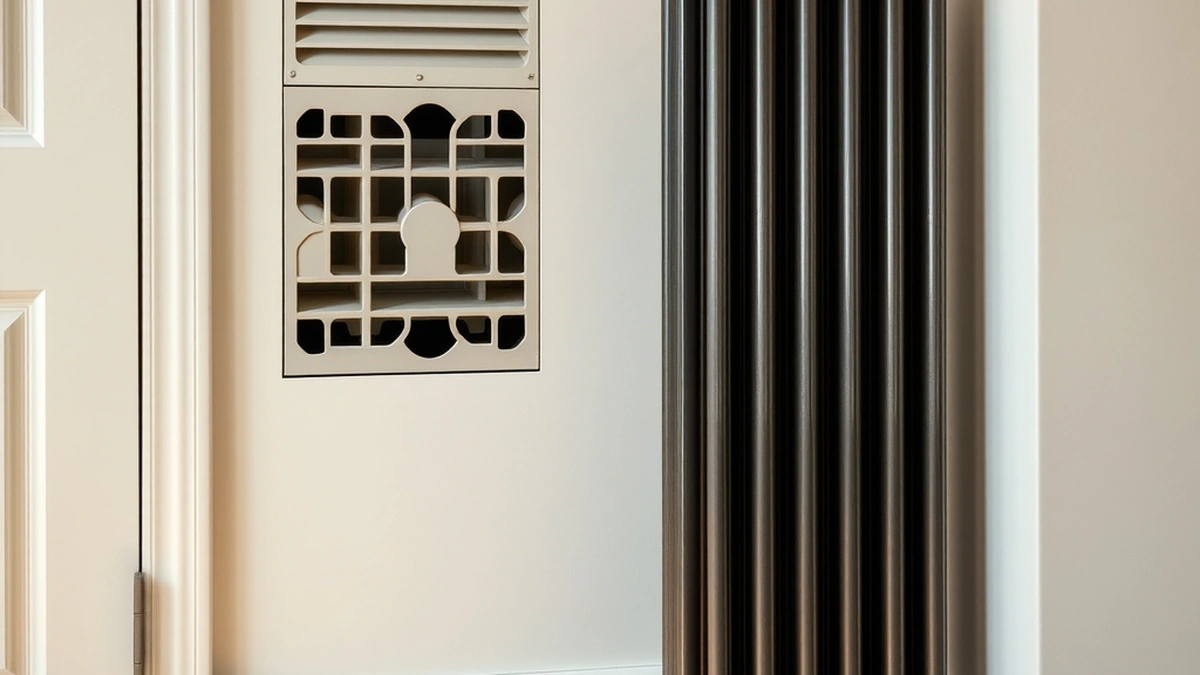
A boiler heats water for radiators or radiant floors and costs about $4,000 to $8,000 installed; a gas furnace heats air for ducts and costs $3,000 to $8,000. The right choice is usually decided by which distribution system the house already has.
- Boiler installed
- $4,000–$8,000
- Gas furnace installed
- $3,000–$8,000
- Annual service, either
- $150–$350
- Emergency call-out
- $200–$500
Some links on this page are affiliate links.If you buy through them we may earn a commission at no extra cost to you. We do not accept payment for rankings. Read the full disclosure.
A boiler costs about $4,000 to $8,000 installed and heats water for radiators or radiant floors. A gas furnace costs $3,000 to $8,000 and heats air for ducts. The price difference is small; the difference in how the house feels, and in what else the system can do, is not.
A boiler is a closed hydronic appliance that heats water and circulates it through emitters. A gas furnace is a forced-air appliance that heats air and pushes it through ductwork. Both burn gas at similar efficiency. They distribute heat in fundamentally different ways.
Side by side
| Boiler | Gas furnace | |
|---|---|---|
| Installed cost | $4,000–$8,000 | $3,000–$8,000 |
| Distribution | Pipes, radiators, radiant | Ducts and registers |
| Typical efficiency | 80–96 AFUE | 80–96 AFUE |
| Cooling | Separate system needed | Add a coil and condenser |
| Air filtration | None | Good, with a quality filter |
| Humidity control | None | Add-on humidifier possible |
| Noise | Very low | Blower and duct noise |
| Service life | 15–25 years | 15–20 years |
| Best retrofit case | House already has pipes | House already has ducts |
The middle rows are what most comparisons miss. A boiler cannot cool, filter, humidify, or ventilate. A furnace can do all four with add-on equipment, because it already moves air through the house.
The arithmetic on fuel
Take a house with a 60 million BTU annual heating load and gas at $1.20 per therm (100,000 BTU). These are illustration assumptions; use your own rate.
Boiler at 92 AFUE, pipes inside the conditioned envelope. Input needed is 60,000,000 ÷ 0.92 = 65.2 million BTU, which is 652 therms. At $1.20 that is $782 a year.
Furnace at 95 AFUE with ducts in an unconditioned attic. Duct losses of 20 percent mean the furnace must deliver 60 million ÷ 0.80 = 75 million BTU to the registers. Input is 75,000,000 ÷ 0.95 = 78.9 million BTU, which is 789 therms — $947 a year.
The $165 a year gap comes from the ducts, not the appliance. Seal and insulate the ducts and it narrows to almost nothing. Put the ducts inside the envelope and the furnace becomes slightly cheaper to run because of its higher AFUE.
That is the honest conclusion: distribution losses matter more than the boiler-versus-furnace question.
Comfort and how the heat arrives
A boiler heats surfaces. Radiators and floors radiate and convect gently, the air stratifies less, and rooms feel warm at a lower air temperature. There is no blower cycling on and off, and no dust pushed around.
A furnace heats air. It responds fast, recovers quickly after a door is left open, and distributes filtered air throughout the house. It also dries the air in winter and can be noisy at the return grille.
Neither is better in the abstract. Radiant floors are pleasant underfoot and slow to change temperature. Forced air is responsive and better suited to a house that is occupied unevenly.
What a retrofit really costs
The appliance price is the small half of a fuel switch.
| Switch | Added work | Typical added cost |
|---|---|---|
| Furnace to boiler | Pipe runs, radiators or radiant tubing, zones | Well above the appliance, often several times |
| Boiler to furnace | Duct system, registers, returns | Well above the appliance, often several times |
| Like for like | Reuse existing distribution | Minimal |
This is why the practical answer in most US homes is to replace like with like. A house built with ducts gets a furnace; a house built with radiators keeps a boiler. Converting means paying twice — once for the appliance and once for the distribution.
If the goal is efficiency rather than a different distribution system, the better comparison is a $5,000 to $12,000 heat pump, covered in our heat pump cost guide and the heat pump versus furnace comparison.
Five steps to decide
- Identify what the house already has — ducts, pipes, or both — and price the like-for-like replacement first.
- Get a heat loss calculation for either option, and size the appliance to it.
- Check the distribution condition. Leaky ducts and sludged pipes both waste more than an efficiency upgrade saves.
- Price the add-ons you actually want — cooling, filtration, humidification, zoning.
- Compare annual fuel use in dollars at your rate, not at nameplate efficiency.
Over 15 years
Take the $165 annual duct-loss difference in the other direction: a house with pipes in good condition replacing a boiler with a furnace would need new ducts, an estimated several thousand dollars, to save perhaps $165 a year. That never pays back.
Conversely, a house with leaking attic ducts gets a better return from $800 to $2,000 of duct sealing than from any appliance upgrade.
Where repair fits first
If the existing appliance is 12 years old and a $200 to $500 call-out plus a part restores it, neither column applies this year. A $150 to $350 annual service buys planning time cheaply.
When the heat exchanger has failed or the appliance is past 20 years, the choice above becomes live. Our boiler problems guide covers the failure modes to check, and the boiler cost breakdown prices the hydronic route in detail.
Frequently asked questions
Is a boiler cheaper to run than a gas furnace?
At the same efficiency, fuel cost is nearly identical per unit of heat delivered. Boilers avoid duct losses but add pipe losses; furnaces are cheaper to install where ducts already exist.
Can a boiler provide air conditioning?
Not directly. Cooling needs either a separate ducted air conditioner, a ductless mini split, or a chilled-water system, which is rare in US homes.
Which is better for allergies, a boiler or a furnace?
Hydronic heat moves no air, so it stirs less dust. A furnace with a high-efficiency filter or an added air cleaner can achieve cleaner air, but only if the filter is maintained.
How long does a boiler last compared with a furnace?
A cast-iron boiler commonly reaches twenty to twenty-five years; a furnace typically runs fifteen to twenty. Condensing boilers sit closer to the furnace figure because of their controls and secondary exchanger.
Can I switch from a furnace to a boiler?
Technically yes, but it means installing pipe, radiators or radiant tubing throughout the house. The distribution cost usually exceeds the appliance cost by a wide margin.
Which system is quieter?
A boiler, because there is no blower and no duct rumble. Radiators can tick as they heat, and a circulator hums, but the overall sound level is lower than forced air.
Sources
Some links are affiliate links.If you buy through them we may earn a commission at no extra cost to you. We do not accept payment for rankings. Read the full disclosure.