Heat pump vs gas furnace: which is cheaper to run?
A heat pump costs $5,000 to $12,000 installed, a gas furnace $3,000 to $8,000. Here is the arithmetic on which one costs less to own and run.
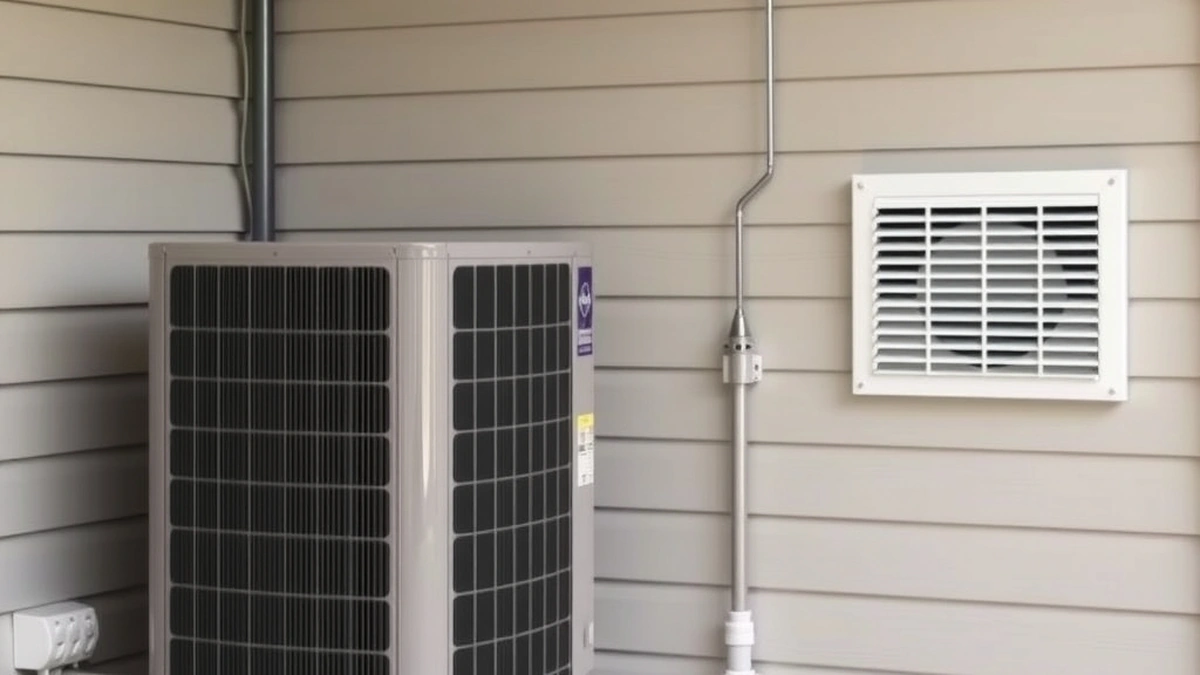
A gas furnace costs less up front at $3,000 to $8,000 against $5,000 to $12,000 for a heat pump. The heat pump usually costs less to run in mild weather and often wins overall once cooling is counted, while gas stays cheaper in cold climates with low gas prices.
- Heat pump installed
- $5,000–$12,000
- Gas furnace installed
- $3,000–$8,000
- Annual service, either
- $100–$250
- Emergency call-out
- $200–$500
Some links on this page are affiliate links.If you buy through them we may earn a commission at no extra cost to you. We do not accept payment for rankings. Read the full disclosure.
A gas furnace costs less to buy: $3,000 to $8,000 installed against $5,000 to $12,000 for a heat pump. The heat pump costs less to run in mild weather and provides cooling from the same appliance. In a cold climate with cheap gas, the furnace usually wins on total cost of ownership.
The deciding variables are not brand, size, or fashion. They are your electricity rate, your gas rate, your winter design temperature, and whether an air conditioner is also due for replacement.
The two machines
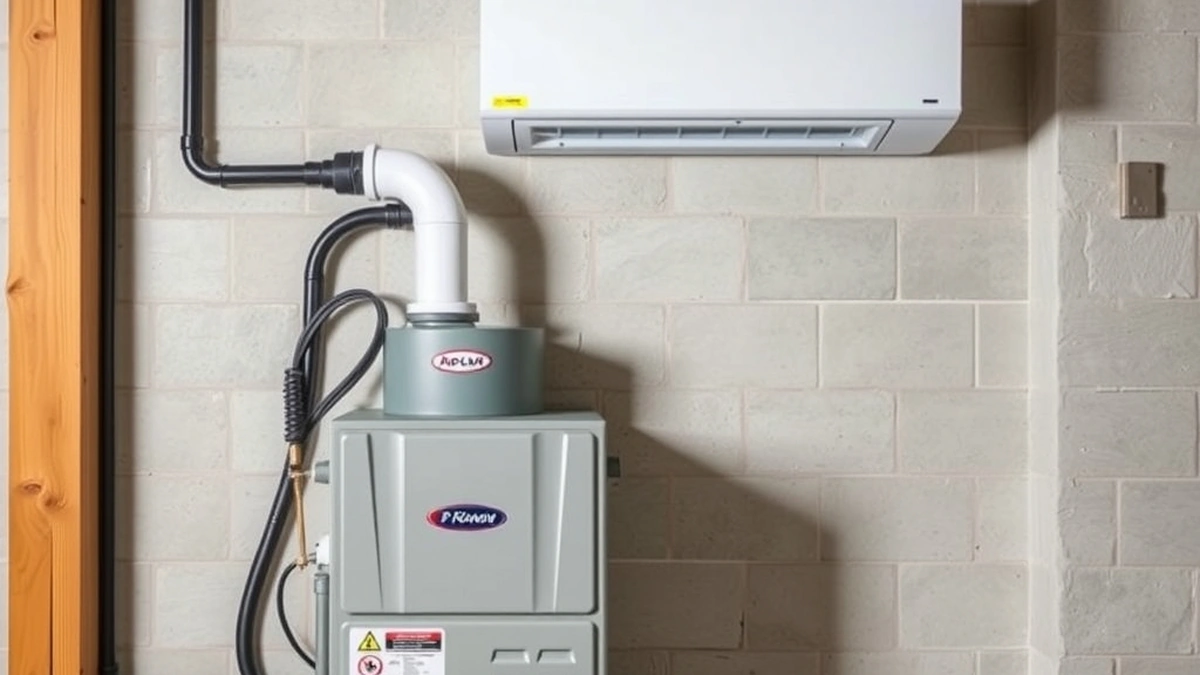
A gas furnace burns fuel in a heat exchanger and blows air across it. Its efficiency is expressed as AFUE, and a modern condensing unit reaches about 95 percent.
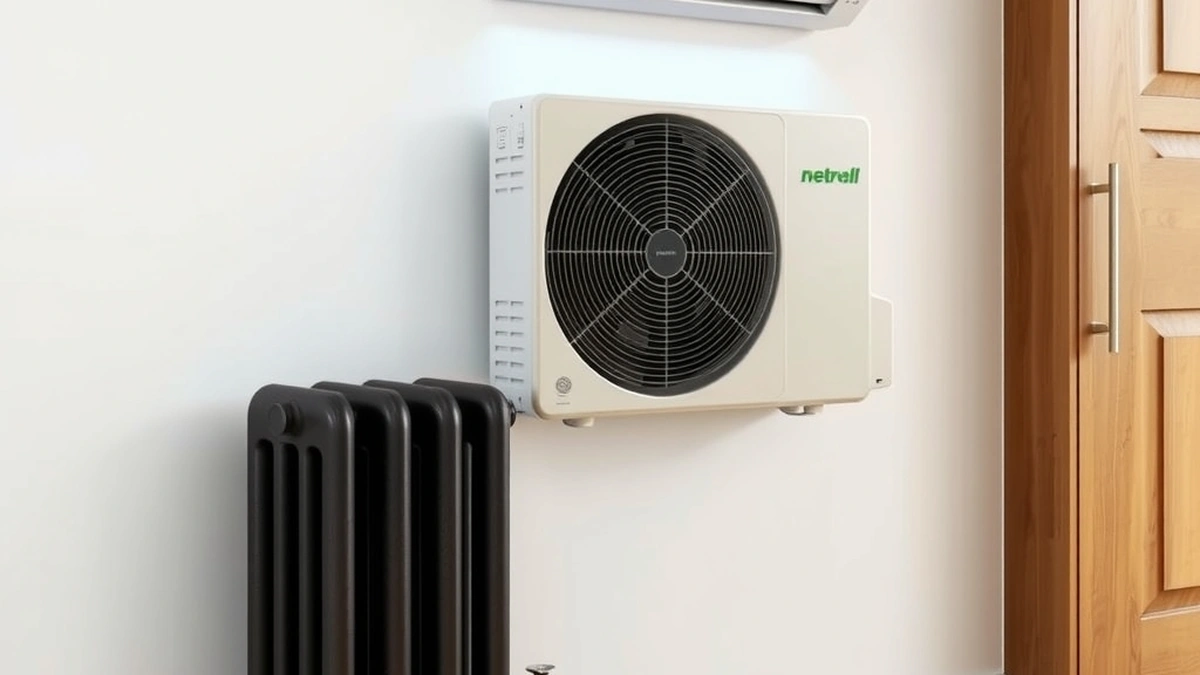
A heat pump is an electric refrigeration machine that moves heat from outdoor air into the house, and reverses to move heat out in summer. Its efficiency is expressed as COP or HSPF, and in mild weather it delivers two to four units of heat per unit of electricity because it moves heat rather than creating it.
That difference is the whole argument: the furnace is capped near 100 percent efficiency by physics, while the heat pump is not.
Side by side
| Heat pump | Gas furnace | |
|---|---|---|
| Installed cost | $5,000–$12,000 | $3,000–$8,000 |
| Fuel | Electricity | Natural gas or propane |
| Efficiency measure | COP, HSPF2 | AFUE |
| Typical efficiency | 2–4 COP in mild weather | 80–95 AFUE |
| Provides cooling | Yes | No |
| Cold-weather output | Falls with outdoor temperature | Constant |
| Service life | 15–20 years | 15–20 years |
| Annual service | $100–$250 | $100–$250 |
The arithmetic per unit of delivered heat
Use a worked example with round numbers: electricity at $0.17 per kWh and gas at $1.20 per therm. These are assumptions for illustration, not national averages — substitute your own bill.
Gas furnace at 95 percent AFUE. One therm is 100,000 BTU of input. At 95 percent efficiency it delivers 95,000 BTU for $1.20. That is $1.26 per 100,000 BTU delivered ($1.20 ÷ 95,000 × 100,000).
Heat pump at COP 3.0. One kWh is 3,412 BTU of electricity. At COP 3.0 it delivers 10,236 BTU for $0.17. That is $1.66 per 100,000 BTU ($0.17 ÷ 10,236 × 100,000).
At those rates gas is cheaper. Now run the same heat pump at COP 4.5, which is realistic in mild weather: one kWh delivers 15,354 BTU for $0.17, or $1.11 per 100,000 BTU. The heat pump is cheaper.
The crossover is the point. A heat pump’s efficiency changes with outdoor temperature; a furnace’s does not. Our heat pump cost guide shows how to build the same calculation from a real bill.
The up-front gap, closed by the air conditioner
Compare a heat pump at $8,500 against a $5,500 furnace plus a $4,500 air conditioner. The furnace route costs $10,000 for two appliances, two installs, and two warranties. The heat pump is $1,500 cheaper and cools the house.
That comparison only holds when the air conditioner is genuinely due for replacement. If the AC is five years old and working, the honest comparison is $8,500 against a $5,500 furnace, and the furnace is $3,000 cheaper today.
Cold climate performance
A standard heat pump loses capacity as outdoor air cools. A cold-climate model holds most of its rated output to 5 degrees Fahrenheit and keeps running below that, at reduced capacity.
Below the balance point — often between 20 and 35 degrees Fahrenheit — the system needs either electric resistance backup or a furnace. Resistance heat is efficient at converting electricity but expensive per BTU, which is why an oversized resistance strip is a running-cost trap.
In a northern climate, the practical answer is frequently a dual fuel system: heat pump above the balance point, furnace below it. It costs more than either alone because you buy both appliances and a control that arbitrates between them.
Five steps to decide
- Pull your electricity rate per kWh and gas rate per therm from a recent bill, including all delivery charges.
- Find your winter design temperature — the cold figure your area is sized to, not the coldest night on record.
- Get a Manual J load calculation so both quotes are sized to the house.
- Price three options: heat pump alone, furnace plus AC, and dual fuel.
- Ask each contractor for annual consumption in dollars at your rates, not at national averages.
Over 15 years
Take the $3,000 up-front gap from the working-AC case and a plausible $400 annual saving for the heat pump in a mild climate: 15 × $400 = $6,000 saved, against $3,000 extra spent, for a net $3,000 advantage. In a cold climate where gas is cheap, the same $400 becomes a $200 annual loss, or $6,000 worse over the period.
Those are illustrations, not forecasts. The direction of the answer flips on two numbers you can read off your own bills in five minutes.
Where repair fits
If the existing furnace is 10 years old and a $300 repair restores it, neither column applies this year. A $150 to $600 repair plus a $100 to $250 tune-up buys planning time, and the repair versus replacement test sets out when that stops being true.
When the furnace is genuinely finished, the choice in this article is live. The furnace repair comparison covers the repair path, and the installation guide covers what the heat pump job involves once you choose it.
Frequently asked questions
Is a heat pump cheaper to run than a gas furnace?
It depends on your electricity and gas rates and the outdoor temperature. In mild weather a heat pump's efficiency advantage usually wins; in a cold snap a 95 percent gas furnace often costs less per delivered unit of heat.
Which costs more to install, a heat pump or a gas furnace?
A heat pump at five to twelve thousand dollars installed against three to eight thousand for a gas furnace. The gap narrows sharply when the heat pump also replaces an air conditioner.
Do heat pumps work in cold climates?
Cold-climate models hold most of their rated capacity down to five degrees Fahrenheit and run below that. Many northern homes pair one with a furnace as a dual fuel system for the coldest weeks.
How long does each system last?
Both typically reach fifteen to twenty years with annual service. A heat pump runs year-round, so its compressor accumulates operating hours faster.
What is a dual fuel system and is it worth it?
A heat pump paired with a gas furnace, switched by outdoor temperature at a balance point usually between twenty and thirty-five degrees Fahrenheit. It costs more than either alone but covers both efficiency and cold-snap capacity.
Which adds more resale value?
Neither reliably adds more than the other in appraisal terms. Buyers value central cooling and a documented, warrantied installation more than the fuel type itself.
Sources
Some links are affiliate links.If you buy through them we may earn a commission at no extra cost to you. We do not accept payment for rankings. Read the full disclosure.