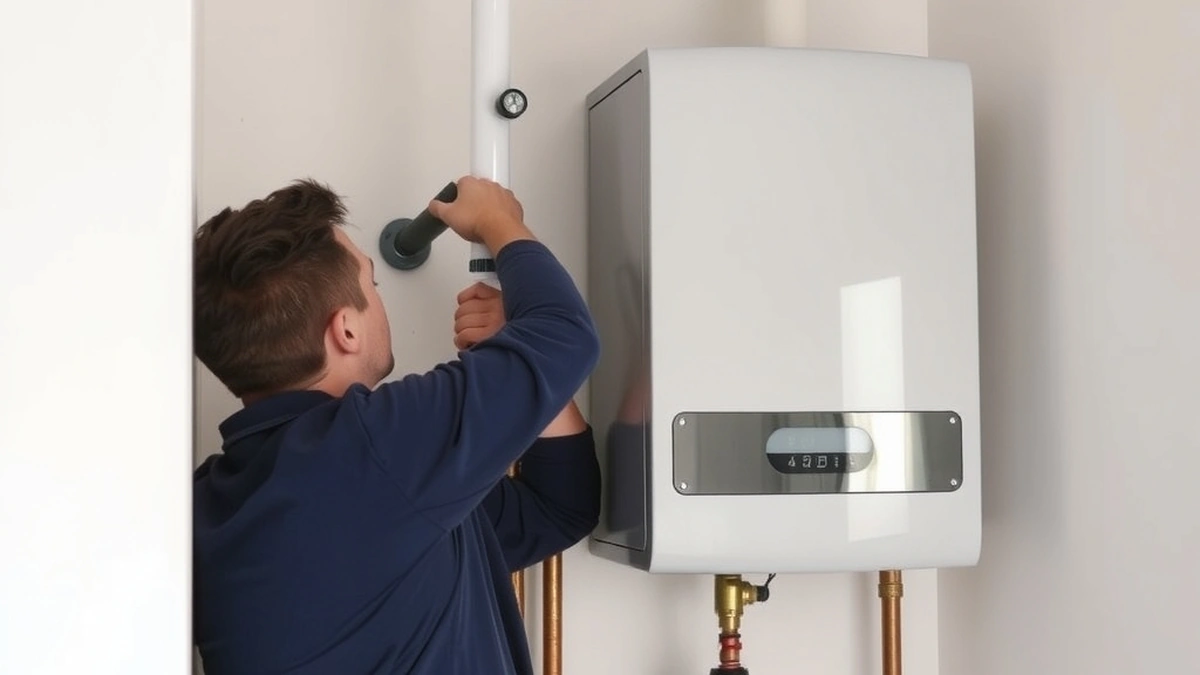
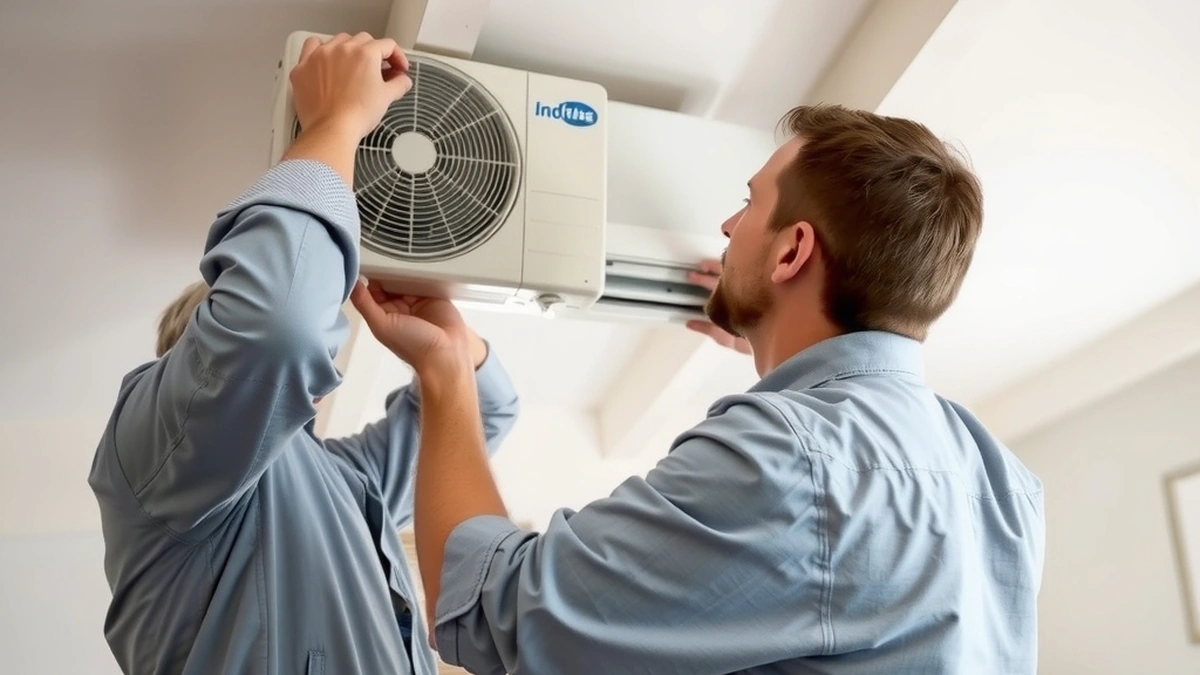
Heat pump installation: what the job actually involves
Heat pump installation runs $5,000 to $12,000 and takes one to three days. Here is each stage of the work, the permits, and the checks to insist on.
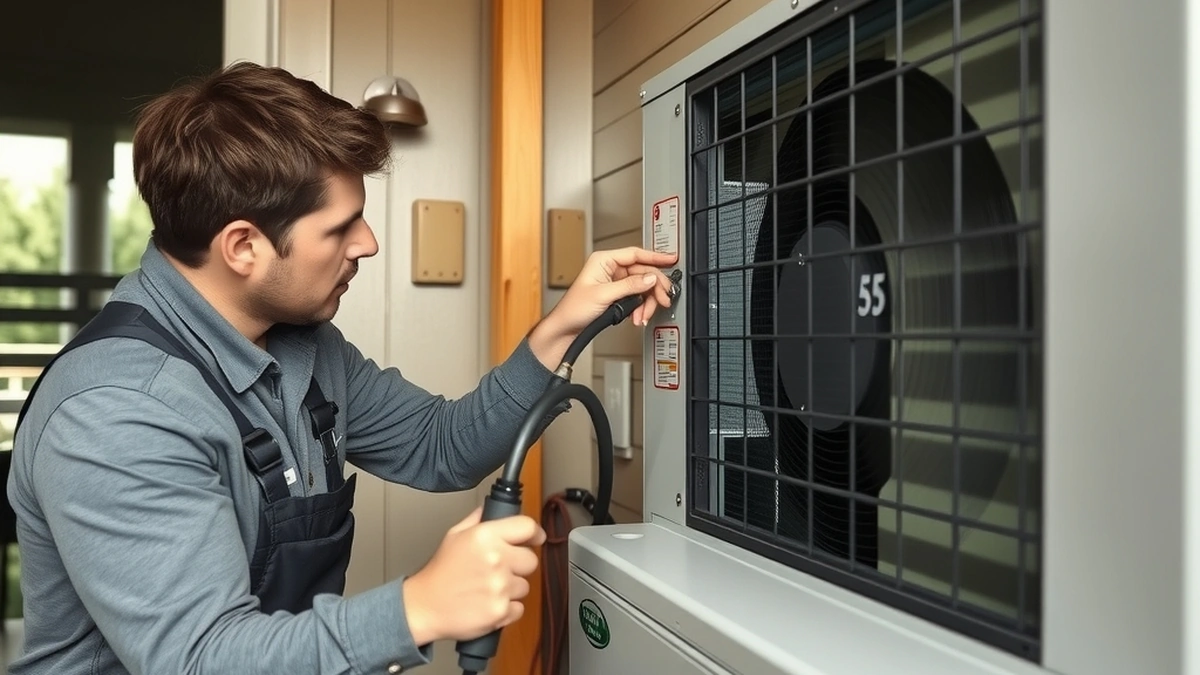
Heat pump installation replaces the furnace and air conditioner with one outdoor unit and an indoor air handler, and takes one to three days. The job runs $5,000 to $12,000 and depends on a load calculation, a line-set run, electrical work, and commissioning.
- Installed cost
- $5,000–$12,000
- Typical duration
- 1–3 days
- Furnace replacement
- $3,000–$8,000
- Emergency call-out
- $200–$500
Some links on this page are affiliate links.If you buy through them we may earn a commission at no extra cost to you. We do not accept payment for rankings. Read the full disclosure.
Heat pump installation takes one to three days and costs $5,000 to $12,000 for a ducted whole-house system. The work replaces two appliances with one: the furnace and the air conditioner come out, and an outdoor unit plus an indoor air handler go in.
Most of the cost and most of the risk sit in the preparation rather than the hardware. A correctly sized unit on sound ducts performs as rated. The same unit on undersized ducts with a low refrigerant charge never will, no matter what the box cost.
What the job replaces
A heat pump is an air-source refrigeration machine with a reversing valve. In summer it moves heat from the house to the outdoors; in winter it reverses and moves heat from outdoor air into the house. One compressor, one set of coils, two modes.
That means the installation touches four systems: refrigerant, air distribution, electrical, and condensate. A furnace installation touches two. The extra scope is why the job costs more than a $3,000 to $8,000 furnace replacement even when the equipment prices are similar.
Stage one: sizing and design
Every credible installation starts with a Manual J load calculation. It measures insulation, window area and orientation, air infiltration, and duct losses room by room, then produces a heating and cooling load in BTU per hour.
Skipping it is expensive in two directions. An oversized heat pump cycles on and off, which wears the compressor and leaves the house with uneven temperatures. An undersized one runs continuously on the coldest night and never reaches setpoint.
Ask for the calculation in writing. If the contractor cannot produce one, the quote is a guess with a price attached.
Stage two: the physical work
- Remove the old equipment. Recover refrigerant from the air conditioner, disconnect gas or oil at the appliance, and haul the furnace and coil out.
- Set the outdoor unit. A level pad or wall bracket, clear of snow line, with clearance for airflow on the service side.
- Run the line set. Insulated copper pair and a communication wire from outdoor unit to indoor coil, through a wall penetration sealed against air and water.
- Modify the plenum and ductwork. The air handler’s dimensions rarely match the old furnace, so the transition is fabricated on site, and any leaking joints found in the assessment are sealed.
- Complete the electrical work. A dedicated 240V circuit, a disconnect within sight of the unit, and a surge protector at the condenser.
- Handle condensate. A primary drain with a trap, plus a secondary pan or float switch that shuts the system down if the drain blocks.
Stage three: commissioning
This is the part homeowners should witness. Commissioning proves the system works as designed rather than merely switching on.
| Check | What it proves |
|---|---|
| Refrigerant charge by weight or subcooling | Correct charge for the actual line length |
| Airflow in CFM at the air handler | The blower delivers the design volume |
| External static pressure | Ducts are not choking the system |
| Temperature rise in heating | Delivery temperature is in the manufacturer’s range |
| Defrost cycle operation | The outdoor coil clears frost correctly |
| Condensate drainage under load | No overflow or trap failure |
A one-page commissioning report with those numbers is a reasonable ask. Contractors who measure properly produce one routinely.
What the price covers
| Line item | Typical estimate |
|---|---|
| Equipment: outdoor unit and air handler | $3,200–$5,800 |
| Labor and commissioning | $1,400–$2,600 |
| Electrical circuit and disconnect | $300–$1,800 |
| Duct sealing and transitions | $0–$2,000 |
| Permits and inspections | $150–$500 |
| Removal and disposal | $100–$400 |
Low ends sum to $5,150; high ends sum to $13,100. Any quote far below $5,000 for a ducted system usually means a reused line set, no permit, or no commissioning. Our cost breakdown explains each line in more detail.
Ducted against ductless
A ducted system conditions the whole house through existing ducts. A ductless mini split serves one or more rooms through a wall-mounted head and needs no ductwork at all.
| Ducted | Ductless multi-zone | |
|---|---|---|
| Whole-house coverage | Yes | Only served rooms |
| Ductwork needed | Yes | No |
| Typical installed cost | $5,000–$12,000 | Lower for one zone, higher for four |
| Best fit | Existing central ducts | Additions, no-duct houses, room-by-room control |
Houses without ducts face a real choice: pay for new ductwork, or accept room-by-room conditioning. Both are legitimate; they are not interchangeable.
Five things to insist on before work starts
- A written Manual J with room-by-room loads.
- The model number and rated capacity at 5 and 17 degrees Fahrenheit for cold-climate claims.
- The permit pulled in the contractor’s name, not yours.
- A line-set length in the quote, because charge and capacity both depend on it.
- The commissioning report as a deliverable, not a favour.
After the install
The first month is the diagnostic window. Note any room that will not hold temperature, any ice on the outdoor unit, and any water near the air handler. Those are installation issues while the warranty is fresh and inexpensive to fix.
Change the filter monthly through the first heating season, then set a service visit annually. Our maintenance schedule lists what each visit should cover, and the common problems guide helps separate a commissioning fault from normal behaviour. If the system is a replacement for a failing furnace, check the repair versus replacement test before committing to either path.
Frequently asked questions
How long does heat pump installation take?
One to three days for a ducted system. A straight swap into an existing air handler closet is often a single day; new line sets, duct changes, or a panel upgrade stretch it to three.
Do I need a permit for a heat pump?
Almost always yes. Most jurisdictions require a mechanical permit and an electrical permit, with an inspection after rough-in and another after commissioning.
Can a heat pump use my existing ductwork?
Usually, after assessment. Heat pumps move more air at a lower temperature rise than furnaces, so leaks and undersized returns hurt performance more and should be sealed first.
What is a Manual J calculation and do I need one?
A room-by-room heat loss and gain calculation that sizes the system to the house. Insist on one. Sizing by square footage alone is the most common cause of an oversized, short-cycling install.
Will installation disrupt my home?
Expect noise outdoors, a crew moving through the mechanical space, and power off for part of a day. Interior refrigerant and condensate lines are usually run in a single visit.
What should be checked at commissioning?
Refrigerant charge by weight or subcooling, airflow in cubic feet per minute, static pressure, condensate drainage, defrost cycle, and a documented heat rise test in heating mode.
Sources
Some links are affiliate links.If you buy through them we may earn a commission at no extra cost to you. We do not accept payment for rankings. Read the full disclosure.