Boiler installation: steps, permits, and what to expect
Boiler installation runs $4,000 to $8,000 and takes one to three days. Here is each stage, the venting decision, and the commissioning checks to demand.
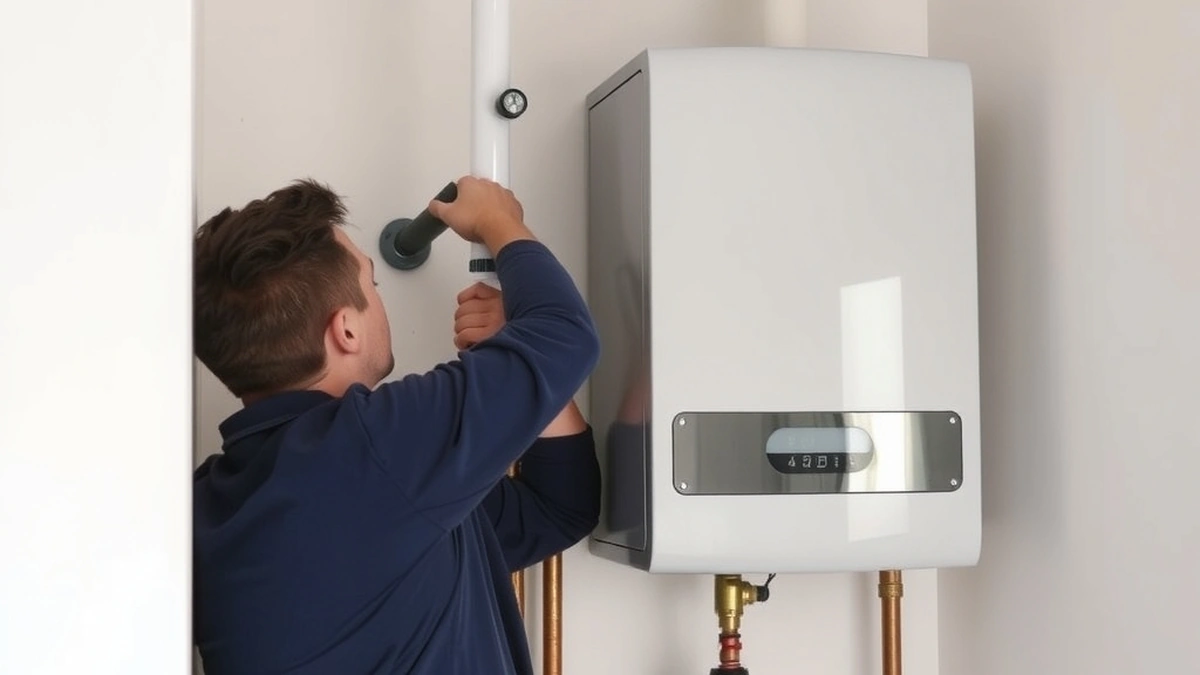
Boiler installation replaces the appliance and reconnects it to the existing piping, venting, gas, and electrical systems, and takes one to three days. It costs about $4,000 to $8,000, or $6,000 to $12,000 for a condensing model with new venting.
- Installed cost
- $4,000–$8,000
- Condensing install
- $6,000–$12,000
- Typical duration
- 1–3 days
- Emergency call-out
- $200–$500
Some links on this page are affiliate links.If you buy through them we may earn a commission at no extra cost to you. We do not accept payment for rankings. Read the full disclosure.
Boiler installation takes one to three days and costs about $4,000 to $8,000 for a standard gas boiler, or $6,000 to $12,000 for a condensing model with new venting. The appliance is swapped, but the job is really about reconnecting it correctly to four systems: water, gas or oil, venting, and electricity.
Most post-installation complaints are not appliance faults. They are piping, venting, and commissioning faults that a careful installation would have prevented.
What the installation must connect
A boiler heats water in a sealed loop and circulates it through radiators, baseboard, or radiant tubing. Installation therefore has to preserve the loop’s pressure, remove air from it, and vent combustion products safely.
Four interfaces matter:
- Hydronic: supply and return piping, circulators, expansion tank, air separator, pressure relief valve, fill valve.
- Fuel: gas pipe sized to the appliance input, or oil line and tank.
- Venting: chimney, liner, or sidewall PVC depending on the boiler type.
- Electrical and controls: power, thermostat and zone wiring, outdoor reset sensor.
Stage one: sizing and system design
The old boiler’s label is not a sizing document. A heat loss calculation measures the building envelope room by room and produces the real load, which is frequently 30 to 50 percent below the old appliance’s rated output.
Oversizing is not harmless. A boiler that is too large short cycles, which wastes fuel, wears the heat exchanger, and makes some rooms overshoot while others lag.
The design also settles the emitter question. Radiant floors and large cast-iron radiators suit low water temperatures. Narrow baseboard needs higher temperatures, which reduces the condensing benefit.
Stage two: the physical work
- Isolate and drain the system, then disconnect fuel, power, venting, and piping from the old boiler.
- Remove the old appliance and dispose of it, checking for asbestos-containing gaskets or rope seals on very old units.
- Set the new boiler on a level base or wall bracket with the manufacturer’s clearances maintained for service access.
- Fabricate the near-boiler piping — isolation valves, circulator, flow check, expansion tank, air separator, relief valve, and a bypass where the manufacturer requires one.
- Connect the fuel line at the correct pipe diameter for the input rating, with a sediment trap on gas.
- Run the vent in the material the boiler requires, with the correct slope and termination clearances.
- Wire the controls — thermostat, zone valves or circulators, outdoor sensor, and a service switch within sight.
Stage three: venting, the decision that changes the price
| Boiler type | Venting route | Typical added cost |
|---|---|---|
| Standard gas, atmospheric | Existing masonry chimney or metal flue | Low, if the chimney is sound |
| Standard gas, no chimney | Sealed stainless liner | $600–$1,500 |
| Condensing gas | PVC sidewall or roof termination | $300–$1,200 |
| Oil | Chimney or power venter | $400–$1,200 |
A condensing boiler cannot vent into an open masonry chimney. Its flue gas is cool and wet, and the acidic condensate would attack the masonry. That is why the “just reuse the flue” assumption turns a $5,000 quote into a $7,000 one.
Commissioning: the checks that prove the job
| Check | Target |
|---|---|
| Combustion analysis | CO within the manufacturer’s range, printed and left on site |
| Gas pressure | Within nameplate tolerance at high and low fire |
| System pressure cold | Usually 12–18 psi for a two-story house |
| Expansion tank charge | Matches the system fill pressure |
| Zone flow | Every zone reaches temperature, none airlocked |
| Supply-to-return rise | Within the design delta T, typically 20 degrees Fahrenheit |
A commissioning report with those six figures is the difference between an installation and an appliance delivery.
What the price covers
| Line item | Typical estimate |
|---|---|
| Boiler appliance | $2,800–$5,000 |
| Labour and near-boiler piping | $1,200–$2,800 |
| Venting or liner | $300–$1,500 |
| Circulators, tank, valves | $300–$900 |
| Permits | $150–$500 |
| Removal | $150–$400 |
Low ends total $4,900; high ends total $11,100. Our cost breakdown explains why the building, not the boiler, drives the spread.
One line deserves its own warning. A quote that omits the venting line is not cheaper; it is incomplete. The vent is the part of the job most often discovered mid-install, when the boiler is already disconnected and the old flue turns out to be unlined.
Five things to insist on
- A heat loss calculation and the resulting output in BTU, written into the quote.
- The venting plan with material, route, and termination, priced separately.
- Permits pulled in the contractor’s name, with the inspection scheduled.
- The combustion analysis report as a deliverable.
- A written zone-by-zone temperature check on the day of handover.
The first heating season
Expect to adjust. A new boiler on old piping usually needs the outdoor reset curve tuned, air bled from high points, and possibly one or two radiators balanced so distant rooms heat evenly.
Keep the commissioning report. When a fault appears, the first question any technician asks is what the combustion and pressure readings were at handover. Our boiler problems guide lists what the symptoms usually mean, and the maintenance schedule sets out the first annual service.
If the boiler is being replaced because the old one failed rather than aged out, the boiler cost guide covers the minimum spend to get heat back safely.
Frequently asked questions
How long does boiler installation take?
One to three days. A straight swap into an existing boiler room is often a single long day; new venting, zone changes, or radiator work stretch it to three.
Do I need a permit to install a boiler?
Yes in nearly every US jurisdiction. Expect a mechanical or plumbing permit, a gas or oil permit, and an electrical permit, with inspection before the system is concealed and again after commissioning.
Can a condensing boiler use my old chimney?
Not directly. Condensing boilers produce acidic condensate and low flue temperatures, so they vent through PVC or a sealed stainless liner rather than an open masonry chimney.
What is near-boiler piping and why does it matter?
The valves, circulators, expansion tank, air separator, and bypasses immediately around the boiler. Poor near-boiler piping is the most common cause of noise, short cycling, and uneven heat after an install.
Will I need new radiators for a condensing boiler?
Often not, but a heat loss calculation decides it. Condensing works best with lower water temperatures, which may mean larger emitters or a different reset curve rather than new radiators.
What should be tested at commissioning?
Combustion analysis with carbon monoxide readings, gas pressure, water pressure and expansion tank charge, flow across each zone, and a documented temperature rise from supply to return.
Sources
Some links are affiliate links.If you buy through them we may earn a commission at no extra cost to you. We do not accept payment for rankings. Read the full disclosure.