Electric furnace installation: circuit, panel, and duct
An electric furnace installation is mostly electrical: a dedicated 240-volt circuit, breaker sizing, and a panel that can carry the load. Here is the process.
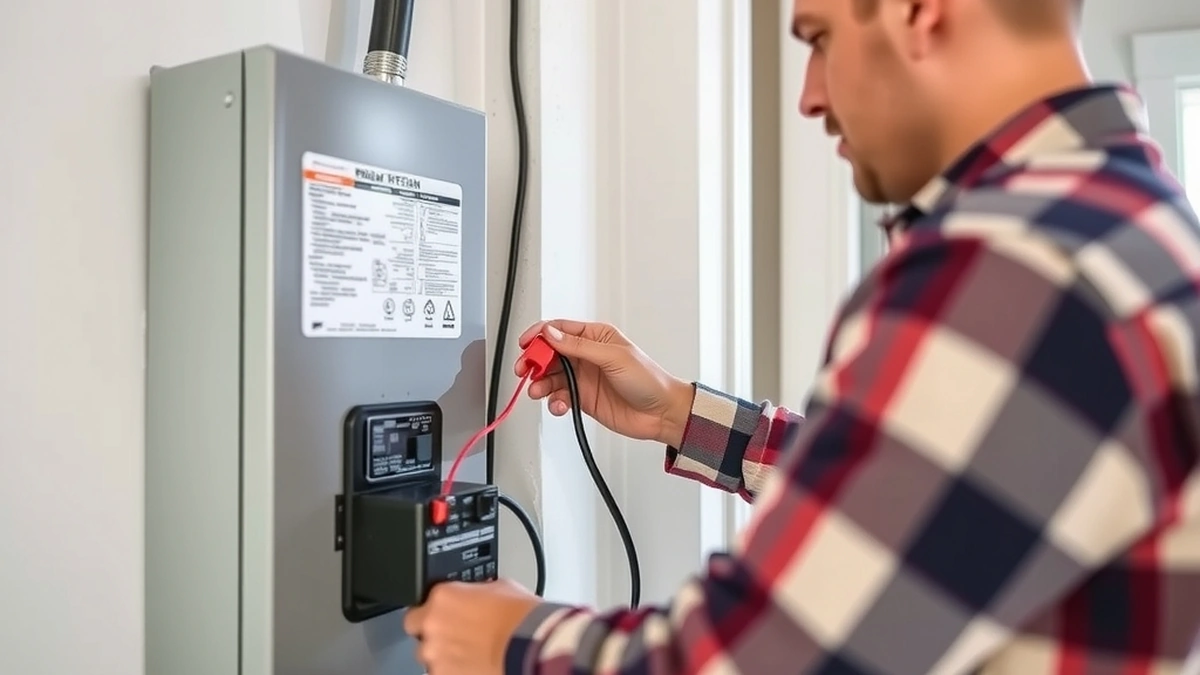
An electric furnace installation takes about a day and is mostly electrical: a dedicated 240-volt circuit, a breaker sized at 125 percent of the nameplate amps, and a panel with capacity to spare. Installed cost runs $3,000 to $6,500.
- Typical duration
- 1 day
- Installed cost
- $3,000 - $6,500
- Breaker sizing
- 125% of nameplate amps
- Supply voltage
- 240 volts
Some links on this page are affiliate links.If you buy through them we may earn a commission at no extra cost to you. We do not accept payment for rankings. Read the full disclosure.
An electric furnace installation takes about one day and costs $3,000 to $6,500 installed. The mechanical work is simple: set the cabinet, connect the plenum, wire the elements. The electrical work is the project, and it decides both the schedule and the price.
An electric furnace installation is the replacement or addition of a resistance-heat furnace together with a dedicated 240-volt branch circuit, overcurrent protection, a thermostat circuit, and a duct connection. No gas line, no flue, and no condensate drain belong to the furnace itself.
Sizing the circuit and the breaker
The nameplate tells you the kW rating and the maximum overcurrent protection. The breaker is sized at 125 percent of the nameplate current, because resistance elements are a continuous load.
| Output | Amps at 240 V | Breaker | Typical copper |
|---|---|---|---|
| 10 kW | 41.7 | 60 A | 6 AWG |
| 15 kW | 62.5 | 80 A | 4 AWG |
| 20 kW | 83.3 | 110 A | 2 AWG |
The arithmetic for 10 kW: 10,000 W ÷ 240 V = 41.7 A. Multiply by 1.25: 41.7 × 1.25 = 52.1 A, and the next standard breaker is 60 A. For 15 kW: 15,000 ÷ 240 = 62.5 A, and 62.5 × 1.25 = 78.1 A, so an 80 A breaker.
Wire size follows the breaker and the code table for the installation method, not the appliance label alone. A circuit run through insulation in a hot attic derates, which can force a larger conductor than the same run in an open basement.
Panel capacity and the service upgrade
A 15 kW furnace adds 62.5 amps to the service. Most 100-amp panels serving an all-electric house cannot absorb that alongside a range, dryer, and water heater. The electrician runs a service calculation and reports the available capacity.
If capacity is short, three options exist: upgrade the service to 200 amps, install a smaller furnace with a lower kW rating, or choose a different heat source. A service upgrade is an estimate of $1,500 to $3,000 in most markets, and it is a separate trade from the HVAC work.
Two other panel details matter. The furnace needs a disconnect within sight of the unit, and the breaker must be a type listed for the panel. A wrong-brand breaker is a common inspection failure.
Some contractors offer a load-management device instead of a service upgrade. It sheds the furnace or another large load when the panel approaches its limit, which can pass a service calculation on an older panel. It is a legitimate option, but it means the furnace may be interrupted on the coldest hour of the year, so ask how it is wired and what it sheds before accepting it.
Removal, setting, and the duct connection
The old unit comes out after the circuit is isolated and locked off. An electric furnace is heavy for its size because of the elements and the blower, and a closet unit may need two people and a stair carry.
The new cabinet goes on a level surface with the clearances on its label. Then the plenum is fitted. This is the same sheet metal work as any forced-air job: a transition that is too small raises static pressure and reduces airflow, and the blower then runs at a higher temperature rise.
Because there is no flue, the furnace can sit in spaces a gas unit cannot. That flexibility is one reason electric furnaces appear in closets and crawlspaces, and it is also why access for future service should be checked before the cabinet is screwed down.
Commissioning checks
- Confirm the supply voltage at the disconnect is 240 volts, not 208 or 120.
- Measure amp draw on each element and compare it to the nameplate.
- Check the temperature rise against the label range with the blower on the correct speed.
- Test each stage and the sequencer timing so the elements come on in order, not all at once.
- Verify the limit and fan controls shut the elements down when airflow stops.
- Label the breaker with the furnace location and kW rating.
A sequencer that brings on all elements at once can trip a breaker that is correctly sized. Staged bring-on is what keeps the inrush within the panel’s capacity.
What it costs
| Line item | Typical estimate |
|---|---|
| Furnace and elements | $1,400–$2,400 |
| Labor and commissioning | $700–$1,700 |
| 240-volt circuit | $350–$800 |
| Breaker and disconnect | $100–$300 |
| Plenum and transition | $250–$700 |
| Permit and inspection | $100–$350 |
| Removal and disposal | $100–$250 |
The low column sums to $1,400 + $700 + $350 + $100 + $250 + $100 + $100 = $3,000. The high column sums to $2,400 + $1,700 + $800 + $300 + $700 + $350 + $250 = $6,500. A panel upgrade is additional and quoted separately.
Permits and inspection
The electrical permit is not optional, and it is not the same as the mechanical permit in jurisdictions that issue both. The inspection checks the circuit, the disconnect, the grounding, and the breaker listing. An unpermitted circuit is a problem at resale and a problem with insurance after a fire.
Keep the inspection card and the commissioning readings with the appliance paperwork. For the running-cost side of the decision, see the electric furnace cost guide; for the comparison with gas, see the electric versus gas guide. The problems guide covers what the elements and sequencers do when they fail.
Frequently asked questions
How long does an electric furnace installation take?
About one day for a like-for-like replacement with an existing circuit and ductwork. A new circuit run or a panel upgrade can add a day, and the electrical inspection is usually a separate visit.
What size breaker does an electric furnace need?
Size the breaker at 125 percent of the nameplate current. A 10-kilowatt unit at 240 volts draws 41.7 amps, so the next standard size is 60 amps. A 15-kilowatt unit takes an 80-amp breaker.
Can I install an electric furnace myself?
The appliance setting and duct work are within reach of a capable DIYer, but the 240-volt circuit, breaker, and permit are licensed electrical work in most jurisdictions. Insurance and inspection are the reasons to use an electrician.
Does an electric furnace need a vent?
No. There is no combustion, so there is no flue. Clearances for the cabinet and access to the elements and blower still apply, and the unit needs room for airflow.
Why does an electric furnace need such a large circuit?
Resistance heat converts electricity to heat at a one-to-one ratio, so a 15-kilowatt output needs 15 kilowatts of input. That is 62.5 amps at 240 volts, which is a large dedicated circuit by household standards.
What is the temperature rise on an electric furnace?
The nameplate states a range, commonly 30 to 60 degrees Fahrenheit. The blower speed is set to land inside that range, and a rise outside it means the airflow is wrong.
Sources
Some links are affiliate links.If you buy through them we may earn a commission at no extra cost to you. We do not accept payment for rankings. Read the full disclosure.