Boiler maintenance: annual service, cost, and checklist
A boiler service runs $150 to $350 a year. Here is what the annual visit should cover, the monthly checks that matter, and how to bleed radiators properly.
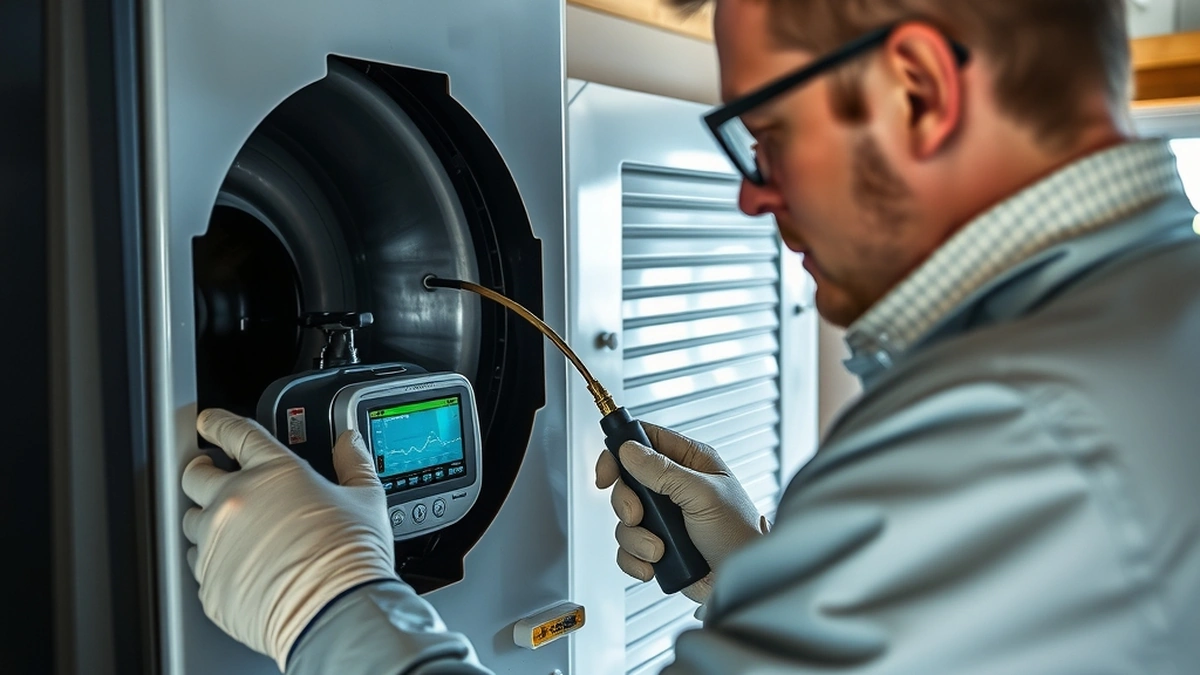
Boiler maintenance costs $150 to $350 for an annual professional service, plus a few minutes of homeowner checks each month. The visit covers combustion analysis, pressure and expansion tank checks, and a circulation test that catch faults before they become repairs.
- Annual service
- $150–$350
- Replacement boiler
- $4,000–$8,000
- Emergency call-out
- $200–$500
- Power flush
- $400–$900
Some links on this page are affiliate links.If you buy through them we may earn a commission at no extra cost to you. We do not accept payment for rankings. Read the full disclosure.
Boiler maintenance costs $150 to $350 for an annual professional service, plus a few minutes of checking each month. That fee protects a $4,000 to $8,000 appliance and, on most warranties, is a condition of keeping the parts coverage.
Boiler maintenance is the scheduled inspection and measurement of combustion, water pressure, water quality, and circulation — the four things that decide whether the system heats the house efficiently or slowly stops doing so.
Why water systems need different care than furnaces
A furnace moves air. A boiler moves water through a sealed loop of pipe, pumps, and radiators. Water carries dissolved minerals and oxygen, and both cause trouble: scale insulates the heat exchanger, and oxygen corrodes steel into sludge.
That is why boiler maintenance is partly chemistry. Inhibitor concentration, pH, and the absence of air matter as much as the burner.
The homeowner checks
| Task | Frequency | What to look for |
|---|---|---|
| Read the pressure gauge | Monthly | Steady 1–1.5 bar cold |
| Check for leaks and drips | Monthly | Water under the boiler, stains on ceilings |
| Bleed radiators | Yearly, or when cold at top | Air hiss, then steady water |
| Clear vents and air bricks | Seasonally | Blocked combustion air is a safety fault |
| Check the condensate pipe | Monthly in winter | Frozen or dripping trap |
| Note any new noise | Ongoing | Kettling, banging, gurgling |
Ten minutes a month covers the homeowner column. Everything that involves opening the case is technician work.
Setting the pressure correctly
The correct cold fill pressure depends on the height of the system above the boiler. Water exerts about 0.43 psi per foot of height (1 psi per 2.31 feet).
For a two-story house with the highest radiator about 18 feet above the boiler: 18 ÷ 2.31 = 7.8 psi of static head. Add 4 to 5 psi of margin so the top of the system stays pressurised, and the fill target is about 12 to 13 psi, which is roughly 1 bar.
Hot pressure rises above that as water expands. A gauge that climbs past 3 bar, or a relief valve that drips, points to the expansion tank.
The expansion tank, explained
The expansion tank holds a compressed air charge separated from system water by a diaphragm. When water heats and expands, it pushes into the tank instead of out of the relief valve.
When the air charge is lost, the tank fills with water and the system pressure swings wildly — high when hot, low when cold. Checking and recharging it takes a pressure gauge and about five minutes, and it is the single most neglected item on the list.
What the annual service should include
- Combustion analysis with a flue probe: carbon monoxide, carbon dioxide, and oxygen readings, printed and left with you.
- Gas pressure check at high and low fire where the boiler is modulating.
- Case and heat exchanger inspection for soot, corrosion, and seal condition.
- Pressure and expansion tank test, including the air charge against the fill pressure.
- Circulation test across each zone, with supply and return temperatures recorded.
- Water quality check — inhibitor concentration and pH, topped up as needed.
- Safety devices: relief valve operation, flame detection, and any low-water cut-off.
A service that consists of a visual glance and an invoice is not a service. Ask for the combustion printout.
Bleeding radiators, step by step
- Turn the heating off and let the radiators cool, so you are not handling hot water.
- Find the bleed valve at the top corner of each radiator and hold a cloth and small container beneath it.
- Open the valve with a radiator key a quarter turn. Air hisses out first.
- Close it as soon as water runs steadily — no spitting, no hiss.
- Work through the house, starting with the lowest floor and finishing at the top.
- Recheck the boiler pressure and top up to the cold fill figure if it dropped.
If a radiator needs bleeding every month, air is entering somewhere and the system needs a proper look rather than a key.
Sludge, filters, and flushing
Magnetite sludge is the slow killer of hydronic systems. It settles in radiators, blocks narrow passages, and wears circulator seals.
| Treatment | Typical cost | When it is warranted |
|---|---|---|
| Magnetic filter fitted | $250–$500 | On any new boiler install |
| Chemical inhibitor | $30–$80 | Annually, with the service |
| Power flush | $400–$900 | Cold-bottom radiators, black water, pre-install |
| Radiator replacement | $150–$400 each | Corroded beyond cleaning |
A filter plus annual inhibitor is cheaper than a flush, and much cheaper than a heat exchanger. Fit the filter at installation, not after the first symptom.
The arithmetic on skipping service
A skipped year saves $150 to $350. What it defers:
A scaled heat exchanger loses efficiency gradually before it fails, so the loss is invisible until the fuel bill moves. A system run without inhibitor corrodes, and a boiler replaced at year 14 instead of year 22 pulls a $4,000 to $8,000 cost forward by eight years.
Take $6,000 spread across those eight lost years: $750 per year of value destroyed to save $250. The service is the cheapest item in the ownership budget.
What a service contract should cover
A service plan at $150 to $350 a year for one visit is normal; two visits for a combi or an oil boiler at $300 to $500 is also normal. Before signing, confirm:
- Whether the combustion analysis is included or billed separately.
- Whether parts and labour are discounted, and whether there is a cap.
- Whether priority scheduling applies during cold snaps.
- Whether the plan is with the contractor or an insurance-style intermediary.
After the service
Keep the reports together — combustion readings, pressure figures, and inhibitor test results. When a fault appears next winter, the previous year’s numbers are what makes a fast diagnosis possible. Our boiler problems guide covers the symptoms, the installation guide covers what a good commissioning record looks like, and the cost guide prices a replacement if the service finds something serious.
Frequently asked questions
How often should a boiler be serviced?
Once a year, and ideally before the heating season starts. Manufacturer warranties commonly require documented annual service, and oil boilers usually need it more often than gas.
How much does boiler servicing cost?
One hundred fifty to three hundred fifty dollars for a standard annual service, higher for oil boilers and for combi units that include a hot water side. Parts are usually extra.
What pressure should my boiler be at?
About 1 to 1.5 bar cold for a two-story house, rising modestly when hot. A system that will not hold pressure has a leak, a failed relief valve, or a failed expansion tank.
How do I bleed a radiator?
With the heating off and the radiator cool, open the bleed valve at the top with a key until water runs steadily, then close it. Recheck system pressure afterwards and top up if it dropped.
Do I need a power flush?
Not routinely. It is warranted when radiators are cold at the bottom, the water runs black when bled, or a new boiler is going onto an old system. A magnetic filter and annual inhibitor are cheaper prevention.
Can I service my own boiler?
You can check pressure, bleed radiators, clean the case, and clear vents. Combustion analysis, gas valve adjustment, and anything inside the combustion chamber is work for a qualified technician.
Sources
Some links are affiliate links.If you buy through them we may earn a commission at no extra cost to you. We do not accept payment for rankings. Read the full disclosure.