Blower motor failure: warning signs
The seven signs a furnace blower is failing, how they differ from a capacitor fault, and which ones mean stop running the system today.
Blower failure signs include no air from registers while the furnace fires, a humming motor that will not turn, a burning smell, rattling or squealing, and the furnace shutting down on a limit trip minutes after start-up. A diagnostic costs $100 to $250.
- Diagnostic
- $100 - $250
- Capacitor
- $150 - $300
- Motor replacement
- $400 - $900
- After-hours call
- $200 - $500
Some links on this page are affiliate links.If you buy through them we may earn a commission at no extra cost to you. We do not accept payment for rankings. Read the full disclosure.
Blower failure shows up on the air side, not the gas side. The furnace lights, the burners run, and nothing arrives at the registers — or the motor hums without turning, or the furnace shuts down a few minutes after start-up because the heat exchanger is not being cooled. A diagnostic at $100 to $250 separates a $150 to $300 capacitor from a $400 to $900 motor.
The seven signs
1. No air from the registers while the burners run. The clearest sign. The furnace is producing heat and the blower is not moving it.
2. A hum with no rotation. The motor is receiving power and not turning. Usually a capacitor, sometimes a seized bearing.
3. The furnace shuts off a few minutes after start-up. The high-limit switch is opening because the heat exchanger is overheating. The limit is doing its job; the blower is not.
4. Weak airflow everywhere. The motor runs, but air volume is low. A matted wheel, a dirty coil or a failing motor.
5. Rattling or squealing. Bearing wear, a loose wheel, or debris in the housing. Squealing usually precedes seizure.
6. A burning smell at start-up. Electrical insulation or dust burning off. Dust is harmless; a persistent smell with the blower running is not.
7. The blower runs constantly, even with the thermostat off. A stuck relay or a failed control board, not necessarily the motor.
What each sign points to
| Sign | Most likely fault | Typical cost |
|---|---|---|
| No air, no sound | No power, board, or motor | $150 - $900 |
| Hum, no rotation | Capacitor or seized motor | $150 - $900 |
| Weak airflow, motor running | Dirty wheel, coil or duct | $150 - $400 |
| Squealing | Bearings | $400 - $900 |
| Burning smell | Motor winding or wiring | $400 - $900 |
| Shutdown after minutes | Blower not moving air | Depends on cause |
| Runs constantly | Relay or control board | $300 - $600 |
The cheapest rows are the ones homeowners skip: the hum and the weak airflow both have inexpensive causes more often than expensive ones.
The hum that is not a motor
The single most common misdiagnosis in this category is a failed run capacitor treated as a failed motor.
A capacitor stores energy to start and run the motor. When it fails, the motor receives power but cannot generate the rotating field it needs, so it sits and hums. From the doorway that is indistinguishable from a seized bearing.
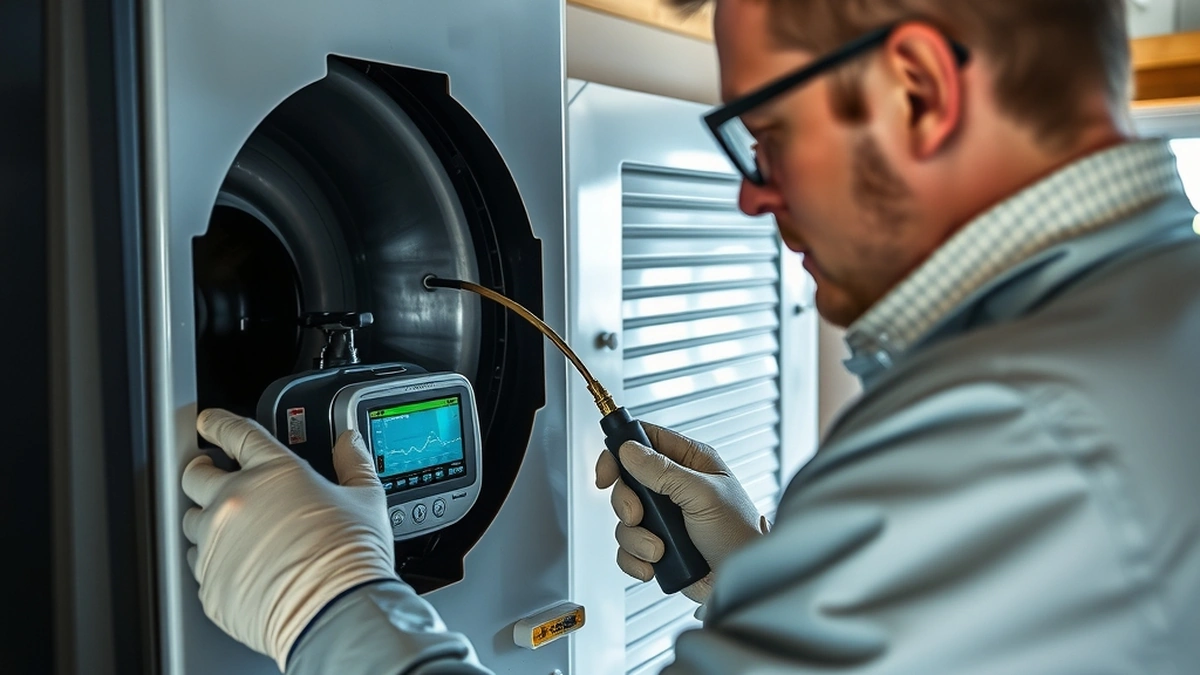
Testing takes a multimeter with a capacitance setting and about two minutes. A capacitor reading far below its rated microfarads is the fault, and the replacement is $150 to $300 rather than $400 to $900.
Ask any contractor quoting a motor what the capacitor measured. A straight answer is a good sign; a vague one is not.
The shutdown-after-minutes pattern
A furnace that fires, runs three to five minutes, and shuts off while the blower continues is showing a high-limit trip. The heat exchanger is getting hotter than design because not enough air is moving across it.
That can be caused by:
- A failing blower motor
- A matted blower wheel
- A blocked evaporator coil
- A collapsed or disconnected duct
- A filter that has not been changed in a year
All five reduce airflow, and only one of them requires a motor. This is why the diagnostic should measure static pressure and inspect the wheel before ordering parts.
The short-cycling pattern in more detail is in short cycling warning signs.
When to stop running the system
Three signs are a shutdown rather than a booking.
- A burning smell that persists after the first minute.
- A hot motor housing you cannot hold your hand on.
- Smoke or scorching at the blower compartment.
Those point to an electrical fault, and continuing to run the furnace risks a fire. Shut it off at the service switch and call for service.
A squealing bearing is not an immediate hazard, but it is a warning that the motor is close to seizing. Booking service at that stage is cheaper than an emergency call when it stops entirely.
What the diagnostic measures
A proper blower diagnosis at $100 to $250 includes:
- Control signal from the board to the motor.
- Capacitor value against its rating.
- Shaft rotation by hand.
- Winding resistance or the ECM fault code.
- Static pressure and temperature rise.
- Blower wheel condition.
Items two and six are where the cheap answers live. Items five tells you whether the system, rather than the motor, is the problem.
What to do now
- Check the filter and replace it if it is grey.
- Listen at the furnace for a hum without airflow.
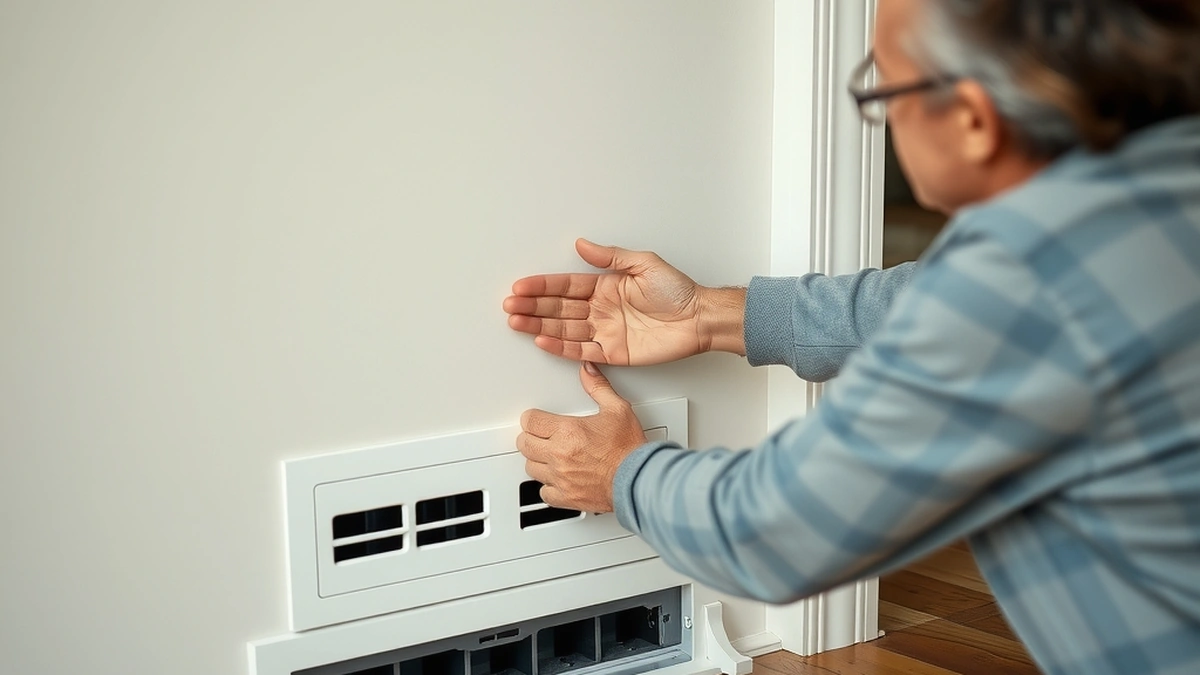
- Feel a register while the burners are running.
- Shut the system off if there is a burning smell or smoke.
- Book a diagnostic at $100 to $250 rather than ordering a motor.
- Ask for the capacitor reading and the static pressure.
The repair options are in blower motor failure repair, the prices are in blower motor failure cost, and the prevention measures are in blower motor failure prevention. If the blower is running but the air is cold, the fault is on the heating side and no heat warning signs is the closer guide.
The short version
A blower that will not turn is usually a capacitor. A blower that turns weakly is usually a dirty wheel or coil. A blower that squeals is on its way out. A blower that smells of burning should be switched off.
Only one of those four needs a new motor, and the diagnostic is what tells you which.
Frequently asked questions
What are the first signs of a failing blower motor?
Weak airflow from the registers while the furnace is firing, a motor that hums without turning, and the furnace shutting down a few minutes after start-up. Any of those points to the air side rather than the gas side.
Why does my furnace run but no air comes out?
Either the blower is not turning, or the air path is blocked by a dirty coil, a collapsed duct or a matted blower wheel. A diagnostic at $100 to $250 distinguishes them.
Is a squealing blower motor dangerous?
Not immediately, but it usually means bearing wear and the motor is on its way out. A burning smell is different — shut the system off, because that can indicate an electrical fault.
Can a bad capacitor look like a bad motor?
Yes, exactly. Both produce a hum with no rotation. A capacitor test takes two minutes and costs far less than a motor, so it should always be checked first.
Why does the furnace shut off after a few minutes?
The high-limit switch is opening because the heat exchanger is not being cooled by enough airflow. The blower is the usual cause, and the limit is protecting the furnace.
How long can I run a furnace with a failing blower?
Days, not weeks. The furnace is cycling on its safety limit, which stresses the heat exchanger, and a complete failure leaves no heat at all. Book service rather than waiting.
Sources
Some links are affiliate links.If you buy through them we may earn a commission at no extra cost to you. We do not accept payment for rankings. Read the full disclosure.