Short cycling: warning signs to catch early
The seven signs a furnace is short cycling, how to tell it from normal cycling, and which ones mean stop using the system and call a technician.
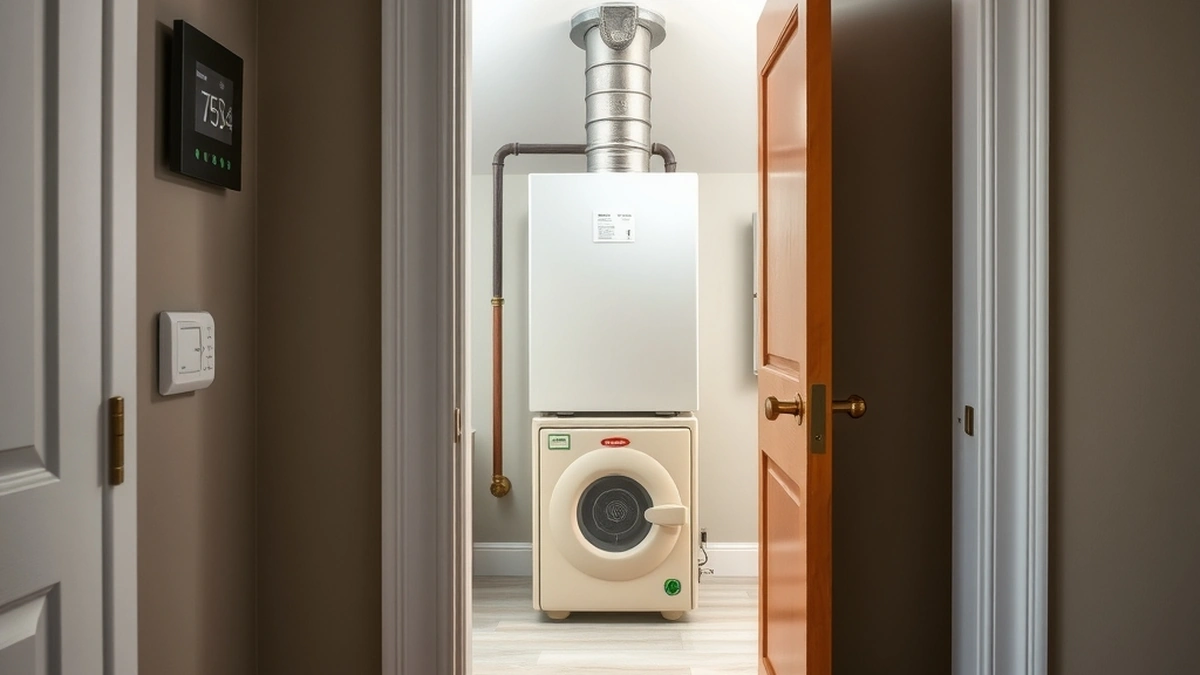
Short cycling warning signs include the burner shutting off before the house reaches setpoint, warm then cool air at the register, a furnace that runs for less than ten minutes at a time, and repeated ignition attempts. A diagnostic costs $100 to $250.
- Diagnostic visit
- $100 - $250
- Typical repair
- $150 - $600
- Filter
- $15 - $40
- After-hours call
- $200 - $500
Some links on this page are affiliate links.If you buy through them we may earn a commission at no extra cost to you. We do not accept payment for rankings. Read the full disclosure.
Short cycling is diagnosed by watching one cycle, not by listening for a few minutes. If the burner runs for less than about ten minutes, shuts off while the house is still below setpoint, and repeats, that is short cycling. If the furnace runs until the thermostat is satisfied and then rests, it is working. A diagnostic visit at $100 to $250 separates the two, and most repairs land at $150 to $600.
Normal cycling versus short cycling
Every furnace cycles. The question is whether the cycle ends because the house is warm or because the furnace stopped itself.
| Behaviour | Normal | Short cycling |
|---|---|---|
| Burner run time | Until setpoint reached | Under about 10 minutes |
| House temperature | Reaches setpoint | Stays below setpoint |
| Register air | Warm throughout | Warm then cool |
| Cycle frequency | 2 - 4 per hour on a mild day | 6 or more per hour |
| Blower after shutdown | Runs to cool exchanger | Runs, then burner relights |
| Sound | Steady combustion | Repeated ignition attempts |
The fourth row is the practical one. Counting cycles over an hour costs nothing and tells you most of what a technician will confirm with instruments.
The seven signs
1. The burner shuts off before the setpoint. The thermostat still shows a call for heat, the burner is off, and the blower is running. That is a limit trip or a sensor fault.
2. Warm air, then cool air, then warm again. The classic high-limit pattern. The exchanger is hot, the burner stops, the blower carries the heat away, and the cycle restarts.
3. Run times under ten minutes in cold weather. In freezing weather a correctly sized furnace should run for long stretches. Short runs in cold weather mean the unit cannot deliver, or something is stopping it.
4. Repeated ignition attempts. You hear the inducer start, the igniter glow, a whoosh, and then a shutdown a few seconds later. That is a flame-proving fault rather than a limit trip, and it is a different repair.
5. A fault code on the control board. Most modern furnaces flash a code. Write down the sequence — the number of short and long flashes — and look it up in the manual on the door panel.
6. Uneven room temperatures. A furnace that cycles never distributes heat evenly. Rooms near the thermostat overshoot while far rooms stay cold.
7. A hot smell or a clicking relay. Not conclusive, but a relay clicking repeatedly at the control board during a short cycle is worth reporting.
What the pattern tells you
The shape of the failure narrows the cause before anyone opens a panel.
- Burner lights, runs a few minutes, shuts off, blower continues. High-limit trip from restricted airflow.
- Burner lights, shuts off within seconds, retries. Flame sensor or gas supply.
- Nothing lights, inducer runs, then stops. Pressure switch or blocked flue.
- Everything runs, but the house never warms. Capacity, duct or thermostat calibration.
- Heat pump cycles in heating mode. Charge, defrost control or reversing valve.
Each of those is a different repair at a different price. That is why the diagnostic is priced as a visit rather than given away: the measurement is the product.
When to stop using the system
Most short cycling is safe to live with for a few days while you book a visit. Three signs are not:
- A smell of exhaust or gas in the house.
- A yellow or lazy flame instead of a blue one.
- Soot or scorching around the furnace cabinet.
Any of those points to combustion rather than airflow, and the correct action is to shut the furnace off at the switch, open a window, and call for service. Do not keep resetting it.
The combustion safety side is covered by OSHA’s guidance on carbon monoxide and by the general home inspection standards at InterNACHI.
What the diagnostic should measure
A proper short-cycling diagnosis at $100 to $250 includes:
- Temperature rise across the heat exchanger, compared to the rating plate.
- Static pressure in the duct system.
- Filter condition and blower wheel condition.
- Fault code history, where the board stores it.
- Refrigerant pressures, if the system is a heat pump.
If a technician quotes a part without those readings, ask which measurement identified the fault. A control board replaced on a hunch is a $560 guess.
What it costs to ignore
Short cycling is cheap to fix and expensive to tolerate.
- A filter at $25 ends the cheapest case.
- A blower clean at $200 ends the next.
- An igniter at $150 to $300 is the wear item that extra starts consume.
- An inducer at $400 to $700 is the next.
- A heat exchanger failure ends the furnace, and replacement is $3,000 to $8,000.
The fuel waste from cycling is small. The wear is not.
The prevention side is in short cycling prevention, the repair options are in short cycling repair, and the fault-by-fault arithmetic is in short cycling cost.
What to do this week
- Count the cycles. Note the run time and the number per hour.
- Check the filter and replace it if it is grey.
- Open any closed registers and confirm returns are unobstructed.
- Write down the fault code if the board is flashing.
- Book a diagnostic at $100 to $250 if the pattern persists after the filter change.
- Shut the system down if there is any exhaust smell or sooting.
Two of those six steps cost nothing and resolve a large share of cases. The rest is a service visit and, usually, a part under $300.
Frequently asked questions
How do I know if my furnace is short cycling?
Watch one cycle. If the burner runs for less than about ten minutes, shuts off while the house is still below setpoint, and repeats, that is short cycling. A normal cycle runs until the thermostat is satisfied.
Is it normal for a furnace to cycle 3 times an hour?
On a mild day, a furnace may cycle two or three times an hour and be working correctly. The problem is a cycle that ends before the setpoint is reached, especially in cold weather.
What does warm then cool air at the register mean?
It usually means the burner shut off on a high-limit trip while the blower kept running. The warm air is the heat that was already in the exchanger, and the cool air follows once it has been carried away.
Can short cycling be dangerous?
The cycling itself is not, but the cause can be. A restricted flue or a cracked heat exchanger can produce the same pattern, so persistent cycling with any combustion smell warrants a shutdown and a service call.
Why does my furnace short cycle only in cold weather?
Because cold weather demands longer runs. A unit that cycles briefly on a mild day may never satisfy the thermostat in freezing weather, revealing a capacity or airflow problem that was invisible in autumn.
How much does it cost to diagnose short cycling?
A diagnostic visit is $100 to $250, and it should include temperature rise, static pressure and, on a heat pump, refrigerant pressures. The repair is usually $150 to $600 on top.
Sources
Some links are affiliate links.If you buy through them we may earn a commission at no extra cost to you. We do not accept payment for rankings. Read the full disclosure.