Blower motor failure: repair options
Four blower faults, four repairs, from a $150 capacitor to a $900 motor. How to tell which one you have and when replacement beats a $750 repair.
Blower motor failure is fixed by a capacitor at $150 to $300, a control module at $300 to $600, a motor at $400 to $900, or a wheel cleaning at $150 to $250. Repair the motor on a unit under 15 years; price replacement at $3,000 to $8,000 past that.
- Capacitor
- $150 - $300
- Motor replacement
- $400 - $900
- Control module
- $300 - $600
- Replacement furnace
- $3,000 - $8,000
Some links on this page are affiliate links.If you buy through them we may earn a commission at no extra cost to you. We do not accept payment for rankings. Read the full disclosure.
Blower motor failure is rarely a single fault, and the repair depends on which part failed. A capacitor costs $150 to $300, a control module $300 to $600, a complete motor $400 to $900, and a wheel cleaning $150 to $250. The diagnostic at $100 to $250 is what determines which of those you need, and it is worth insisting on before anyone orders a motor.
What the blower does
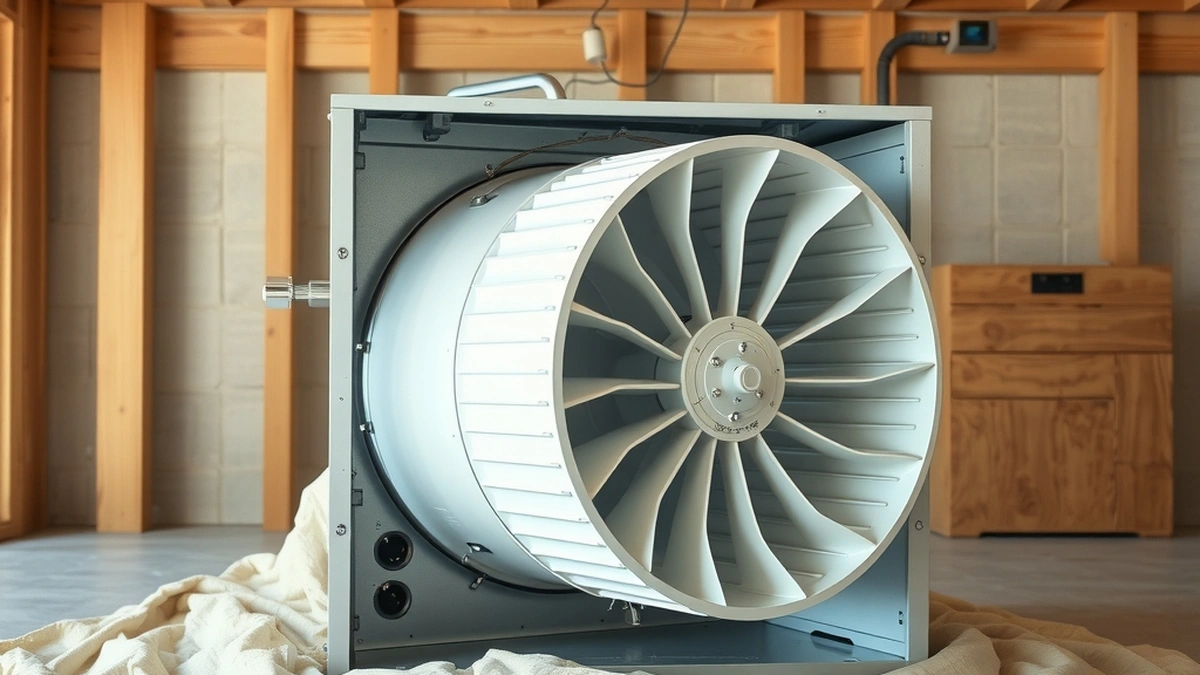
The blower moves air across the heat exchanger and through the duct system. It runs on a motor, usually a permanent split capacitor (PSC) motor or an electronically commutated motor (ECM) in newer equipment.
The blower is not the burner. A furnace can fire correctly and still deliver no heat to the house because the blower has stopped. That is why the symptom “furnace runs but the house is cold” points at the blower rather than the gas side.
The four failure modes
| Fault | Symptom | Repair | Cost |
|---|---|---|---|
| Failed capacitor | Hum, no rotation | Replace capacitor | $150 - $300 |
| Seized or worn motor | No rotation, hot housing | Replace motor | $400 - $900 |
| Failed ECM module | Motor does not respond, fault code | Replace module | $300 - $600 |
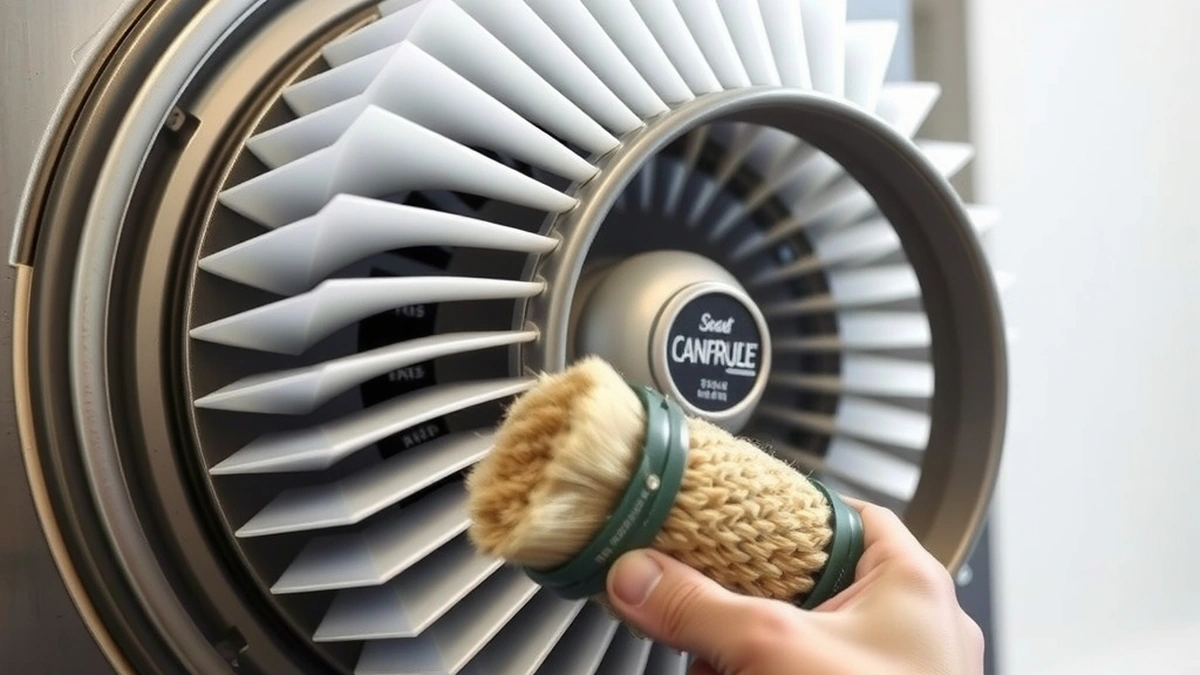
| Dirty blower wheel | Weak airflow, noisy | Pull and clean | $150 - $250 |
There is a fifth pattern that is often misdiagnosed as a motor: the motor runs, but airflow is blocked by a dirty evaporator coil or a collapsed flexible duct. The motor is working and the air is not arriving — a cleaning or duct repair at $150 to $600.
How the diagnosis works
A technician confirms the blower fault in a sequence, and each step is cheap before the next.
- Power and control signal. Is the board commanding the blower on?
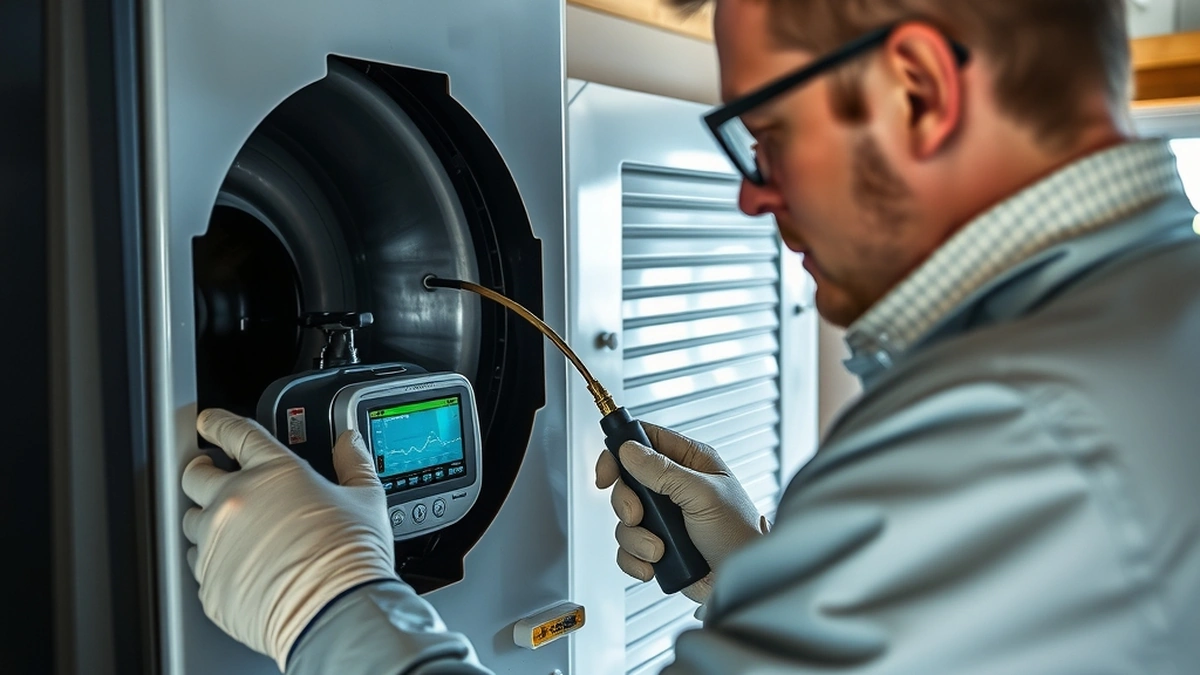
- Capacitor test. Is it within its rated microfarad range?
- Motor winding resistance and shaft free rotation.
- Module fault codes, on an ECM.
- Static pressure and airflow, to rule out a blockage.
Skipping to step five and replacing a motor is the most common expensive mistake in this category. A humming motor with a bad capacitor looks identical to a seized motor from the doorway.
Repair or replace
The decision is mostly about the age of the rest of the furnace.
| Situation | Recommendation | Cost |
|---|---|---|
| Unit under 10 years, motor failed | Replace motor | $400 - $900 |
| Unit 10 - 15 years, capacitor only | Repair | $150 - $300 |
| Unit 15 - 20 years, motor failed | Compare against replacement | $400 - $900 vs $3,000 - $8,000 |
| Unit over 20 years, motor failed | Price replacement | $3,000 - $8,000 |
| Heat exchanger also cracked | Replace | $3,000 - $8,000 |
A $750 motor on a 12-year-old furnace is a reasonable spend: the unit may have another eight to ten years. The same $750 on a 22-year-old unit with a 70 percent efficient exchanger is money spent on a machine that is due for replacement anyway.
The arithmetic that decides it is cost per remaining year, not cost against replacement. A $750 repair that buys eight years is $94 a year. A $5,000 replacement that buys twenty is $250 a year. On that basis the repair wins — until the remaining life is short enough that the replacement is cheaper per year.
What a motor replacement involves
The job is more than swapping a part.
- Disconnect and lock out the power.
- Remove the blower assembly from the cabinet.
- Separate the motor from the wheel, which is often seized on the shaft.
- Match the motor by horsepower, speed, voltage and rotation.
- Set the speed taps or program the ECM for the correct airflow.
- Reassemble, check rotation, and measure temperature rise.
The last step is the one that matters. A motor installed on the wrong speed tap moves the wrong volume of air, and the furnace will short cycle or overheat. Ask for the temperature rise to be verified after the replacement.
What the repair does not fix
A new motor does not fix a duct system that was too restrictive for the old one, and it will fail the same way. If the previous motor lasted 18 years, the duct is probably fine. If it lasted six, the duct or the filter is the cause, and the next motor will last six years too.
Ask the technician what the static pressure measured. A system above the manufacturer’s maximum is a duct problem, and the honest recommendation is to correct the duct rather than fit a third motor.
The duct side is covered in duct cleaning cost and the airflow discussion in furnace repair maintenance.
What to do when the blower stops
- Check the filter. A completely blocked filter can stop airflow without stopping the motor.
- Check the breaker and the furnace service switch.
- Listen for a hum with no air — that is a capacitor or a seized motor.
- Shut the furnace off if there is a burning smell or the motor housing is hot.
- Book a diagnostic at $100 to $250 and ask for the capacitor test first.
- Ask for temperature rise after the repair, not just a working blower.
The pricing detail is in blower motor failure cost, and the causes behind the failure are in blower motor failure prevention. For the wider no-heat picture, see no heat repair.
The short version
Most “blower motor failures” are capacitors, blockages or dirty wheels, and the motor itself is the last thing to condemn. The repair range of $150 to $900 reflects that, and a technician who quotes a motor without testing the capacitor has skipped the cheapest step.
Frequently asked questions
How do I know if my blower motor has failed?
No air from the registers while the furnace is running, a humming motor that does not turn, a burning smell, or the furnace shutting down on a limit trip soon after start-up. A diagnostic at $100 to $250 confirms which.
Is it worth replacing a blower motor?
On a furnace under 15 years old, yes. A motor at $400 to $900 against a $3,000 to $8,000 replacement is usually the better value, and the rest of the unit keeps its remaining life.
What is an ECM motor and why is it more expensive?
An electronically commutated motor uses a control module to vary speed. The module is a separate failure point, so a repair can be a $300 to $600 module rather than a $400 to $900 motor.
Can a bad capacitor stop the blower?
Yes. A failed run capacitor prevents the motor from starting, and the symptom is a hum with no rotation. Replacing it costs $150 to $300 and is far cheaper than a motor.
Why does the blower run but no air comes out?
A blocked evaporator coil, a collapsed duct, or a blower wheel packed with dust. The motor is fine; the air path is not. Cleaning or duct repair is the fix, not a motor.
How long does a blower motor last?
Fifteen to twenty years for a permanent split capacitor motor, and often less for an ECM. Dust, restricted airflow and constant low-speed operation shorten the life.
Sources
Some links are affiliate links.If you buy through them we may earn a commission at no extra cost to you. We do not accept payment for rankings. Read the full disclosure.