No heat: warning signs that appear before a failure
A flame that lights and dies, banging on start-up, a yellow burner, or soot around the cabinet: what each warning sign means and how fast to act.
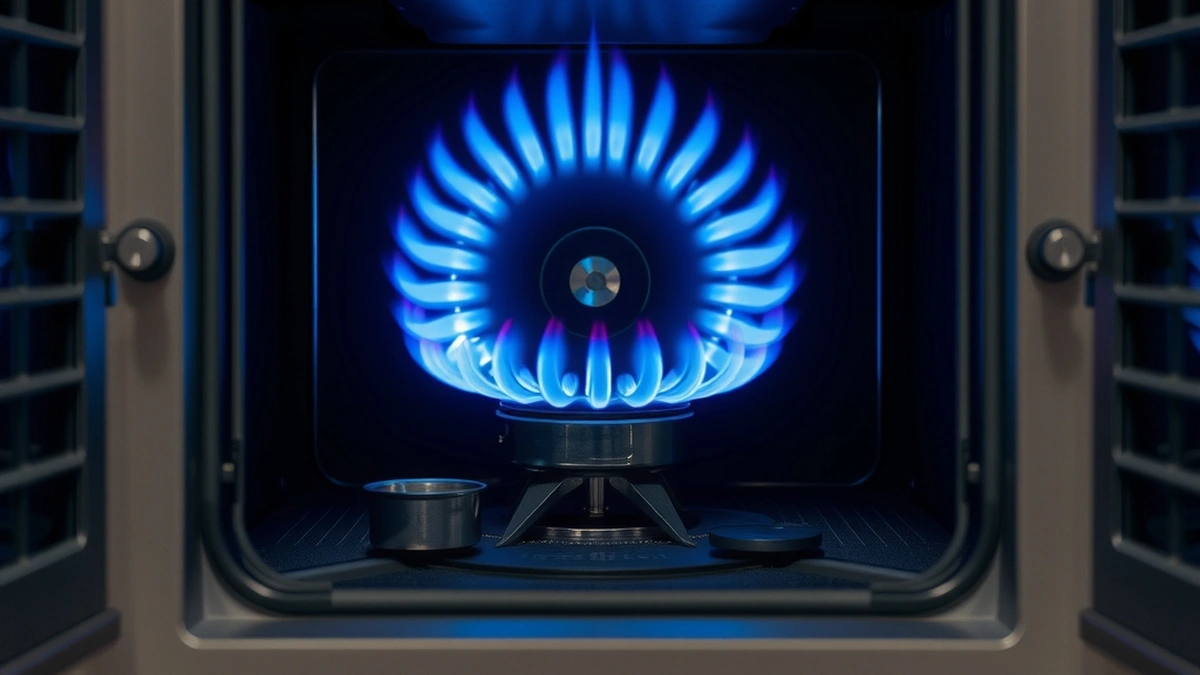
The warning signs of a furnace about to fail are a flame that lights then dies, banging on start-up, a yellow or lifting flame, soot or rust around the cabinet, frequent short cycles, and a gas bill that climbs without a weather reason. Soot or a CO alarm means stop using it.
- Flame sensor fix
- $150 - $250
- Delayed ignition fix
- $200 - $500
- Emergency call-out
- $200 - $500
- Replacement
- $3,000 - $8,000
Some links on this page are affiliate links.If you buy through them we may earn a commission at no extra cost to you. We do not accept payment for rankings. Read the full disclosure.
A furnace rarely dies without notice. The flame starts dying a few seconds after it lights, the burner thumps on start-up, the cabinet collects soot, or the gas bill climbs while the weather improves. Those are the warnings, and most of them are cheap to fix at that stage — $150 to $250 for a flame sensor, against a $200 to $500 emergency call once the house is cold.
A warning sign is a symptom that appears before the total failure: a change in sound, flame colour, cycle length, or fuel use. The point of knowing them is to book a daytime repair instead of an after-hours one.
The signs, ranked by urgency
| Sign | What it usually means | How fast to act |
|---|---|---|
| CO alarm sounds | Combustion products in the house | Leave now, call from outside |
| Soot or rust streaks at the cabinet | Heat exchanger or venting fault | Stop using, same day |
| Gas smell | Leak in the valve train or piping | Leave, call the utility |
| Yellow, lifting, or floating flame | Incomplete combustion | Within days |
| Banging or popping on start-up | Delayed ignition | Within days |
| Flame lights then dies in seconds | Flame sensor out of spec | Within weeks |
| Short cycles, house never reaches setpoint | Filter, limit switch, oversizing | Within weeks |
| Whistling or grinding | Inducer or blower bearing | Within weeks |
| Gas bill up with milder weather | Efficiency loss, dirty burners | Next service |
The top three rows are not repair scheduling. They are reasons to stop running the appliance.
The flame tells you the most
Look through the inspection window with the burner running. A healthy natural gas flame is blue with a crisp inner cone, steady, and pulled slightly into the burner ports. What you do not want to see:
- Yellow or orange throughout. Incomplete combustion. It can produce carbon monoxide and it coats the heat exchanger with soot.
- Lifting or floating off the ports. Too much air or too much pressure, and the flame is not stable.
- Rollout — flame licking out of the burner box toward the front. That is a blocked flue or a failed heat exchanger, and it is an immediate shutdown.
A propane flame reads slightly differently and is often a little more yellow at the tips. Your technician will know what the appliance should look like; the useful homeowner signal is simply “it changed.”
Banging, popping, and delayed ignition
A thump at start-up is gas igniting late, after it has accumulated in the burner compartment. The usual causes are a weak igniter, a dirty burner, or low gas pressure. It is not just noise: the small explosion stresses the heat exchanger, and heat exchangers are the part that ends a furnace’s life.
The fix is usually an igniter, a burner cleaning, or a gas pressure adjustment, landing around $200 to $500. Tolerating the bang for a season is how a $300 repair becomes a $3,000 to $8,000 replacement.
Short cycles and cold rooms
A furnace that starts and stops every few minutes is telling you something is restricting it — a clogged filter, a closed register, a failing limit switch, or a blower that is slowing down. This is the same symptom cluster as short cycling, and the causes overlap almost completely.
Cold rooms with a warm furnace usually mean distribution, not combustion: a damper closed, a duct disconnected in the attic, or a blower wheel packed with dust. If the burner runs and one room stays cold, start with the register and the duct, not the furnace.
The carbon monoxide rule
Carbon monoxide is odourless, and a cracked heat exchanger can put flue gases into the supply air. This is the one sign where the correct response is not a repair booking:
- If an alarm sounds, get everyone outside and call the fire department or gas utility from outside.
- Do not open windows to “air it out” before the responders arrive — it hides the reading they need.
- Do not run the furnace again until it has been inspected and cleared.
Test your CO alarms twice a year and replace the units every five to seven years, or per the manufacturer’s date. A $25 alarm is the cheapest safety device in the house.
What each warning costs to fix early
| Symptom | Early repair | If ignored |
|---|---|---|
| Flame sensor | $150 - $250 | No heat, after-hours call |
| Igniter | $150 - $300 | No heat at the worst time |
| Delayed ignition | $200 - $500 | Heat exchanger stress |
| Dirty burners | Part of a $100 - $250 tune-up | Soot, efficiency loss |
| Blower motor (early noise) | $450 - $900 | No airflow, limit trips |
The arithmetic favours acting early. $230 for a flame sensor during a scheduled visit against $530 for the same part at 2 am — a $350 call-out plus a $180 igniter — is the entire case for paying attention to a flame that dies.
When the signs mean replace
Three findings end the conversation: a cracked heat exchanger, soot through the cabinet, or rust streaks that indicate long-term condensation inside the unit. On a furnace past fifteen years, any of those is a replacement at $3,000 to $8,000, not a repair.
Below fifteen years, the third-of-replacement test applies. A $900 repair on a twelve-year-old unit is worth doing; on a twenty-year-old unit, $900 ÷ 3 expected years = $300 per year, which is close to the $306 per year a $5,500 replacement costs over eighteen years — and the replacement comes with a warranty.
A five-step response plan
- Write down what changed — the sound, the colour, the cycle length, and when it started.
- Check the filter and the registers before booking anything.
- Photograph the flame through the inspection window if you can do it safely.
- Book a daytime service visit and describe the symptoms rather than the part you think is broken.
- Stop using the furnace if there is soot, a gas smell, or a CO alarm.
Our guide to repair options explains what the technician will test, and what a fix costs shows the arithmetic by fault. If you would rather prevent the next one, the prevention routine is a six-step autumn checklist.
Frequently asked questions
What are the first signs a furnace is failing?
A flame that lights and dies within seconds, a burner that bangs or pops on start-up, and short cycles that never reach the thermostat setpoint. Those three usually precede a full no-heat failure.
Is a yellow furnace flame dangerous?
A steady yellow flame suggests incomplete combustion, which can produce carbon monoxide. A blue flame with a small orange tip on start-up is normal; a yellow or lifting flame needs a service call.
Why does my furnace bang when it starts?
Delayed ignition: gas builds up before it lights, and the ignition makes a thump or bang. It is hard on the heat exchanger and should be repaired rather than tolerated.
How long does a furnace last after the first warning sign?
There is no fixed answer. A flame sensor or igniter problem can be fixed and the furnace may run another decade. Soot, rust streaks, or a cracked heat exchanger are end-of-life signals.
When should I turn the furnace off completely?
If a carbon monoxide alarm sounds, if you smell gas, or if there is soot around the cabinet or a visible crack in the heat exchanger. Shut the gas valve and call for service.
Does a rising gas bill mean the furnace is failing?
Not on its own. Compare degree days first. If the bill rises while the weather is milder, the furnace is losing efficiency and needs a combustion check.
Sources
Some links are affiliate links.If you buy through them we may earn a commission at no extra cost to you. We do not accept payment for rankings. Read the full disclosure.