No heat: how to prevent a furnace failure in winter
A $100 to $250 autumn tune-up plus a filter habit prevents most no-heat calls. Here is what actually fails, what service catches, and what it cannot.
Preventing a no-heat failure means booking a $100 to $250 tune-up and safety check before the heating season, changing the filter on schedule, keeping the condensate drain flowing, and confirming the gas supply and thermostat are ready before the first cold night.
- Annual tune-up
- $100 - $250
- Filter change
- Every 1 - 3 months
- Emergency call-out
- $200 - $500
- Typical repair
- $150 - $600
Some links on this page are affiliate links.If you buy through them we may earn a commission at no extra cost to you. We do not accept payment for rankings. Read the full disclosure.
Most no-heat failures give warning. A flame sensor that is drifting out of spec, a filter that has been in since spring, an igniter that is drawing more current each year — none of them fail on a schedule, but all of them show up on a meter before they strand you in January. Prevention is mostly a $100 to $250 tune-up and a filter habit, not a maintenance contract with a long list of exclusions.
Prevention here means servicing the ignition train, airflow path, and safety chain before the heating season starts, rather than reacting to the first cold night. It is a short list of tasks with a known cost.
The autumn tune-up is the strategy
A tune-up and safety check runs $100 to $250 and should be booked in early autumn, before every company in the county is booked solid. What it should include:
| Task | Why it matters |
|---|---|
| Clean and test the flame sensor | The most common no-heat fault |
| Measure igniter current draw | Predicts igniter failure before it happens |
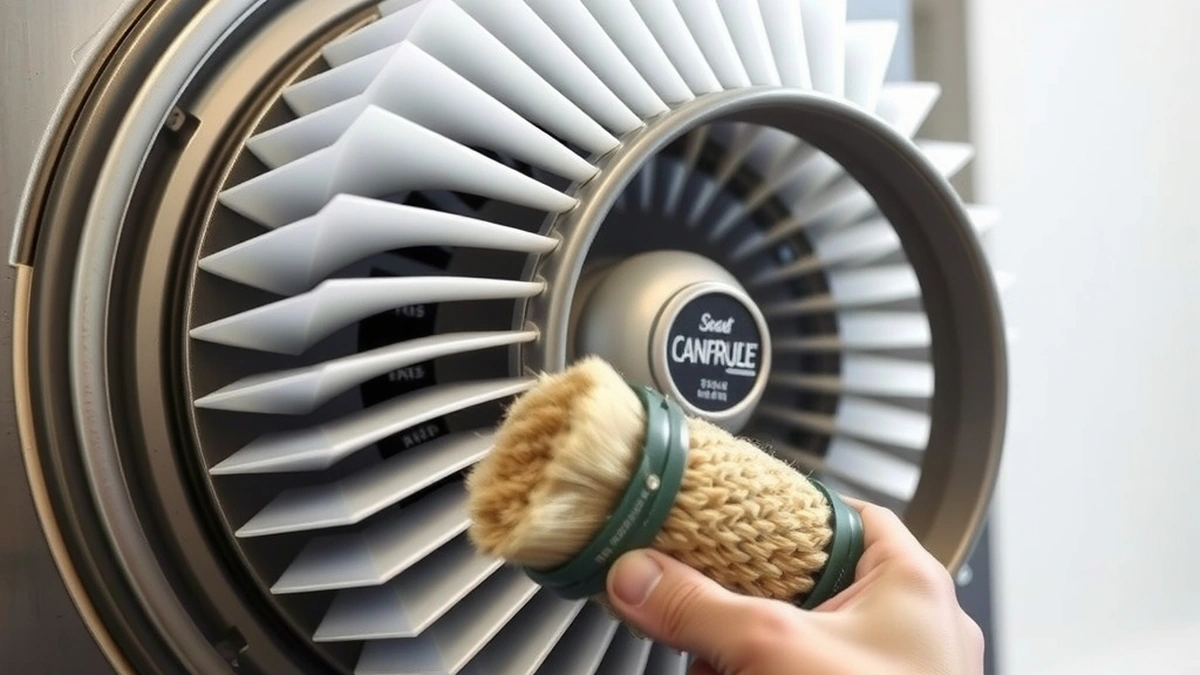
| Inspect burners and clean orifices | Rust and spider webs block gas flow |
| Check gas pressure against the data plate | Wrong pressure means poor combustion |
| Inspect the heat exchanger | Cracks are a carbon monoxide risk |
| Test the flue and pressure switch | A blocked flue shuts the furnace down |
| Measure temperature rise | Confirms airflow is inside spec |
| Check the condensate drain and float | The usual cold-weather shutdown |
| Test safety switches and limits | The chain that protects the house |
Ask for the temperature rise and the flame signal readings. A technician who writes them down has done the work; one who only writes “serviced” has not.
Filters and the high-limit switch
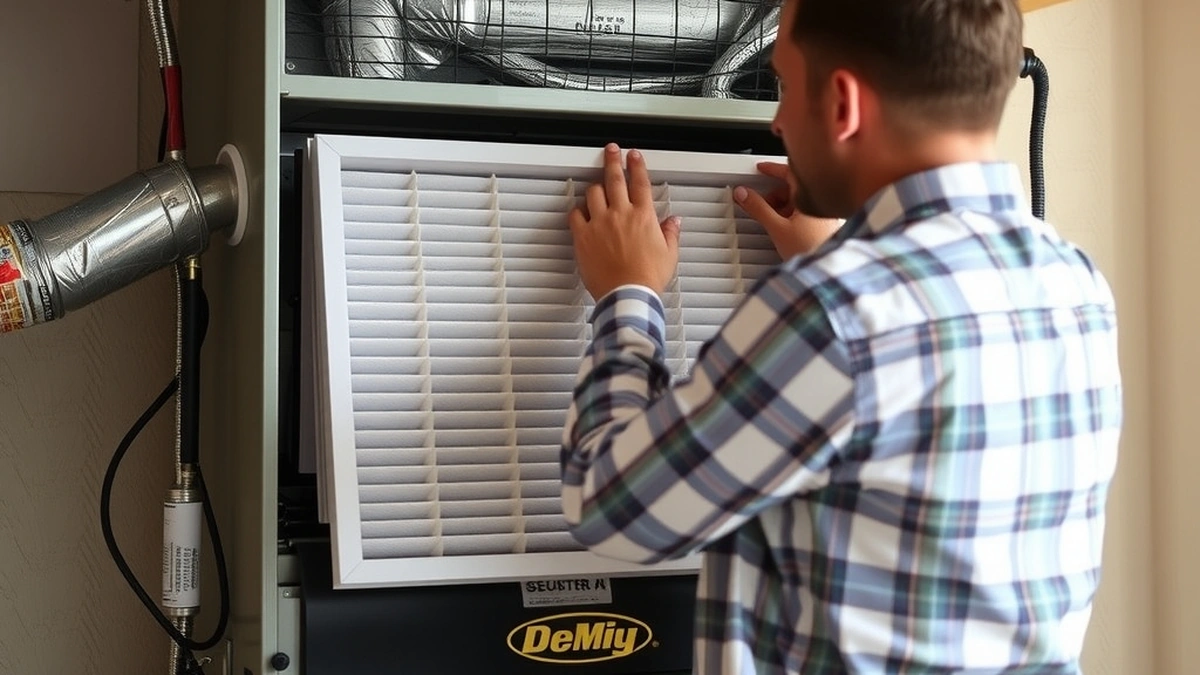
A clogged filter is the cheapest possible cause of no heat and the most common self-inflicted one. Restricted airflow lets the heat exchanger run hotter than design, the high-limit switch trips, and the burner shuts off while the blower keeps running. The furnace then cycles on the limit until the filter is changed or the switch fails.
Replace or clean the filter every one to three months. A 1-inch fiberglass filter in a dusty house with pets is a monthly item; a 4-inch media filter lasts three to six months. Write the date on the frame with a marker — it is the only reliable reminder.
If the ducts have never been cleaned and the returns are visibly dusty, $300 to $800 for duct cleaning is a reasonable one-time spend. It is not annual maintenance.
The condensate line, which freezes
High-efficiency furnaces produce condensate and drain it through a small line, often to a floor drain or outdoors. In a hard freeze, an outdoor run can ice shut, the drain pan fills, the float switch trips, and the furnace locks out. The house goes cold on the coldest night of the year, which is exactly when it is hardest to get a technician.
Prevention is physical: route the drain to an indoor drain where possible, insulate any run through an unheated space, and confirm the line has continuous fall with no sag. Two minutes with a torch and a level in autumn beats a $200 to $500 emergency call in January.
Gas, propane, and parts that sit idle
A furnace that idles from April to October accumulates its own problems. Dust settles on burners, spiders build in orifices, and a propane tank that was “fine in spring” is empty in November.
- Propane: check the tank level in early autumn and set a delivery before the season, not during it. Winter deliveries are slower and sometimes surcharged.
- Gas: confirm the shutoff valve at the furnace is open, and that no one closed it during summer service.
- Burners: a tune-up cleans them. Do not open the burner compartment yourself on a condensing furnace.
- Flue: check the termination outdoors for nests, snow level, and vegetation growth over summer.
A no-heat call that turns out to be an empty propane tank is an expensive way to learn the tank was low.
Thermostat and controls
The thermostat is the cheapest thing to check and the most often blamed. Before the season:
- Replace the batteries, even if the display looks fine.
- Confirm heat mode and a setpoint above room temperature.
- Check the schedule has not been left on a summer program.
- Confirm the fan switch is on auto, not off.
- If it is a smart thermostat, confirm it is still connected and the firmware is current.
A thermostat that loses power mid-winter is not a furnace fault, but it produces the same symptom.
What a tune-up cannot prevent
Honesty matters here. A tune-up catches wear items and safety faults; it does not predict every failure. Control boards, blower motors, inducer assemblies, and gas valves can fail without warning, and those are the $400 to $900 repairs that sit above the typical $150 to $600 band.
What prevention does buy is the cheap half of the failure distribution. The flame sensor, igniter, filter, condensate, and pressure switch faults that make up most no-heat calls are exactly the ones a service visit catches first.
Run the arithmetic on one avoided failure: a $350 after-hours call-out plus a $180 igniter is $530. A daytime igniter replacement is $300. The $230 difference is roughly one to two years of tune-ups at $100 to $250, and that ignores the cold house and the wait.
A six-step routine before the first frost
- Book the tune-up in September, and ask for flame signal and temperature rise on the invoice.
- Change the filter and write the date on it.
- Flush the condensate drain and check the run for sags or outdoor exposure.
- Test the heat on a mild day, so a failure surfaces before you need it.
- Check the propane level or confirm the gas valve is open.
- Test carbon monoxide alarms and replace the batteries.
If something does fail, the repair options guide covers the triage order, and what a fix costs breaks down the arithmetic by fault. The warning signs guide lists the symptoms that mean call now rather than wait.
Frequently asked questions
How often does a furnace need a tune-up?
Once a year, ideally in early autumn before the first cold snap. A tune-up and safety check costs $100 to $250 and covers the ignition system, burners, flue, and heat exchanger.
Can a dirty filter cause no heat?
Yes. Restricted airflow overheats the heat exchanger, the high-limit switch trips, and the burner shuts down. Changing the filter is the cheapest no-heat fix there is.
Why does my high-efficiency furnace quit in very cold weather?
Usually a frozen condensate line. The drain exits outdoors and a blocked or frozen line trips the float switch. Insulating or re-routing the line prevents it.
Should I get a tune-up if the furnace is working fine?
Yes. A tune-up is a safety inspection as much as a performance service, and it is the only routine check of the heat exchanger for cracks.
Does a tune-up prevent every breakdown?
No. It catches wear items and safety faults, but control boards, blower motors, and gas valves can fail without warning. It reduces the odds; it does not eliminate them.
How much does prevention save?
One avoided after-hours call is worth $200 to $500. Against a $100 to $250 tune-up, preventing a single mid-winter failure pays for one to three years of service.
Sources
Some links are affiliate links.If you buy through them we may earn a commission at no extra cost to you. We do not accept payment for rankings. Read the full disclosure.