Ductless mini-split vs gas furnace: which fits the house
A mini-split heats and cools for $3,000 to $5,500 per zone; a gas furnace heats the whole house for $3,000 to $8,000. The decision turns on ducts and fuel.
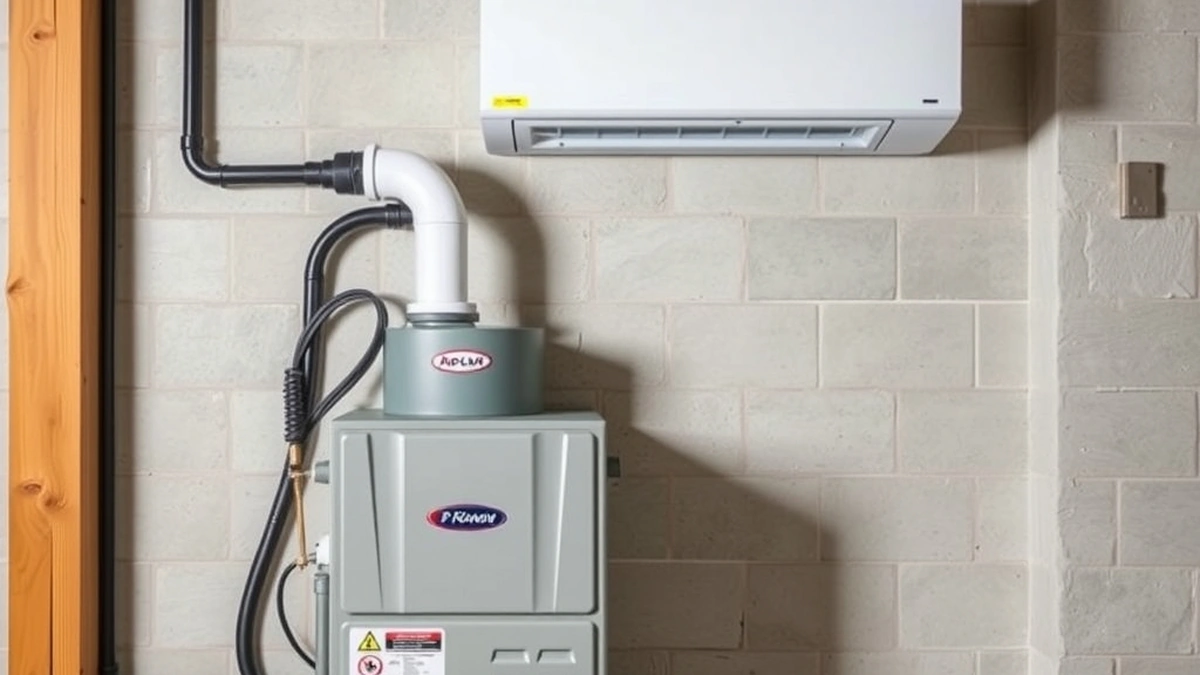
A ductless mini-split costs $3,000 to $5,500 for one zone and both heats and cools; a gas furnace costs $3,000 to $8,000 and heats the whole house through ducts. Choose ductless where there are no ducts and gas is expensive; choose the furnace where ducts exist and gas is cheap.
- Mini-split, one zone
- $3,000 - $5,500
- Gas furnace installed
- $3,000 - $8,000
- Cooling included
- Mini-split only
- Furnace tune-up
- $100 - $250
Some links on this page are affiliate links.If you buy through them we may earn a commission at no extra cost to you. We do not accept payment for rankings. Read the full disclosure.
A ductless mini-split costs $3,000 to $5,500 for one zone and both heats and cools. A gas furnace costs $3,000 to $8,000 installed, heats the whole house through ducts, and does not cool anything at all. The decision is less about which machine is better and more about three facts on your property: whether ducts exist, what gas and electricity cost, and how cold the design day gets.
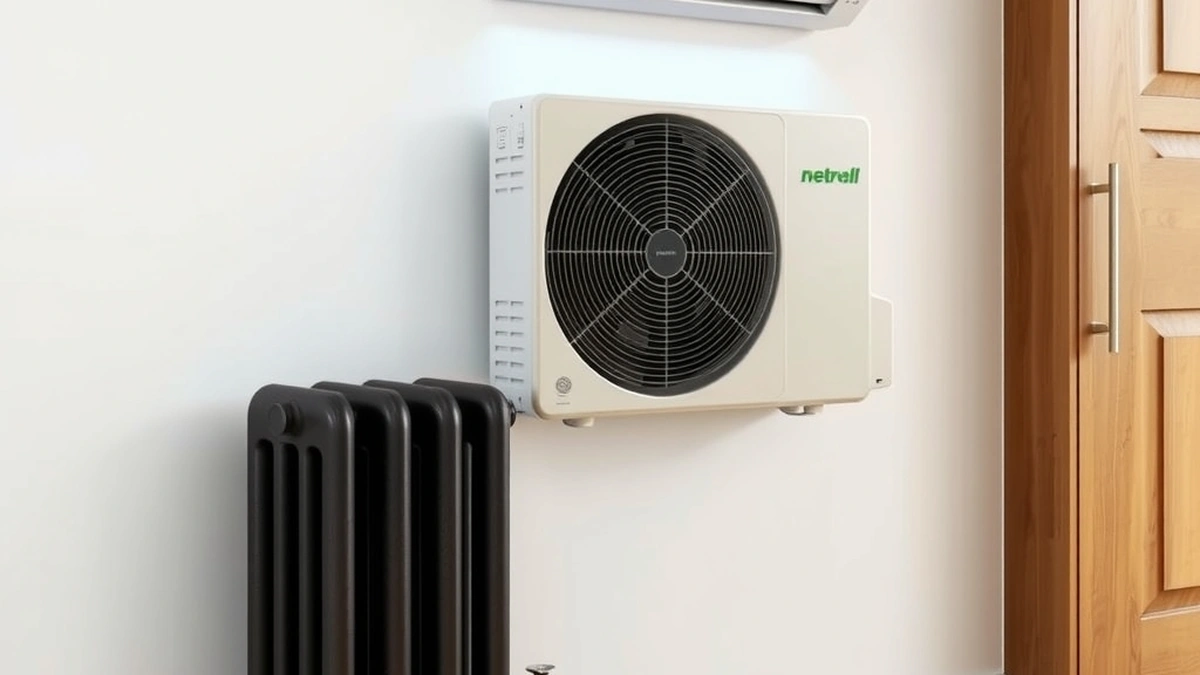
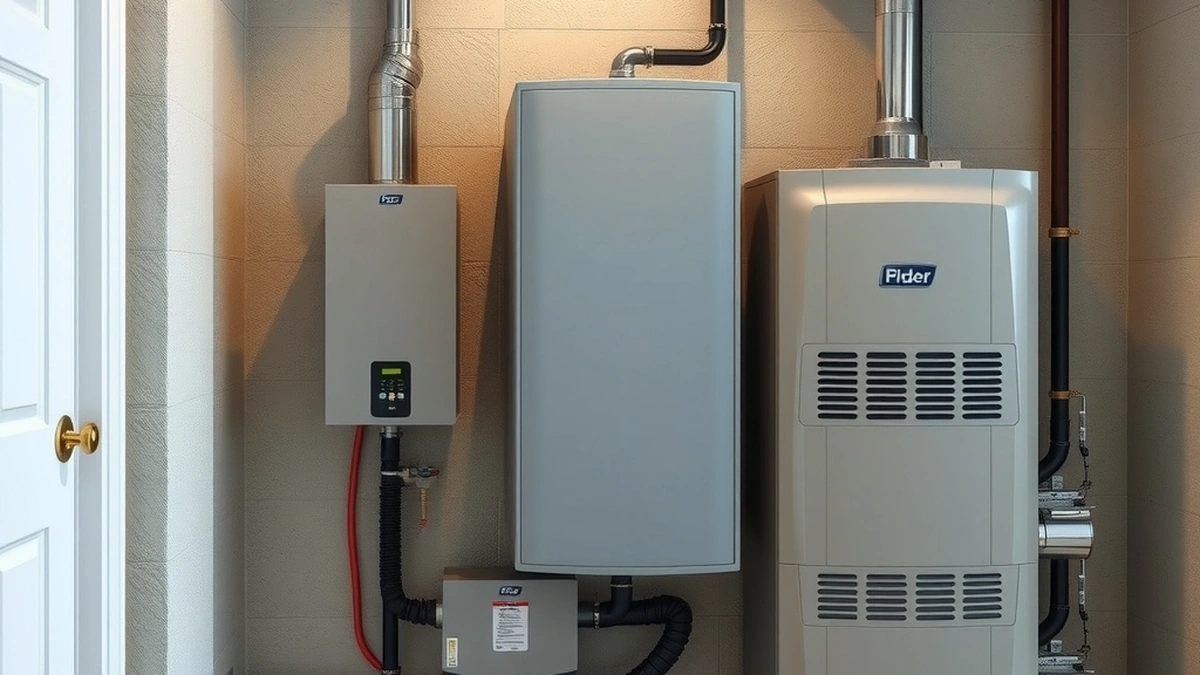
A ductless mini-split is an electric heat pump that moves heat between outdoor air and one or more indoor heads through refrigerant lines. A gas furnace burns natural gas or propane to heat air and pushes it through ductwork. One moves heat; the other makes it.
Two different ways to heat a house
The heat pump does not create heat. It absorbs it from outside air — even at 5 degrees Fahrenheit there is heat to absorb — and releases it indoors, which is why its efficiency is expressed as a coefficient of performance rather than a percentage. A furnace converts fuel to heat at 80 to 96 percent efficiency and loses the rest up the flue.
That difference drives everything else. A heat pump’s running cost depends on the ratio of electricity to gas prices. A furnace’s running cost depends almost entirely on the gas price and the efficiency rating.
Installed cost, side by side
| Ductless mini-split | Gas furnace | |
|---|---|---|
| One zone / whole house | $3,000 - $5,500 | $3,000 - $8,000 |
| Three zones | $7,500 - $12,000 | Not applicable |
| Ducted heat pump, for reference | $5,000 - $12,000 | n/a |
| Cooling | Included | Extra: AC or heat pump |
| Ducts required | No | Yes |
| Fuel | Electricity | Gas or propane |
| Life expectancy | 15 - 20 years | 15 - 20 years |
The furnace number assumes ducts already exist and are usable. If they do not, add the cost of building them, which is why a house without ducts almost never chooses forced air. Conversely, a house with good ducts gets a cheaper whole-house result from a furnace or a ducted heat pump than from five wall heads.
What it costs to run
Work it through with two example prices, both labelled as examples because your utility bill is the real input: $1.20 per therm for gas and $0.16 per kWh for electricity.
One therm holds 100,000 BTU. An 80 percent furnace delivers 80,000 BTU, so 100,000 BTU of delivered heat needs 1.25 therms:
1.25 × $1.20 = $1.50 per 100,000 BTU delivered.
A heat pump delivers 100,000 BTU as 29.3 kWh of heat, divided by its coefficient of performance:
- At COP 3.5: 29.3 ÷ 3.5 = 8.4 kWh × $0.16 = $1.34
- At COP 3.0: 29.3 ÷ 3.0 = 9.8 kWh × $0.16 = $1.56
- At COP 2.0: 29.3 ÷ 2.0 = 14.7 kWh × $0.16 = $2.35
The crossover is a COP of about 3.1. A modern mini-split clears that in mild weather and loses it in a hard freeze, which is the honest answer to “which is cheaper to run” — it changes with the outdoor temperature. In a mild-climate house the heat pump usually wins on the annual total. In a cold-climate house with cheap gas, the furnace usually wins.
Comfort, rooms, and ducts
Ducts leak. In a vented attic or crawlspace, a commonly cited estimate is that 20 to 30 percent of the conditioned air never reaches the room. A mini-split has no ducts to leak, so every BTU it makes arrives where the head is mounted.
The trade is coverage. A furnace heats every room with a register, including the bathroom and the hallway. A mini-split heats the rooms with heads. Doors matter: a head in the hallway does not heat a bedroom with the door closed, which is why multi-zone systems exist and why a three-zone install runs $7,500 to $12,000.
Noise sits in the same trade. A furnace is heard through the return grille; a mini-split head is nearly silent on low fan but visible on the wall, and some owners dislike that more than the noise.
Cold weather and the dual-fuel option
A standard mini-split loses capacity as outdoor temperature falls, and a cold-climate model holds more of it at 5 degrees Fahrenheit. Ask for the rated capacity at 5 F, not an assurance that it “works in cold.”
Where winters are severe, the practical answer is often dual fuel: a heat pump or mini-split carries the mild months, and the furnace takes over below a set outdoor temperature. A changeover around 30 to 35 F captures most of the heat pump’s efficiency advantage while removing the risk of a cold snap overwhelming it.
Maintenance, repairs, and life
Both systems need one annual visit. A furnace tune-up and safety check runs $100 to $250; a mini-split service runs $150 to $300. Common repairs on either land at $150 to $600, and after-hours call-outs run $200 to $500.
A furnace also needs its ducts cleaned every few years, at $300 to $800 — a cost a ductless system never has. Against that, a mini-split has more electronics and a sealed refrigerant circuit, so a board or compressor fault costs more than a furnace’s usual igniter or flame sensor. Our furnace repair cost guide covers the furnace side in detail.
Life expectancy is similar at 15 to 20 years with service, though a mini-split runs year-round and accumulates compressor hours faster than a furnace that idles all summer.
Five steps to decide
- Check whether the ducts are usable. Have them inspected; leaking or undersized ducts change the whole comparison. If they are sound, price a furnace and a ducted heat pump first.
- Get the delivered fuel prices from your own bills, in dollars per therm and dollars per kWh, and run the arithmetic above.
- Look up your design temperature and ask each installer for rated capacity at 5 F, then at your design temperature.
- Count the rooms you actually want controlled, and price that head count before comparing totals.
- Price the backup plan. A dual-fuel setup has two appliances to maintain but no single point of failure in a cold snap.
Our mini-split cost breakdown covers what each zone adds, and the maintenance guide explains the annual routine either system needs. If the furnace is the direction you are leaning, the heat pump comparison covers the ducted version of the same argument.
Frequently asked questions
Is a mini-split cheaper to run than a gas furnace?
It depends on the price ratio. At $0.16 per kWh and $1.20 per therm, a heat pump needs a coefficient of performance above about 3.1 to beat an 80 percent furnace, which is easy in mild weather and harder in a cold snap.
Can a mini-split replace a furnace entirely?
In a well-insulated house in a mild climate, yes, with cold-climate units sized for the design temperature. In a cold climate, most owners keep a furnace or boiler as backup and run a dual-fuel setup.
Do I need ducts for a mini-split?
No, that is the point. Each indoor head connects to the outdoor unit through a small line set, so a house with no ductwork can be heated and cooled without opening walls.
Which lasts longer, a furnace or a mini-split?
Both run 15 to 20 years with annual service. A furnace has fewer electronic parts; a mini-split runs year-round, so its compressor accumulates hours faster.
Does a gas furnace cool the house?
No. A furnace heats only, so a house with a furnace needs a separate air conditioner or a heat pump added, which changes the cost comparison considerably.
What does a furnace repair cost compared with a mini-split repair?
Both typically land between $150 and $600 for common faults, with after-hours call-outs at $200 to $500. Sealed-system work on a mini-split can run higher.
Sources
Some links are affiliate links.If you buy through them we may earn a commission at no extra cost to you. We do not accept payment for rankings. Read the full disclosure.