Boiler vs ductless mini-split
Hydronic heat at $4,000 to $8,000 against a ductless heat pump at $3,000 to $5,500 a zone. Comfort, cooling and which retrofit makes financial sense.
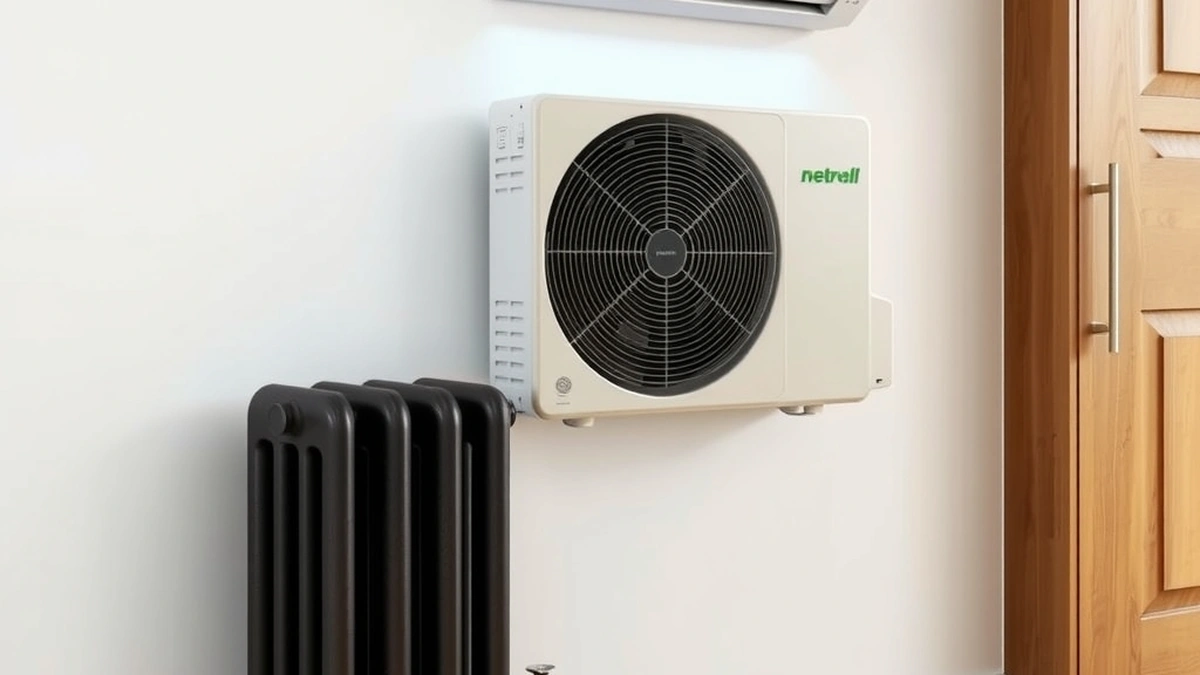
A boiler costs $4,000 to $8,000 and heats water for radiators or radiant floors. A ductless mini-split costs $3,000 to $5,500 for the first zone, heats and cools, and needs no pipes or ducts. A boiler suits an existing hydronic house; a mini-split suits one without distribution.
- Boiler
- $4,000 - $8,000
- Mini-split per zone
- $3,000 - $5,500
- Boiler service
- $150 - $300
- Mini-split service
- $150 - $300
Some links on this page are affiliate links.If you buy through them we may earn a commission at no extra cost to you. We do not accept payment for rankings. Read the full disclosure.
A boiler costs $4,000 to $8,000 and heats water for radiators or radiant floors. A ductless mini-split costs $3,000 to $5,500 for the first zone, heats and cools, and needs neither pipes nor ducts. A boiler is the right answer in a house that already has hydronic distribution; a mini-split is the right answer where there is none, or where cooling is the missing piece.
The two systems
A boiler heats water and circulates it to radiators, baseboard convectors or floor tubing. It is a central system with one heat source and distribution throughout the house.
A ductless mini-split is a split heat pump with an outdoor condenser and one or more indoor heads. Each head serves a room and delivers both heating and cooling.
One distributes heat through water. The other delivers conditioned air directly, room by room.
Cost compared
| Item | Boiler | Mini-split |
|---|---|---|
| Single zone | N/A | $3,000 - $5,500 |
| Whole house | $4,000 - $8,000 | $9,000 - $18,000 |
| Distribution | Pipes and emitters, existing | None |
| Cooling | Separate system | Included |
| Venting | $300 - $1,500 | $0 |
| Permit | $50 - $500 | $50 - $500 |
The whole-house comparison is stark. Four zones at $5,000 each is $20,000 against a boiler replacement at $6,500 plus a separate cooling solution.
The mini-split is cheaper only when the comparison is a single zone, or when there is no hydronic distribution to preserve.
Where each one wins
Boiler:
- Existing radiators or radiant floors, which are expensive to replace with anything else.
- Whole-house heat at the lowest installed cost in a hydronic house.
- Quiet, draught-free heat, with no air movement.
- Long service life, at 25 to 35 years for cast iron.
- High output in a cold climate without multiple outdoor units.
Mini-split:
- No hydronic distribution, such as a house with electric baseboard or no central heat at all.
- Cooling is needed, which a boiler cannot provide.
- Zoned comfort in a partly occupied house.
- No freeze risk in the distribution.
- Additions and converted spaces that the existing system cannot reach.
- Quiet operation at low fan speed.
Running cost, with arithmetic
Assume a house needing 60 million Btu of delivered heat.
Gas boiler at 93 percent, $1.20 per therm:
- 60 ÷ 0.93 = 64.5 million Btu
- 645 therms × $1.20 = $774
Mini-split at an average COP of 2.5, $0.16 per kWh:
- 60 ÷ 2.5 = 24 million Btu
- 7,030 kWh × $0.16 = $1,125
The boiler is cheaper by $351 on those assumptions. At a COP of 3.0 the mini-split costs $938; at $0.12 per kWh it costs $844 and beats the boiler.
The mini-split’s case improves further when the alternative includes buying a separate air conditioner, and when zoning reduces the conditioned area.
The cooling question
This is usually what decides the comparison. A boiler heats only. A house with a boiler and no air conditioning that wants cooling needs either a ducted system, ductless heads, or window units.
If cooling is on the list, the mini-split does two jobs for one installation, and comparing it against a boiler alone overstates its cost.
If cooling is not wanted, that advantage disappears entirely, and the boiler’s lower installed cost and longer life carry more weight.
Hybrid approaches
Two hybrid configurations are common and often sensible.
Keep the boiler, add heads for cooling. The boiler handles winter heating through the existing radiators; one or two mini-split heads handle summer cooling and shoulder-season heating. This preserves a working hydronic system and solves the cooling problem at $6,000 to $12,000 for two or three zones.
Replace the boiler with an air-to-water heat pump. This feeds the existing radiators from a heat pump rather than a boiler. It requires emitters large enough to work at lower water temperature, and it costs more than a boiler replacement, but it removes the gas connection and provides efficient heating.
The second option is the one to research if the goal is to stop burning fuel rather than to add cooling.
Maintenance and repair
| Task | Boiler | Mini-split |
|---|---|---|
| Annual service | $150 - $300 | $150 - $300 per system |
| Typical repair | $200 - $700 | $200 - $800 |
| Common failures | Circulator, aquastat, expansion tank | Compressor, charge, fan motor |
| Water treatment | Required | Not applicable |
| Outdoor care | None | Clear snow and debris |
Both need annual attention. The boiler needs water chemistry and a pressure check; the mini-split needs a clear outdoor unit and a filter rinse monthly.
Costs on the boiler side are in boiler cost, and the mini-split side in ductless mini-split cost.
What to ask before deciding
- What distribution exists, and what condition are the radiators or tubing in?
- Is cooling needed, now or within a few years?
- How many rooms need independent control?
- What are the local fuel and electricity prices?
- Is there space for outdoor units and for the heads?
- What is the total cost for the whole house, not per zone?
Question two is the deciding one in most houses. If cooling is on the list, the mini-split is doing two jobs and the comparison changes.
The related options are heat pump vs boiler and heat pump vs ductless mini-split.
A boiler is the cheaper way to heat a house that already has radiators, and it lasts longer. A mini-split is the better answer where there is no hydronic distribution, where cooling is wanted, or where zoning matters.
In many hydronic houses the best answer is both: keep the boiler, add a head or two for summer. One practical note on the hybrid route: if you keep the boiler and add heads, agree in advance which system heats in the shoulder months. Two systems with independent thermostats can end up fighting each other, with the boiler running because its thermostat is cold while a head is already heating the same room. A simple rule — heads above 45°F outdoor, boiler below — avoids the overlap and the wasted fuel.
Frequently asked questions
Is a mini-split cheaper than a new boiler?
For one zone, often yes. For a whole house with existing radiators, a boiler replacement at $4,000 to $8,000 is usually cheaper than a multi-zone mini-split system at $9,000 to $18,000.
Can a mini-split replace a boiler completely?
It can in a well-insulated house with a mild climate. In a hydronic house with many rooms, the number of heads needed usually makes it more expensive than replacing the boiler.
Which is more comfortable?
Radiant and radiator heat is often described as more even and has no airflow. A mini-split provides faster response and cooling. The preference is personal; neither is objectively superior.
Do mini-splits work with existing radiators?
Not directly. A mini-split heats air through a head, not water through pipes. An air-to-water heat pump is the product that feeds radiators, and it is a different installation.
Which adds more value to a house?
A working heat source of either type, documented and under warranty. In a cooling-heavy climate, the mini-split's air conditioning is a strong selling point.
What if I want both?
It is common to keep the boiler for heating and add a mini-split for cooling and shoulder-season heating. That combination avoids replacing a working hydronic system.
Sources
Some links are affiliate links.If you buy through them we may earn a commission at no extra cost to you. We do not accept payment for rankings. Read the full disclosure.