Ductless mini-split cost: what a system runs installed
A single-zone ductless mini-split runs $3,000 to $5,500 installed, and three zones $7,500 to $12,000. Here is the line-by-line arithmetic behind both.
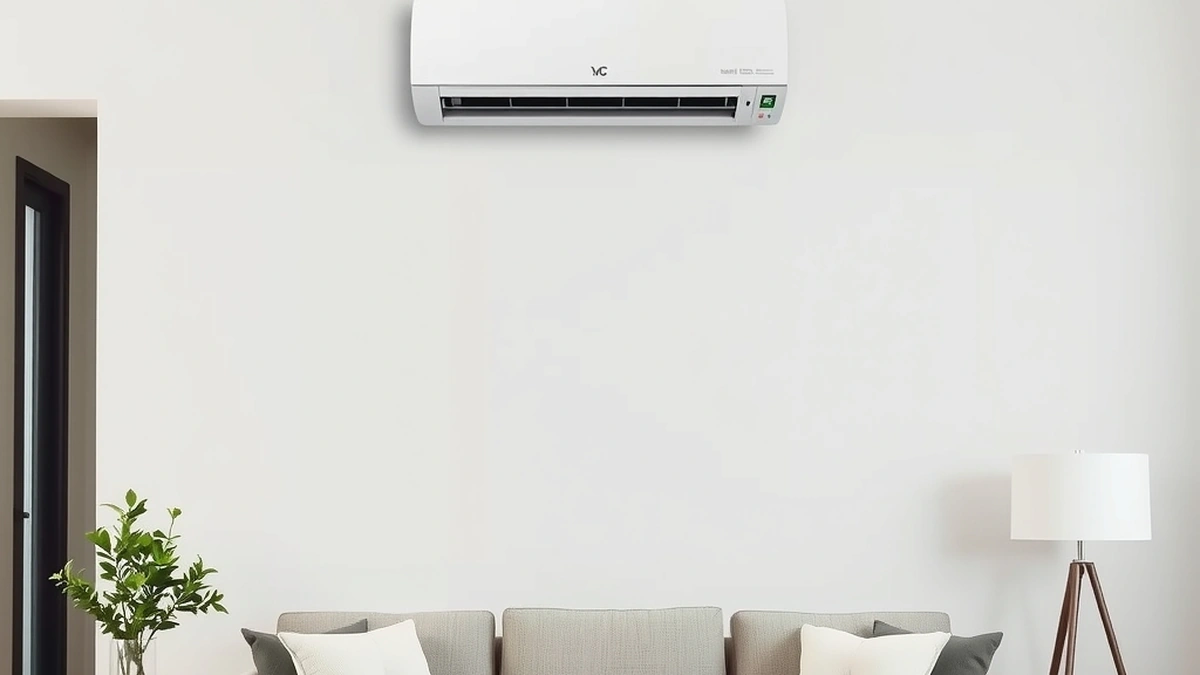
A single-zone ductless mini-split costs about $3,000 to $5,500 installed in the US, and a three-zone system runs $7,500 to $12,000. Line sets, a new 240-volt circuit, and one mounting point per head move the number more than brand does.
- One zone
- $3,000 - $5,500
- Three zones
- $7,500 - $12,000
- Each extra head
- $1,300 - $2,600
- Annual service
- $150 - $300
Some links on this page are affiliate links.If you buy through them we may earn a commission at no extra cost to you. We do not accept payment for rankings. Read the full disclosure.
A single-zone ductless mini-split costs about $3,000 to $5,500 installed in the US. A three-zone system for one floor runs $7,500 to $12,000, which puts it at the top of the standard heat pump band of $5,000 to $12,000. The number that decides where you land is not the badge on the outdoor unit. It is the head count and the distance each head sits from the condenser.
A ductless mini-split is a heat pump that moves heat between outdoor air and one or more indoor heads through refrigerant lines instead of ductwork. That definition is also the pricing story: no ducts to build, but a line set, a drain, a mounting point, and usually a new electrical circuit for every head.
What a single zone actually contains
One head, one outdoor unit, one line set. The equipment is the biggest single line, but it is not half the job in every house.
| Line item | Typical estimate | Notes |
|---|---|---|
| Outdoor unit and one head | $1,400 - $2,600 | 9,000 to 18,000 BTU |
| Line set and insulation | $150 - $450 | 25 feet included on most units |
| Electrical circuit and disconnect | $250 - $700 | 240-volt, dedicated breaker |
| Wall bracket, pad, drain | $80 - $250 | Condensate pump adds $150 - $300 |
| Permit | $100 - $350 | Varies by jurisdiction |
| Labour and commissioning | $600 - $1,200 | Vacuum, leak test, charge check |
Add the low ends: $1,400 + $150 + $250 + $80 + $100 + $600 = $2,580. Add the high ends: $2,600 + $450 + $700 + $250 + $350 + $1,200 = $5,550. That is where the $3,000 to $5,500 band comes from, and why a garage install with the panel ten feet away prices differently from a second-floor bedroom with a 40-foot run.
The second and third head
Each extra head adds an indoor unit, another line set, another drain, and another day of labour. Budget $1,300 to $2,600 per head and the arithmetic holds together.
A 1,900-square-foot house with one head in the living room, one in the main bedroom, and one in a far bedroom:
- Multi-zone outdoor unit, 24,000 to 30,000 BTU: $2,800
- Three indoor heads at $1,000 each: $3,000
- Three line sets: $1,200
- One 240-volt circuit and disconnect: $650
- Pad, brackets, condensate routing: $300
- Permit: $250
- Labour and commissioning: $1,900
Total: $10,100. Four heads on the same plan lands near $11,500, and five heads push past the $12,000 ceiling of the standard heat pump band, at which point a second outdoor unit or a ducted system usually prices better per room.
Cost by configuration
| Configuration | Installed estimate | Best fit |
|---|---|---|
| One zone | $3,000 - $5,500 | Studio, addition, garage, one problem room |
| Two zones | $5,000 - $8,000 | Small house, one floor |
| Three zones | $7,500 - $12,000 | Whole floor of a two-storey house |
| Ducted heat pump, for comparison | $5,000 - $12,000 | House with usable ducts |
The ducted row comes from our heat pump cost guide. It overlaps the three-zone mini-split band on purpose: once you are conditioning most of a house, the ductless premium is mostly the extra heads and the extra labour, not the technology.
What pushes a quote upward
- Panel capacity. A house with a full 100-amp panel may need a subpanel or service upgrade, adding $400 to $1,200.
- Long line runs. Most units include 25 feet of line set. Extra length runs $40 to $80 per foot installed, including the charge adjustment.
- Cold-climate equipment. A model rated for full capacity at 5 degrees Fahrenheit carries a premium of roughly $500 to $1,200 over a standard unit.
- Difficult penetrations. Brick, plaster, and second-floor walls cost more in labour than vinyl siding and drywall.
- Condensate routing. A gravity drain is cheap; a condensate pump where gravity will not work adds $150 to $300.
The annual side of the ledger
Installation is one payment. Service is forever, and it is small next to the equipment:
- Professional service, once a year: $150 to $300
- A repair call, most faults: $150 to $600
- After-hours emergency call-out: $200 to $500
- Duct cleaning, which a ductless system never needs: $300 to $800
That last line is the quiet advantage. A ducted system in a dusty house is told to schedule duct cleaning every few years. A mini-split has no ducts, so the maintenance budget goes into filter cleaning you can do yourself and one service visit a year. Our maintenance guide covers what that visit should include.
Mini-split against the alternatives
| Ductless mini-split | Central heat pump | Window units | |
|---|---|---|---|
| Installed cost | $3,000 - $12,000 | $5,000 - $12,000 | $400 - $1,200 |
| Rooms controlled | Per head | Whole house | Per unit |
| Heating at 5 F | With cold-climate model | With cold-climate model | No |
| Ducts required | No | Yes | No |
| Noise inside | Low | Low, through registers | High |
| Life expectancy | 15 - 20 years | 12 - 18 years | 5 - 8 years |
Window units win on purchase price and lose on everything else: security, noise, heating, and the fact that you store them half the year. A central heat pump wins on a house that already has ducts in good condition. The mini-split wins where ducts do not exist and adding them would mean opening walls.
Five steps before you sign
- Ask for a room-by-room load calculation. A quote built on square footage alone will oversize the system, and an oversized mini-split short cycles and dehumidifies badly.
- Confirm the electrical plan in writing. Dedicated circuit, breaker size, disconnect location, and who pulls the permit.
- Walk the line set route. Agree on where the pipes run outside, where the drain exits, and how the wall is made good afterwards.
- Check the cold-weather rating, not just the efficiency number. Look for rated heating capacity at 5 degrees Fahrenheit, not only the HSPF2 figure.
- Read the warranty labour terms. Most manufacturers require a licensed installer and proof of commissioning; a cash job can void coverage.
If the quotes you have differ by more than about $2,000 on the same house, the difference is almost always electrical scope or line set length. Our guide to what installation involves explains what a crew should be doing on each day, and the comparison with a gas furnace covers whether ductless is the right system for your climate at all.
Frequently asked questions
How much does a ductless mini-split cost installed?
About $3,000 to $5,500 for a single zone and $7,500 to $12,000 for three zones. Equipment is roughly half the bill; line sets, electrical, and labour make up the rest.
Is a mini-split cheaper than central air?
For one or two rooms, usually yes, because there are no ducts to build. For a whole house with existing ductwork, a central heat pump is often cheaper per square foot of conditioned space.
How many heads do I need?
One per room you actually want to control, up to about four on a single outdoor unit. Beyond that, a second outdoor unit or a ducted system usually prices better.
Does a mini-split add resale value?
A permitted, warrantied installation is a selling point in homes without ducts. It rarely returns its full cost at appraisal, so treat it as comfort spending with a reliability benefit.
How long does a mini-split last?
Fifteen to twenty years with annual service in most US climates. Coastal salt air and heavy runtime shorten that; a quality installation extends it more than any brand choice.
Why do quotes for the same house vary by thousands?
Electrical scope, line set length, condensate routing, and whether the quote includes a load calculation. Ask for those four items itemised and the spread usually shrinks.
Sources
Some links are affiliate links.If you buy through them we may earn a commission at no extra cost to you. We do not accept payment for rankings. Read the full disclosure.