Ductless mini-split maintenance: the routine that works
Filter cleaning every two to four weeks plus one $150 to $300 service visit a year keeps a mini-split at rated output. Here is the full schedule.
Mini-split maintenance is filter cleaning every two to four weeks, a monthly drain flush in humid weather, and one professional service a year at $150 to $300. The annual visit covers coil cleaning, drain clearing, charge verification, and an electrical check.
- Filter cleaning
- Every 2 - 4 weeks
- Annual service
- $150 - $300
- Drain flush
- Monthly in summer
- Neglect repair
- $150 - $600
Some links on this page are affiliate links.If you buy through them we may earn a commission at no extra cost to you. We do not accept payment for rankings. Read the full disclosure.
Ductless mini-split maintenance comes down to two habits: clean the filters every two to four weeks, and pay for one professional service a year at $150 to $300. Everything else — the drain flush, the outdoor coil rinse, the seasonal check — hangs off those two. A system treated this way reaches its fifteen-to-twenty-year service life; one that is never touched usually needs a $150 to $600 repair long before that.
Routine maintenance is the scheduled cleaning and inspection that keeps airflow, drainage, and refrigerant charge inside the manufacturer’s specification. It is mostly labour, which is why the parts cost almost nothing and the neglect cost is high.
The filter is most of the job
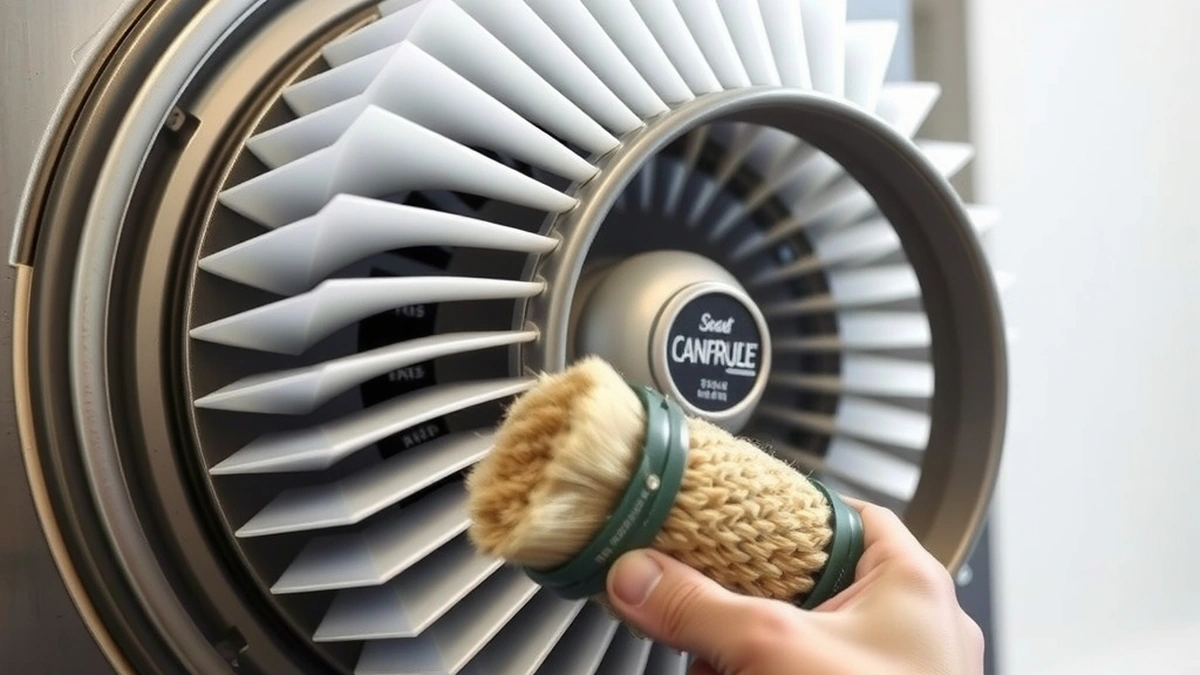
The filter sits behind the front panel of each indoor head. It is a mesh screen, not a high-efficiency filter, and its only job is to keep dust off the coil. When it loads up, airflow drops, the coil runs colder than it should, and the unit loses capacity exactly when you need it.
| Household | Filter interval |
|---|---|
| No pets, no carpet, windows closed | Every 4 weeks |
| One pet or nearby construction | Every 2 weeks |
| Two or more shedding pets | Weekly |
| Renovation dust in the house | Weekly, or daily during sanding |
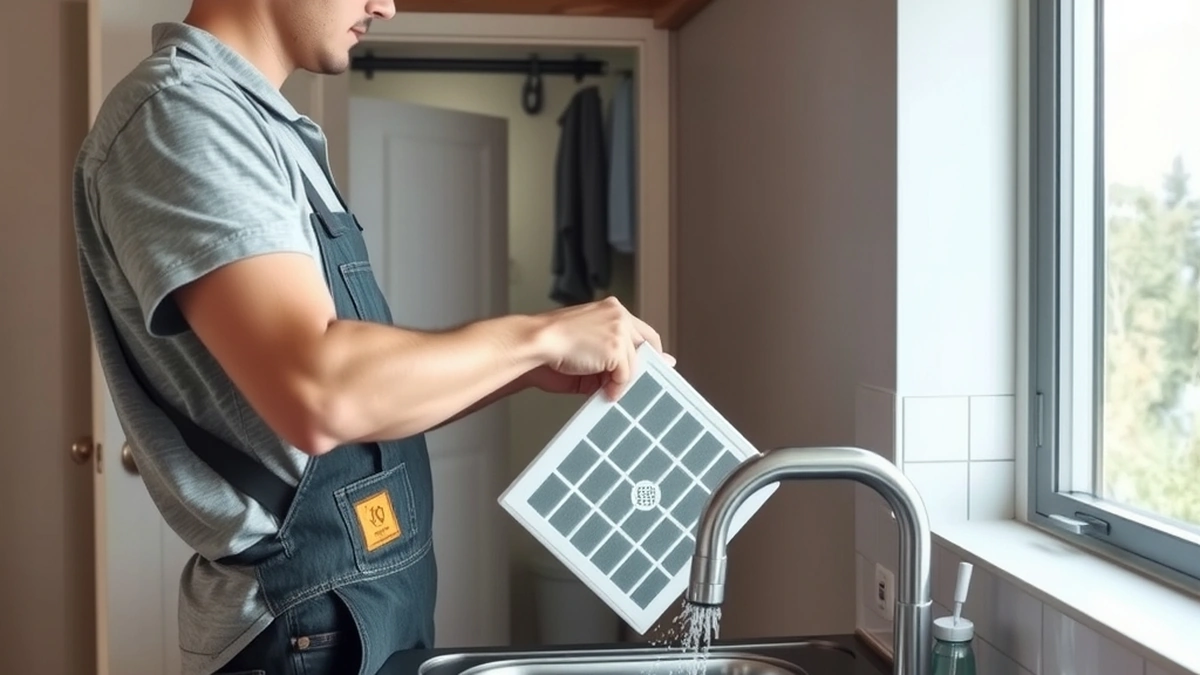
Washing takes five minutes per head. Warm water, a drop of dish soap if there is greasy kitchen film, rinse from the clean side, shake out, and let it dry before refitting. A wet filter grows mould in a dark housing.
What the annual service should include
A service visit that only rinses a filter is not a service visit. For $150 to $300, expect the technician to work through this list on every head and the outdoor unit:
- Remove and clean the indoor coil with a no-rinse cleaner, capturing water in the pan.
- Flush the condensate drain and confirm the pan drains fully with no standing water.
- Clean the blower wheel, which collects a mat of dust that a filter never catches.
- Rinse the outdoor coil from the inside out and straighten any bent fins.
- Check refrigerant pressures or superheat/subcooling against spec without adding charge.
- Test the electrical connections, capacitor, and disconnect for heat damage.
- Confirm the remote, sensors, and any error history on the board.
Ask which of those were done. The difference between a $150 visit and a $300 visit is usually head count and how thoroughly the blower wheel is cleaned.
The drain is the failure you notice
Condensate drains are the number one source of “water on the wall” calls. The line is narrow, warm, and wet — ideal for biofilm. Flush it monthly during cooling season with a cup of water or diluted vinegar through the pan, and watch that it exits outdoors at the same rate it goes in.
Signs the drain is failing:
- Water stains or bubbling paint below the head
- A musty smell when the fan starts
- Water in the pan after the unit has been off for an hour
- Ice at the outdoor end of the drain in winter
A blocked drain cleared professionally costs $150 to $300. A drain that has been overflowing into a wall for a month costs drywall repair on top of that, which is why the monthly flush is worth the two minutes.
The outdoor unit needs air, not attention
The condenser rejects heat, so it needs clear space: about 12 inches at the back and sides, and nothing stacked in front of the fan. Leaves, grass clippings, and storage against the unit are the usual offenders.
Rinse the coil once a year from the inside out with a garden hose, not a pressure washer. The fins are thin aluminum and bend flat under pressure, and bent fins cannot be restored cheaply. A fin comb costs about $10 and fixes minor bends.
Do not cover the outdoor unit for winter if the system heats the house. It runs in cold weather, and a cover traps moisture against the coil. Cover it only for a full-season shutdown, and isolate the power first.
DIY against professional
| Task | DIY | Professional | Cost |
|---|---|---|---|
| Filter cleaning | Yes | Included | $0 |
| Drain flush | Yes | Included | $0 |
| Coil cleaning | Careful, indoor | Yes | Part of service |
| Charge check | No | Yes | Part of service |
| Electrical inspection | No | Yes | Part of service |
| Refrigerant repair | Illegal without EPA 608 | Yes | $250 - $600 |
The line is the sealed system. Everything outside it is homeowner work; everything inside it needs certification and gauges.
What neglect actually costs
Filters are free to clean and expensive to ignore. A restricted coil ices, and a frosted coil sends liquid refrigerant back to the compressor. That path ends at a $900-plus compressor job on a system that installs new for $3,000 to $5,500, which is why the arithmetic of maintenance is so lopsided.
Run the annual numbers:
- Service: $150 to $300 a year for fifteen years = $2,250 to $4,500.
- One ignored repair: $150 to $600, and often a second within a year.
- One compressor replacement: more than a third of a new single-zone system.
A house that also has a furnace should budget both visits. A furnace tune-up and safety check runs $100 to $250; a mini-split service runs $150 to $300. Our furnace maintenance guide covers the other side of that pair.
A five-step routine that holds
- Set a phone reminder for the first of each month in cooling season and clean every filter that day.
- Flush each drain with a cup of water and watch it exit.
- Clear the outdoor unit of leaves and check the pad is level.
- Book the service visit in early autumn, before heating season, when technicians are less booked.
- Keep the commissioning report and every service receipt in one folder for warranty claims.
If a head is already misbehaving, our guide to mini-split problems maps symptoms to likely causes before you call. The installation guide explains what a correct commissioning report contains, and the cost guide covers what replacement would run if the system is past saving.
Frequently asked questions
How often should mini-split filters be cleaned?
Every two to four weeks in cooling season for a normal household, and weekly during renovation or with pets that shed. Rinse with lukewarm water and let them dry fully before refitting.
How much does annual mini-split service cost?
About $150 to $300 in most US markets. That covers coil cleaning, drain flush, a charge check, and electrical inspection on one to three heads.
Can I skip professional service if I clean the filters?
No. Filters protect airflow; they do not clean the coil, check the charge, or test the drain pan. Skipping the annual visit is how a small leak becomes a compressor failure.
What is the best way to clean a mini-split coil?
A no-rinse coil cleaner sprayed onto the indoor coil with the unit off, then a gentle rinse into the drain pan. Do not use a pressure washer; bent fins block airflow permanently.
Should I cover the outdoor unit in winter?
No, if the system provides winter heating. It runs in cold weather and a cover traps moisture. Cover only a unit that will sit unused for the whole season, and only after isolating power.
Does maintenance affect the warranty?
Yes. Most manufacturers require documented annual service and proof of a licensed installation. Keep receipts; a denied compressor claim often turns on missing service records.
Sources
Some links are affiliate links.If you buy through them we may earn a commission at no extra cost to you. We do not accept payment for rankings. Read the full disclosure.