Ductless mini-split problems: symptoms and likely fixes
Water indoors, ice on the coil, warm air in heat mode: six mini-split symptoms, what causes each, and what the repair usually costs.
Most ductless mini-split problems trace to one of three causes: restricted airflow at the filter or coil, a condensate drain that no longer drains, or a sealed-system fault that needs gauges. Typical repairs run $150 to $600, and an after-hours call-out adds $200 to $500.
- Typical repair
- $150 - $600
- Emergency call-out
- $200 - $500
- Annual service
- $150 - $300
- Single-zone replacement
- $3,000 - $5,500
Some links on this page are affiliate links.If you buy through them we may earn a commission at no extra cost to you. We do not accept payment for rankings. Read the full disclosure.
Most ductless mini-split problems fall into three buckets: airflow restricted at the filter or coil, a condensate drain that stopped draining, or a sealed-system fault that needs gauges. The first two are cheap and often homeowner-fixable. The third is not, and a technician should be the one to open the system.
A ductless mini-split fault is any condition where the head fails to deliver its rated heating or cooling, leaks water, or reports an error. The symptom tells you which bucket you are in before anyone arrives, which is useful when you are deciding whether to pay emergency rates.
The symptom table
| Symptom | Likely cause | Typical cost | Urgency |
|---|---|---|---|
| Water dripping from the head | Blocked or mis-sloped drain | $150 - $300 | Same week |
| Ice on the indoor coil | Dirty filter, low charge | $150 - $600 | Same week |
| Ice on the outdoor unit in heat mode | Defrost fault, sensor | $200 - $500 | Same week |
| Runs, but air is not cold | Mode conflict, valve, charge | $200 - $600 | Same week |
| Error code, unit stops | Sensor, board, communication | $250 - $900 | Call for diagnosis |
| Grinding or rattling | Fan blade, bearing, loose mount | $150 - $450 | Promptly |
| Musty smell | Wet pan, biofilm, mould | $150 - $350 | Routine |
After-hours rates add $200 to $500 on top of the repair. Nothing in that table is worth emergency pricing unless the house is unsafe or unlivable, which for a single-zone unit usually means waiting until morning.
Water indoors is almost never refrigerant
A head that drips onto the wall is draining badly, not leaking gas. Condensate forms on the indoor coil all summer and leaves through a small hose. Three things stop it:
- Lost slope. The drain must fall about 1/4 inch per foot. A line that sags holds water, and the pan overflows.
- Biofilm. Warm, wet, dark tubing grows a gel that closes to a pinhole. A flush with a drain gun clears it.
- A frozen or blocked outlet. In cold weather the outdoor end can ice shut, and water backs up indoors.
A technician will flush the line, check the pan for cracks, and confirm the outlet is clear. Budget $150 to $300. If the head has been dripping for weeks, the drywall and any insulation behind it may need attention too, and that is a separate trade.
Ice on the coil means the coil is too cold
Ice on the indoor coil in cooling mode means the coil is running below freezing, which happens for two reasons: not enough air across it, or not enough refrigerant in it.
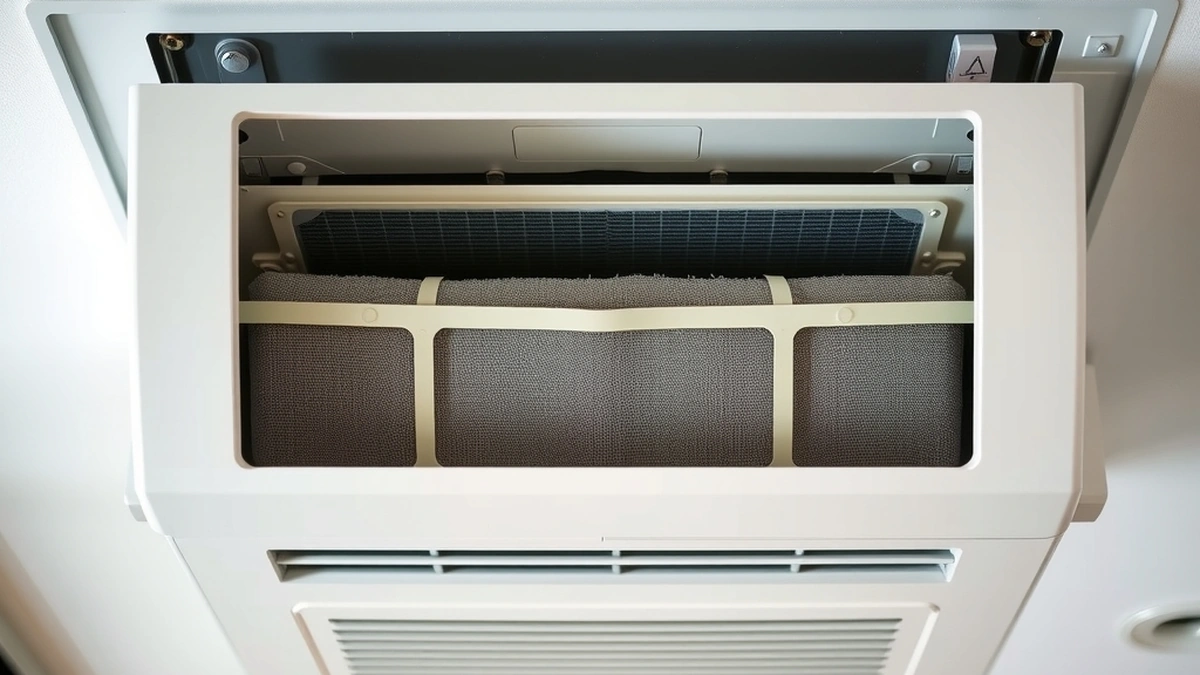
Start with the filter. A clogged filter is the single most common cause, and cleaning it costs nothing. If the filter is clean and the coil still frosts, the system is probably low on charge or has a restricted metering device, and that is a technician job.
One caution that saves money: do not keep running a frosted unit. Liquid refrigerant returning to the compressor damages it, and a compressor replacement usually exceeds the value of a ten-year-old single-zone system, which installs new for $3,000 to $5,500.
In heat mode, the outdoor coil frosts by design and the unit runs a defrost cycle to clear it. Steam rising from the outdoor unit on a cold morning is normal. A solid block of ice that never clears is a defrost fault — usually a sensor or board.
It runs, but the air is not cold
Check the boring things before booking a call:
- Confirm the remote is in cool mode and the setpoint is below room temperature.
- Confirm no other head is calling for heat on the same system; a multi-zone unit cannot heat and cool at once.
- Look at the outdoor fan — if it never spins, the fault is electrical or a sensor, not charge.
- Clean the filter and look through the coil with a flashlight.
If those four are fine, the diagnosis needs gauges. Common findings are a failed reversing valve, a bad thermistor reading the room wrong, or a slow leak at a flare connection. Repairs in that group typically run $200 to $600, and a reversing valve sits at the top of the range.
Error codes, sensors, and boards
Every brand numbers its faults differently, so a code means nothing without that model’s service manual. What travels across brands is the pattern:
- A code that clears on reset and returns within minutes points to a sensor or communication fault.
- A code that appears only at start-up often means low voltage or a failing capacitor.
- A board that has visible burn marks or a swollen capacitor is a board.
Board replacements are the expensive end of mini-split repair, often $400 to $900 with labour. On a system under ten years old that is usually worth doing. On a fifteen-year-old unit with a second fault behind it, get a replacement quote before approving the board.
Noise, smell, and vibration
A rattle at the outdoor unit is often a loose grille or a fan blade with debris in it — cheap to fix, and worth fixing before the blade cracks. A grinding noise is a bearing, and bearing replacement means opening the motor or replacing it.
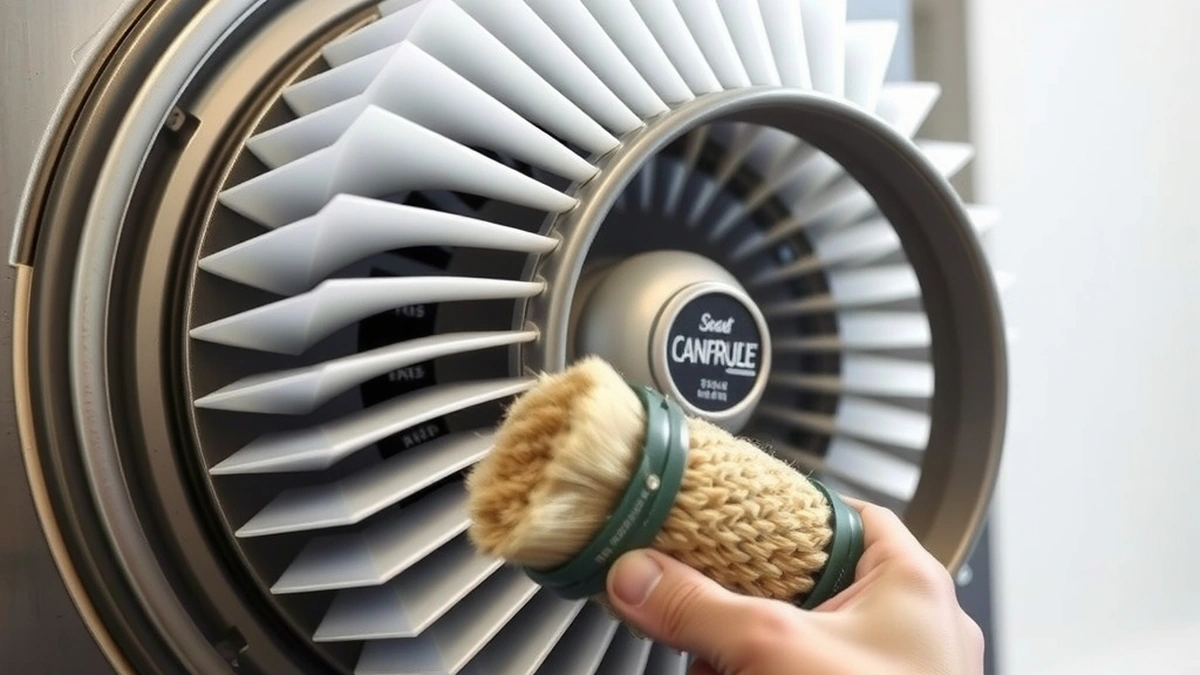
Musty smell from the head is a wet drain pan or mould on the blower wheel. Cleaning the wheel and pan and flushing the drain usually clears it for $150 to $350. Running the fan for twenty minutes after cooling shuts off, so the coil dries, prevents most of it.
Short cycling is a separate diagnosis with its own causes — oversized equipment, a thermostat placed in a draft, or a high-pressure trip. Our guide to short cycling repair covers that path.
Repair or replace
| Repair | Replace | |
|---|---|---|
| Typical cost | $150 - $600 | $3,000 - $5,500 per zone |
| Age that favours it | Under 12 years | Over 15 years |
| Repeat faults | One in two years is normal | Two in one year is not |
| Parts availability | Good for current models | Not a factor |
| Efficiency | Unchanged | New unit beats an old one |
The arithmetic that matters: a $600 repair on a twelve-year-old unit buys another three years at about $200 per year. Replacement at $4,200 over eighteen years is $233 per year, before you count the fuel savings. Past fifteen years with a sealed-system fault, replacement usually wins.
Before you call anyone, run the five-minute check that covers filters, breakers, mode, and setpoint. If the system is new and behaving badly, the fault may be installation rather than equipment — our installation guide lists what a correct commissioning report should show. And if you are still choosing a system, the cost breakdown explains why head count, not brand, sets the price.
Frequently asked questions
Why is my mini-split dripping water inside?
Almost always the condensate drain. The line has lost its slope, the pan is clogged with biofilm, or the drain froze. A flush and re-route runs $150 to $300; a cracked pan costs more.
Why is there ice on my mini-split?
On the indoor coil it means restricted airflow or low refrigerant charge. On the outdoor unit in heat mode, a light frost that clears during defrost is normal; a solid block of ice is not.
What do mini-split error codes mean?
They are manufacturer-specific. The same code means different things on different brands, so read the indoor unit's blink pattern against its own service manual rather than a forum post.
Why does my mini-split blow warm air in heat mode?
Check the mode and setpoint first, then the outdoor unit for frost or a blocked coil. If the outdoor fan never runs, the fault is usually a sensor, board, or reversing valve.
Is a mini-split expensive to repair?
Most faults land between $150 and $600. Control boards, compressors, and reversing valves are the exceptions and can pass $900, which changes the repair-or-replace arithmetic.
How often should a mini-split be serviced?
Once a year, ideally before the heating season. A service visit runs $150 to $300 and covers coil cleaning, drain flush, charge check, and electrical inspection.
Sources
Some links are affiliate links.If you buy through them we may earn a commission at no extra cost to you. We do not accept payment for rankings. Read the full disclosure.