Heat pump vs boiler
A heat pump costs $5,000 to $12,000 and a boiler $4,000 to $8,000. Why the cheaper install can cost more to run, and where each one belongs.
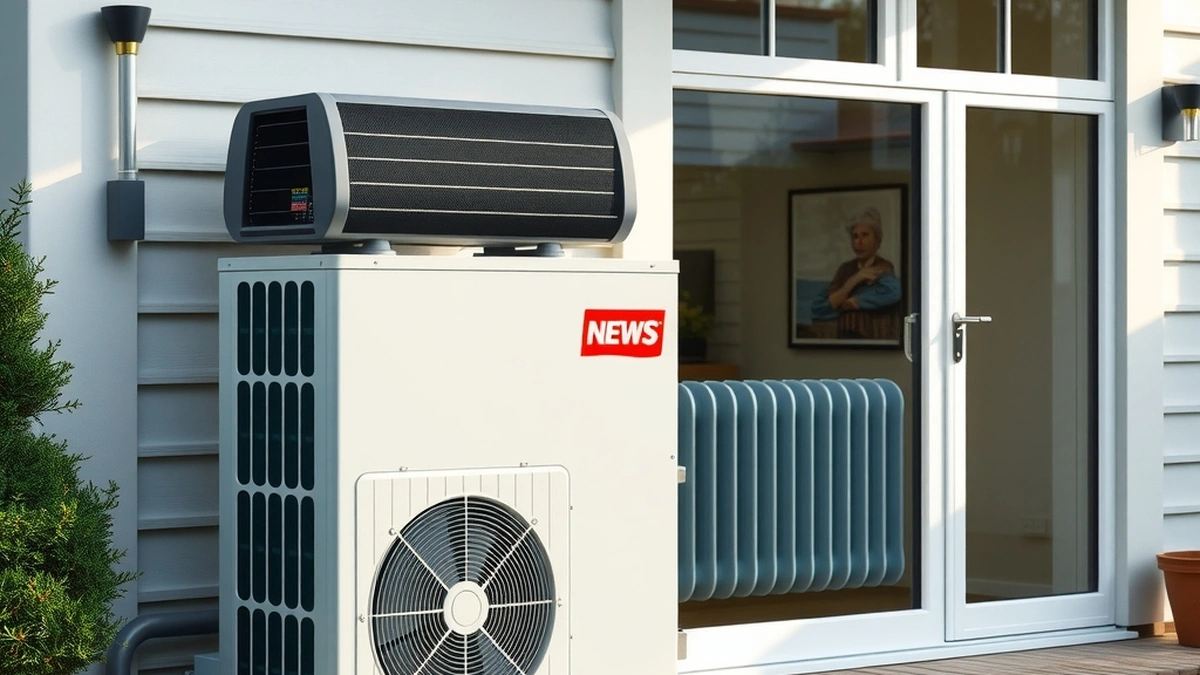
A heat pump costs $5,000 to $12,000 and a boiler $4,000 to $8,000, so the boiler is usually cheaper to install. A heat pump can cost less to run and also cools, but it needs ductwork or emitters sized for low temperatures, which is the main retrofit obstacle.
- Heat pump
- $5,000 - $12,000
- Boiler
- $4,000 - $8,000
- Boiler service
- $150 - $300
- Heat pump service
- $150 - $300
Some links on this page are affiliate links.If you buy through them we may earn a commission at no extra cost to you. We do not accept payment for rankings. Read the full disclosure.
A boiler costs $4,000 to $8,000 installed and a heat pump $5,000 to $12,000, so the boiler is usually cheaper upfront. The heat pump can cost less to run because it moves heat rather than burning fuel, and it cools. The obstacle is distribution: a heat pump needs either ducts or emitters large enough to work at lower water temperatures, and that is where retrofit costs appear.
Two different approaches
A boiler burns gas, oil or propane to heat water, which circulates to radiators, baseboard or radiant floors. Modern condensing boilers reach 92 to 95 percent efficiency.
A heat pump moves heat from outdoor air into the house with a refrigeration cycle. It delivers two to three units of heat per unit of electricity at moderate temperatures, falling as it gets colder.
One converts fuel at high efficiency. The other moves existing heat at a ratio. The economics differ by climate and by fuel price.
Cost compared
| Item | Boiler | Heat pump |
|---|---|---|
| Equipment | $2,500 - $6,000 | $3,000 - $6,500 |
| Labour | $1,200 - $2,500 | $1,200 - $2,800 |
| Distribution | Pipes and emitters, usually existing | Ducts, heads, or new emitters |
| Venting | $300 - $1,500 | $0 |
| Electrical | $0 - $600 | $500 - $2,000 |
| Permit | $50 - $500 | $50 - $500 |
| Total | $4,000 - $8,000 | $5,000 - $12,000 |
Those figures assume distribution exists. A heat pump retrofit into a house with radiators may need larger emitters, which can add $3,000 to $12,000 depending on how many rooms are affected.
Running cost, with assumptions stated
Take a house needing 60 million Btu of delivered heat.
Gas boiler at 93 percent, $1.20 per therm:
- 60 ÷ 0.93 = 64.5 million Btu input
- 645 therms × $1.20 = $774
Heat pump at an average seasonal COP of 2.5, $0.16 per kWh:
- 60 ÷ 2.5 = 24 million Btu
- 7,030 kWh × $0.16 = $1,125
On those assumptions the boiler is cheaper by $351 a year. At a COP of 3.0 the heat pump costs $938, nearly matching the boiler. At $0.12 per kWh it costs $844 and beats it.
The heat pump’s advantage grows where cooling would otherwise be bought separately, and where gas is expensive or unavailable.
The emitter problem
This is the practical crux of any heat pump retrofit in a hydronic house.
Radiators sized for boiler water at 160 to 180°F will not deliver the same heat output at the 110 to 120°F a heat pump prefers. To get the same output at lower temperature, the emitter surface has to be larger.
Options:
- Enlarge existing radiators, replacing panels with larger ones.
- Add emitters, such as a fan coil or additional radiators.
- Use a high-temperature heat pump, which exists but operates at lower efficiency.
- Hybrid approach, keeping the boiler for the coldest days.
Each of those changes the arithmetic. A retrofit that requires new radiators in six rooms is not a $9,000 project.
Where the heat pump wins
- Cooling is wanted, and the house has no air conditioning.
- No gas supply, where the alternative is oil or propane.
- Mild climates, where the COP stays high through the season.
- New build or deep renovation, where emitters can be specified for low temperature from the start.
- Cheap or renewable electricity.
Where the boiler wins
- Existing radiators sized for high temperature, where a heat pump would need new emitters.
- Cheap gas, which widens the running-cost gap.
- Cold climates where heat pump capacity falls significantly.
- Lower upfront cost, when the existing system is being replaced in kind.
- Long service life, at 25 to 35 years for cast iron.
Maintenance and repair
| Task | Boiler | Heat pump |
|---|---|---|
| Annual service | $150 - $300 | $150 - $300 |
| Typical repair | $200 - $700 | $200 - $800 |
| Common failures | Circulator, aquastat, expansion tank | Compressor, reversing valve, charge |
| Water treatment | Required | Not applicable |
| Outdoor unit care | None | Clear snow and debris |
Both need annual service. A boiler needs water chemistry checks; a heat pump needs a clear outdoor unit and a refrigerant charge check.
Boiler repairs are priced in boiler cost, and heat pump repairs in heat pump cost.
What to ask before deciding
- What emitters exist, and what output do they give at 120°F?
- What is the design heat load at the local design temperature?
- What are the local fuel prices, all in?
- Is cooling needed, and what would it cost separately?
- What backup heat will be installed, and at what changeover?
- What is the total cost including emitter changes, not just the plant?
Question one is the one that decides whether a heat pump retrofit is economic. A heat loss calculation and an emitter schedule answer it, and neither is expensive.
The related comparisons are gas furnace vs heat pump and boiler vs ductless mini-split.
A boiler is cheaper to install and often cheaper to run where gas is cheap, and it lasts longer. A heat pump costs more, can cost less to run, and cools.
In a house with old radiators and cheap gas, replace the boiler. In a house with low-temperature emitters, no gas, or a need for cooling, the heat pump is the better long-term purchase. One more consideration that shapes the retrofit: where the outdoor unit will sit. A heat pump needs clearance for airflow, a solid base, and a route for the line set and condensate. On a terraced or historic property that can be the constraint that decides the project, long before efficiency enters the conversation. A boiler replacement, by contrast, reuses the existing flue and plant space.
Finally, think about the order of work. If the boiler is near the end of its life and the fabric of the house is being improved — loft insulation, double glazing, draught proofing — do the fabric first. A tighter house needs lower flow temperatures, which makes a future heat pump retrofit cheaper and more effective, and it may let you size the replacement plant smaller either way.
Frequently asked questions
Is a heat pump cheaper to run than a boiler?
Often yes, because a heat pump moves heat rather than burning fuel, and it can deliver two to three units of heat per unit of electricity. The answer depends on local electricity and gas prices and on how well the emitters work at low temperature.
Can a heat pump replace a boiler?
Yes, but usually with changes. Air-to-water heat pumps can feed radiators, though radiators sized for high-temperature boiler water often need enlarging. Air-to-air heat pumps need ducts or heads.
Do radiators work with a heat pump?
They can, if they are large enough to heat the room at the lower water temperature a heat pump produces. Many older radiators are undersized for that, and the fix is larger emitters or supplementary heat.
Which lasts longer?
A cast iron boiler can last 25 to 35 years; a condensing boiler 15 to 20. A heat pump typically lasts 12 to 18 years. The boiler has the longer service life, but it has no cooling function.
Can a boiler provide cooling?
Only with an added fan coil or chilled water system, which is uncommon in houses. A heat pump provides cooling as standard, which is a major practical difference.
Which is better in a cold climate?
Both work. A cold-climate heat pump with a backup source is common, and a boiler remains a strong choice where radiators already exist and gas is available.
Sources
Some links are affiliate links.If you buy through them we may earn a commission at no extra cost to you. We do not accept payment for rankings. Read the full disclosure.