Gas furnace vs heat pump
A furnace costs $3,000 to $8,000 and a heat pump $5,000 to $12,000. Why the heat pump can still cost less to run, and where it loses in cold weather.
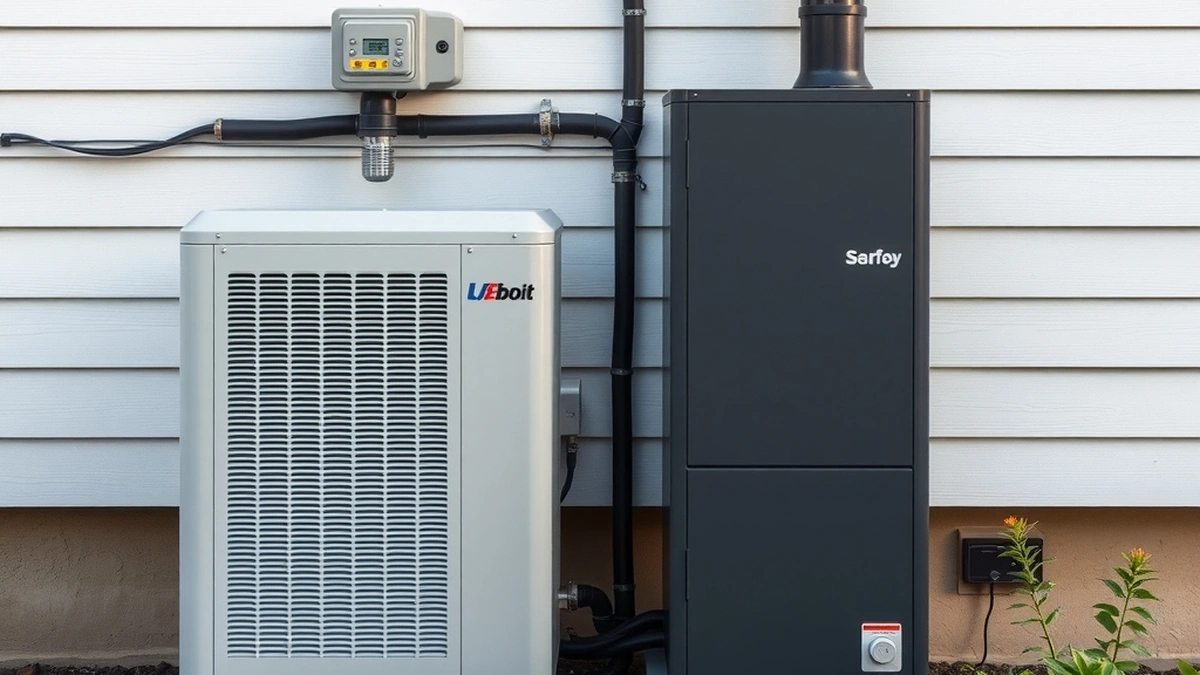
A gas furnace costs $3,000 to $8,000 installed and a heat pump $5,000 to $12,000, but a heat pump moves heat instead of making it and can cost less to run in mild climates. In deep cold, output and efficiency fall, and a furnace or a dual-fuel setup often wins.
- Gas furnace
- $3,000 - $8,000
- Heat pump
- $5,000 - $12,000
- Furnace repair
- $150 - $600
- Tune-up
- $100 - $250
Some links on this page are affiliate links.If you buy through them we may earn a commission at no extra cost to you. We do not accept payment for rankings. Read the full disclosure.
A gas furnace costs $3,000 to $8,000 installed; a heat pump costs $5,000 to $12,000. The heat pump is the more expensive purchase and can be the cheaper system to run, because it moves heat rather than generating it. Whether that holds in your house depends on the climate, the electricity price and how well the system is sized. Neither technology wins everywhere.
How each one makes heat
A gas furnace burns fuel in a heat exchanger. At 90 percent annual fuel utilisation efficiency, about 90 cents of every dollar of gas becomes heat in the ducts.
A heat pump moves heat from outside air into the house using a refrigeration cycle. It does not generate heat; it transports it. That is why a heat pump can deliver two to three units of heat per unit of electricity, a ratio expressed as a coefficient of performance.
The difference is fundamental. One converts fuel; the other moves existing heat. It is why the efficiency numbers are not comparable at face value.
Installed cost
| Item | Gas furnace | Heat pump |
|---|---|---|
| Equipment | $1,500 - $4,500 | $3,000 - $6,500 |
| Labour | $800 - $2,000 | $1,200 - $2,800 |
| Line set and electrical | $0 | $500 - $1,500 |
| Venting | $300 - $1,500 | $0 |
| Permit | $50 - $500 | $50 - $500 |
| Total | $3,000 - $8,000 | $5,000 - $12,000 |
A heat pump also provides cooling, which matters if the house currently has no air conditioning. Comparing it against a furnace alone overstates the premium; comparing it against a furnace plus a new air conditioner usually closes most of the gap.
Running cost, with assumptions stated
Take a house needing 60 million Btu of delivered heat.
Gas at 90 AFUE, $1.20 per therm:
- 60 ÷ 0.90 = 66.7 million Btu input
- 667 therms × $1.20 = $800
Heat pump at an average seasonal COP of 2.5, $0.16 per kWh:
- 60 million Btu ÷ 2.5 = 24 million Btu of electricity
- 24 million Btu = 7,030 kWh
- 7,030 × $0.16 = $1,125
At those numbers the gas furnace is cheaper by $325 a year. Change the assumptions and the answer changes: at an average COP of 3.0 the heat pump costs $938, and at $0.12 per kWh it costs $844.
That is the honest position. The heat pump is not automatically cheaper, and the gas furnace is not automatically cheaper either. The local electricity price and the climate decide.
Where the heat pump wins
- Mild winters, where the average COP stays high all season.
- No gas supply, where the alternative is propane or electric resistance.
- Houses that also need cooling, since one system replaces two.
- Cheap electricity, including off-peak rates and solar.
- Ducted systems with good airflow, where the coil pressure drop is manageable.
Where the furnace wins
- Deep cold, where heat pump capacity and COP both fall.
- Cheap gas, where the running-cost gap widens.
- Existing ductwork sized for a furnace with marginal static pressure.
- A house with a flue and no space for an outdoor unit.
- Short payback expectations, since the furnace costs less upfront.
The dual-fuel option
A dual-fuel system pairs a heat pump with a gas furnace. The heat pump runs above a set outdoor temperature, typically somewhere between 30°F and 40°F, and the furnace takes over below it.
That configuration is often the best answer in a cold climate. It uses the heat pump where it is most efficient and the furnace where the heat pump is weakest, and it keeps a gas backup for the coldest week of the year.
The trade-offs are two systems to maintain, two service schedules, and a control strategy that has to be set correctly. A badly configured dual-fuel system runs the furnace all winter and the heat pump never pays back.
Maintenance and repair
| Task | Gas furnace | Heat pump |
|---|---|---|
| Annual service | $100 - $250 | $150 - $300, often twice |
| Typical repair | $150 - $600 | $200 - $800 |
| Expensive failure | Heat exchanger | Compressor |
| Filter schedule | 1 - 3 months | 1 - 3 months |
| Outdoor unit care | None | Clear snow and debris |
The heat pump’s outdoor unit needs snow clearance and a clear defrost path. A unit buried in a drift runs poorly and can be damaged.
Repair pricing for the furnace side is in how much furnace repair costs, and the heat pump side in heat pump cost.
What to ask before choosing
- What is the design outdoor temperature for the house, and the heat load at that temperature?
- What is the local electricity price per kWh, all in?
- What is the local gas price per therm, all in?
- Does the existing ductwork support the coil without excessive static pressure?
- Is there space and clearance for an outdoor unit?
- What rebates and tax credits apply to each option?
Question four is the one most often skipped, and it is the reason some heat pump retrofits underperform. A coil added to marginal ductwork raises static pressure and reduces airflow, which hurts both heating and cooling.
The system comparison continues in electric furnace vs heat pump and furnace repair vs heat pump.
The heat pump costs more to install and can cost less to run, but only where the climate and the electricity price cooperate. The furnace costs less and is predictable in cold weather.
In a cold climate with mains gas, dual fuel is usually the best of both. In a mild climate with expensive gas, the heat pump is usually the right answer on its own. A practical note on sizing: a heat pump is often sized to the cooling load as well as the heating load, because it has to do both. In a house with large west-facing glass, the cooling load can drive the size upward, which then makes the heating side slightly oversized. That is not a fault, but it is worth asking which load the unit was selected for, because it explains the capacity you end up with.
Frequently asked questions
Is a heat pump cheaper to run than a gas furnace?
In mild and moderate climates, often yes, because a heat pump delivers two to three units of heat per unit of electricity. In deep cold, output and efficiency drop and a gas furnace usually costs less per unit of heat.
How much does a heat pump cost installed?
Typically $5,000 to $12,000 for a whole-home system, including the outdoor unit, indoor coil or air handler, line set and electrical work. Duct modifications are extra.
Can I keep my furnace and add a heat pump?
Yes. A dual-fuel system uses the heat pump above a set outdoor temperature and the furnace below it. That combination handles cold snaps without losing capacity.
How long does a heat pump last?
Twelve to eighteen years with regular service, similar to a furnace. The compressor is the expensive component, and its life depends on correct charge and airflow.
Do heat pumps work below freezing?
Yes, and modern cold-climate models retain most of their capacity well below 0°F. Output still falls as temperature drops, so sizing and backup matter more than the headline efficiency rating.
Which needs more maintenance?
A heat pump has both indoor and outdoor components and needs two service visits a year in many recommendations. A furnace needs one annual service and a filter schedule.
Sources
Some links are affiliate links.If you buy through them we may earn a commission at no extra cost to you. We do not accept payment for rankings. Read the full disclosure.