Electric furnace vs heat pump
Both run on electricity, but one makes heat and one moves it. Why a heat pump can use a third of the power, and when resistance heat is still right.
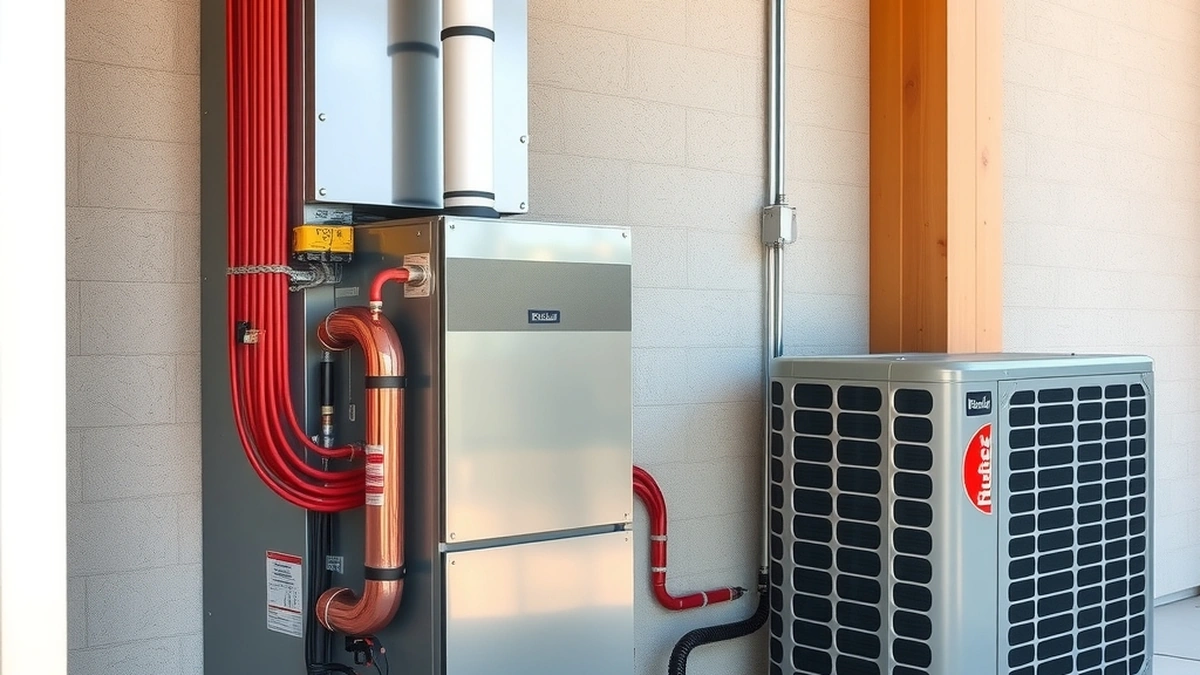
An electric furnace costs less to install and delivers one unit of heat per unit of electricity. A heat pump costs more upfront but moves heat, delivering two to three units per unit of electricity. In most climates the heat pump costs less to run and also provides cooling.
- Electric furnace
- $3,000 - $6,500
- Heat pump
- $5,000 - $12,000
- Furnace repair
- $150 - $600
- Tune-up
- $100 - $250
Some links on this page are affiliate links.If you buy through them we may earn a commission at no extra cost to you. We do not accept payment for rankings. Read the full disclosure.
An electric furnace is cheap to install and expensive to run. A heat pump costs more upfront and, in most climates, delivers the same heat for roughly a third of the electricity. The reason is simple: resistance elements convert electricity to heat at 100 percent, while a heat pump moves existing heat and can deliver two to three units per unit of electricity.
The efficiency difference, in plain terms
An electric furnace passes current through resistance elements. Every kilowatt-hour becomes 3,412 Btu of heat. That is 100 percent efficient, and it is also the ceiling — there is no way to make resistance heat more efficient than that.
A heat pump uses a refrigeration cycle to move heat from outdoor air into the house. At 40°F outdoor temperature, a typical unit might deliver 2.5 to 3 units of heat per unit of electricity. That ratio is the coefficient of performance, and it falls as the outdoor temperature drops.
| Outdoor temperature | Typical COP | Heat per kWh |
|---|---|---|
| 47°F | 2.8 - 3.2 | 9,500 - 10,900 Btu |
| 35°F | 2.3 - 2.7 | 7,800 - 9,200 Btu |
| 17°F | 1.8 - 2.3 | 6,100 - 7,800 Btu |
| 5°F | 1.4 - 1.9 | 4,800 - 6,500 Btu |
| Below 0°F | 1.0 - 1.5 | 3,400 - 5,100 Btu |
Those are illustrative ranges rather than guarantees; the rating sheet for a specific model is the authority. But the shape is consistent: a heat pump beats resistance heat at every temperature above roughly 5°F, and matches it near 0°F.
Installed cost
| Item | Electric furnace | Heat pump |
|---|---|---|
| Equipment | $800 - $2,500 | $3,000 - $6,500 |
| Labour | $700 - $1,800 | $1,200 - $2,800 |
| Line set and outdoor unit | $0 | $800 - $2,000 |
| Electrical | $0 - $2,500 | $0 - $2,500 |
| Permit | $50 - $500 | $50 - $500 |
| Total | $3,000 - $6,500 | $5,000 - $12,000 |
The electrical line applies to both. An electric furnace draws a large current, and a heat pump with electric backup draws similarly. An older panel may need an upgrade either way.
Running cost, with arithmetic
Take a house needing 60 million Btu of delivered heat.
Electric furnace at 100 percent, $0.16 per kWh:
- 60 million Btu = 17,580 kWh
- 17,580 × $0.16 = $2,813
Heat pump at an average seasonal COP of 2.4:
- 60 ÷ 2.4 = 25 million Btu of electricity
- 7,320 kWh × $0.16 = $1,171
The heat pump costs $1,642 less per year on those assumptions. Against a $4,000 installation premium, the payback is about 2.4 years.
Change the assumptions and it still works: at an average COP of 2.0 the heat pump costs $1,406, saving $1,407 a year and paying back in under three years. At $0.10 per kWh the saving is $1,026 a year.
That is why the heat pump almost always wins on running cost. The exception is a climate so mild that the system barely runs, where the premium is never recovered.
Keeping the electric furnace as backup
The most common and sensible configuration is a heat pump with electric resistance backup in the air handler.
The heat pump runs whenever it can meet the load. Below a set outdoor temperature — or when the heat pump cannot keep up — the elements stage on. That combination costs less to install than a dual-fuel gas system and gives the heat pump a safety net.
The trade-off is that the backup elements are expensive to run. A system with a badly set changeover temperature will use them far more than necessary, which erases the savings. The changeover should be set from the load calculation, not left at a default.
Where the electric furnace still wins
- Mild climates with very low heating demand, where the premium never pays back.
- No space for an outdoor unit, such as a flat with no balcony or a heritage facade.
- Very cold climates where a heat pump would need so much backup that the system is effectively resistance heat anyway.
- Emergency replacement when speed matters more than running cost.
- As backup to an existing heat pump.
Maintenance and repair
| Task | Electric furnace | Heat pump |
|---|---|---|
| Annual service | $100 - $200 | $150 - $300 |
| Typical repair | $150 - $500 | $200 - $800 |
| Common failures | Element, sequencer, blower, board | Compressor, reversing valve, charge |
| Filter schedule | 1 - 3 months | 1 - 3 months |
| Outdoor care | None | Clear snow and debris |
An electric furnace is mechanically simple. A heat pump has a compressor, a reversing valve, a defrost control and a refrigerant charge, and each is a potential repair. The maintenance burden is real, and it should be part of the comparison.
Repair pricing on the electric side is in electric furnace cost, and the heat pump side in heat pump cost.
What to ask before choosing
- What is the design heat load at the local design temperature?
- What is the average COP of the proposed model at that temperature?
- What is the local electricity price, all in?
- What backup heat will be installed, and at what changeover temperature?
- Is there space and clearance for an outdoor unit?
- What rebates apply to each option?
Question four is where savings are lost. A heat pump with electric backup set to switch over at 40°F is an electric furnace with extra steps.
The wider comparison is in gas furnace vs heat pump, and the related ductless option in heat pump vs ductless mini-split.
The short version
An electric furnace converts electricity to heat at 100 percent. A heat pump moves heat and delivers two to three times as much per unit of electricity in moderate weather.
The heat pump costs $3,000 to $6,000 more and usually pays that back in two to four years. The electric furnace remains the right answer for mild climates, tight installations and backup duty.
Frequently asked questions
Is a heat pump cheaper to run than an electric furnace?
Almost always, in a climate where it is installed correctly. A heat pump delivers two to three units of heat per unit of electricity, while resistance elements deliver one, so the same heat costs a third as much at moderate temperatures.
Why is a heat pump more expensive to install?
It has an outdoor unit, a refrigerant circuit, a line set and more controls. An electric furnace is a box of elements and a blower, so the equipment and labour are both lower.
Can a heat pump replace an electric furnace directly?
Often yes, using the existing ductwork and blower. Many installations keep the electric elements as backup heat, which also covers the coldest days when heat pump output falls.
At what temperature does a heat pump lose efficiency?
Efficiency declines gradually as outdoor temperature falls, and capacity falls with it. Modern cold-climate units still deliver useful heat well below freezing, but a backup source is common in cold regions.
Does a heat pump last as long as an electric furnace?
An electric furnace commonly lasts 15 to 20 years with minimal service. A heat pump typically lasts 12 to 18 and needs more maintenance because it has a compressor and refrigerant circuit.
Is resistance heat ever the better choice?
Yes, in a mild climate where the heat pump premium cannot be recovered, in a house with no space for an outdoor unit, or as emergency backup where a heat pump is already installed.
Sources
Some links are affiliate links.If you buy through them we may earn a commission at no extra cost to you. We do not accept payment for rankings. Read the full disclosure.