Boiler reviews: what to check before you buy one
Boiler reviews rank installers more than appliances. Here are the specifications that decide satisfaction, the warranty traps, and how to verify a model.
Boiler reviews are most useful for judging the installer and the local parts supply, not the badge on the case. The specifications that decide satisfaction are AFUE, modulation range, heat exchanger warranty, and whether a technician nearby stocks the control board.
- Standard boiler
- $4,000–$8,000
- Condensing boiler
- $6,000–$12,000
- Annual service
- $150–$350
- Service life
- 15–25 years
Some links on this page are affiliate links.If you buy through them we may earn a commission at no extra cost to you. We do not accept payment for rankings. Read the full disclosure.
Boiler reviews are worth reading, but they measure the wrong thing. A star rating mostly records how the installation went and how quickly the contractor answered the phone afterwards. The appliance itself is usually competent.
For a $4,000 to $8,000 purchase with a 15-to-25-year life, four published specifications and one local relationship decide whether you are satisfied.
What a boiler review actually records
A boiler review is an owner’s account of the appliance and the transaction — the installation, the first winter, the noise, and the service response. It is evidence about an experience, not a measurement of reliability.
| Source | Good for | Blind spot |
|---|---|---|
| Retailer listings | Delivery, damage, installer conduct | Nothing after year one |
| Contractor testimonials | Local crew quality | Curated by definition |
| Manufacturer claim data | Failure rates by model | Not published |
| Trade forums | Repeated faults, parts delays | Small, opinionated sample |
| A neighbour with the same boiler | Real fuel use in your climate | One house, one installation |
No public source measures long-term reliability well. Read reviews as stories about a single job.
The specifications that beat a star rating
| Specification | Why it decides satisfaction |
|---|---|
| AFUE rating | Sets the ceiling on fuel efficiency |
| Modulation ratio | Determines cycling in mild weather |
| Heat exchanger warranty, with conditions | The expensive failure, and who pays |
| Parts availability nearby | A three-week wait for a board is three weeks without heat |
| Minimum condensing return temperature | Whether the AFUE figure is achievable in your house |
That last row is the one buyers overlook. A 95 AFUE boiler only condenses when return water is cool enough, roughly below 130 degrees Fahrenheit. On narrow baseboard sized for 180-degree water, it will not condense much, and the real gain over an 82 AFUE unit is smaller than the brochure implies.
How to read a bad review properly
Sort by lowest rating and look for patterns rather than volume. One angry review is noise. Eight reviews describing the same fault — a control board that fails in year three, a condensate trap that freezes, a diverter valve that sticks — is a signal.
Then split the complaints in two:
- Installation faults. Noise, cold rooms, pressure loss, kettling. These are piping, air, and commissioning problems, and they are fixable. They describe the contractor.
- Appliance faults. Repeated board failures, leaking heat exchangers, failed gas valves. These follow the model and are worth researching across several sources.
A cluster of installation complaints from one city is one crew, not one product.
There is one more filter worth applying. Reviews written in the first month describe a delivery, not a heating system. The useful ones are dated after at least one full winter, because that is when pressure faults, cold rooms, and frozen condensate traps show up.
Verify before you trust any review
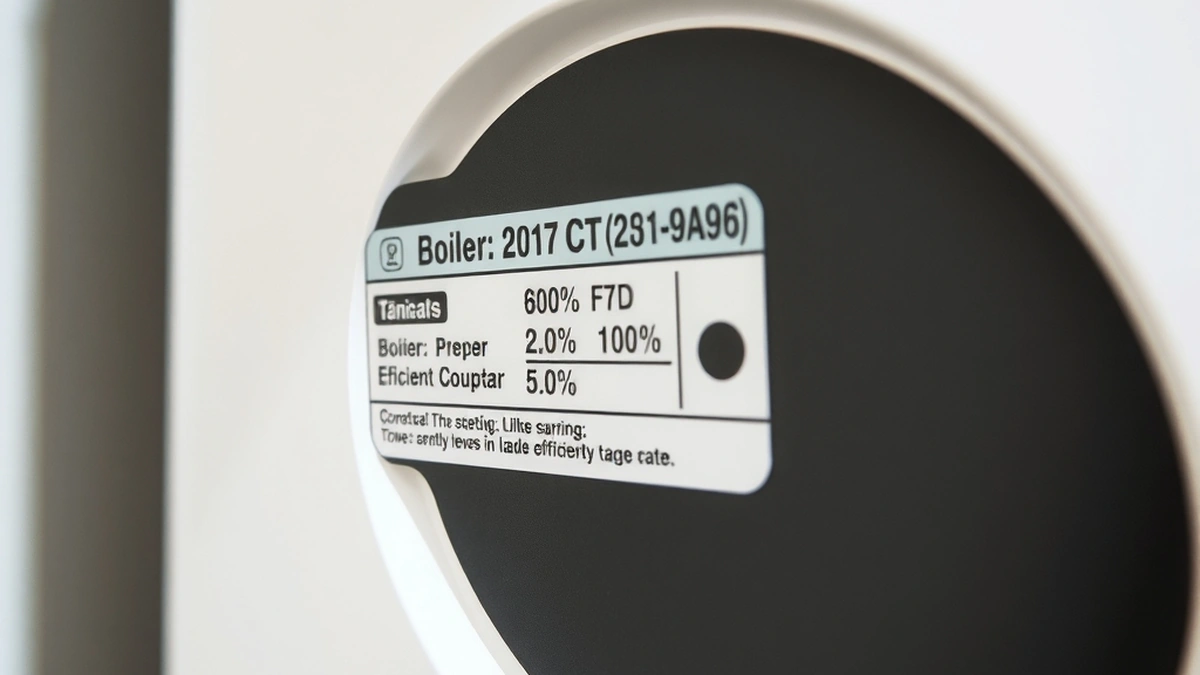
- Read the data plate on the quoted model and note the exact model number, not the series name.
- Check the AFUE in the manufacturer’s technical manual, and read what conditions produce it.
- Download the warranty document and check the heat exchanger term, the parts term, the labour exclusion, and the annual service condition.
- Call a local supply house and ask if they stock the control board and the pump for that model. A yes beats any rating.
- Ask two contractors the same question: which boiler do you install most, and what do you get called back for? The answer will be specific and unglamorous.
What reviews never tell you: the running cost
Nobody’s review tells you what the boiler will cost to run in your house. Fuel use depends on your rate, your climate, your emitters, and your controls.
The purchase is $4,000 to $8,000; the fuel bill arrives every year for two decades. A boiler at 82 AFUE and one at 95 AFUE differ by roughly 14 percent in fuel per unit of delivered heat ($0.95 ÷ $0.82 = 1.16, so the standard unit uses about 16 percent more input for the same output). On a $1,800 annual bill that is about $290 a year, or $5,200 over 18 years.
That figure, not the review score, is the one to weigh against the condensing premium. Our cost breakdown shows the arithmetic line by line.
Red flags, in reviews and in quotes
- A quote that names a series but not a model number.
- A “high efficiency” claim with no AFUE figure.
- A heat exchanger warranty that depends on annual service the contractor never mentions.
- Reviews that all appear in the same week with identical phrasing.
- A price well below $4,000 for a boiler replacement, which usually means no permit, no combustion analysis, or a reused unsafe flue.
Where reviews fit in the decision
Read them last. Size the boiler with a heat loss calculation, confirm the AFUE and modulation, check the warranty conditions, verify parts supply, and pick the contractor whose quote itemizes piping and venting. Reviews then do one job: confirming the crew has done this before.
If the reviews are excellent and the specification is wrong, the specification wins. Our installation guide lists what a complete quote contains, and the maintenance guide explains the annual service the warranty will require.
Frequently asked questions
Which boiler brand is the most reliable?
There is no defensible national ranking, and most brands buy the same pumps, gas valves, and controls. Installation quality and local service support predict satisfaction better than the label.
Are online boiler reviews trustworthy?
Partly. They capture installation experience and first-year faults well, but few owners return to update a review after ten years. Read them for patterns in service response rather than for reliability scores.
What efficiency should I look for in a boiler?
A condensing boiler typically rates 90 to 96 AFUE against 80 to 85 for a standard unit. The real gain depends on your emitters running cool enough for the boiler to condense.
What is boiler modulation ratio?
The range between minimum and maximum firing rate. A five-to-one ratio lets the boiler match mild weather rather than cycling on and off, which improves efficiency and reduces wear.
How long is a boiler warranty?
Common terms are ten to fifteen years on the heat exchanger and two to five on parts and labour, with the longest coverage usually conditional on annual service by a registered technician.
Does a more expensive boiler last longer?
Not automatically. Price tracks efficiency, modulation, controls, and materials. A mid-priced boiler installed and commissioned properly often outlasts a premium one installed badly.
Sources
Some links are affiliate links.If you buy through them we may earn a commission at no extra cost to you. We do not accept payment for rankings. Read the full disclosure.