Cheap Furnace Repair: What Low Quotes Miss
A low furnace repair quote can skip safety checks, proper diagnostics, and parts warranties. Learn what cheap bids often leave out before you book.
A cheap furnace repair quote often skips diagnostics, safety tests, and labor warranties. Expect real repairs to fall between $150 and $600, and always compare scope, not just price.
- Typical furnace repair range
- $150–$600
- Furnace replacement range
- $3,000–$8,000
- Tune-up and safety check
- $100–$250
- Emergency call-out
- $200–$500
Some links on this page are affiliate links.If you buy through them we may earn a commission at no extra cost to you. We do not accept payment for rankings. Read the full disclosure.
A cheap furnace repair quote often looks like a bargain until you read the fine print. The national average for furnace repair sits between $150 and $600, but a bid well below that range usually means something is missing from the scope of work. Before you sign off on the lowest number, you need to know what low quotes commonly skip and how those omissions can cost you more later.
What a Low Quote Usually Covers
At the bottom end of the market, a cheap furnace repair quote often includes only the most visible fix: swapping a part, resetting a breaker, or cleaning a flame sensor. That might get the furnace running again for the day, but it rarely includes a full system diagnostic. If the actual problem is a cracked heat exchanger, a failing control board, or restricted airflow, a parts-only fix can mask the issue while the real fault gets worse.
A complete repair visit should include testing voltage, checking gas pressure, inspecting the vent system, and verifying safety controls. When a quote is suspiciously low, those steps are often the first things cut. You can read more about what a proper visit involves in our furnace inspection guide.
Diagnostics Cost Time, and Time Costs Money
Technicians need time to open the unit, read error codes, measure temperature rise, and test components. That labor has a real cost. If a company quotes $89 for a repair that normally falls in the $150–$600 range, they are either eating the diagnostic time or skipping it entirely.
Here is how the math can break down on a standard repair:
- Technician travel and on-site time: roughly 1 to 1.5 hours
- Diagnostic testing: 30 to 60 minutes
- Part replacement: 30 to 90 minutes depending on accessibility
If a technician spends two hours on a visit and charges only $90, that is $45 per hour before overhead, insurance, tools, and vehicle costs. A sustainable business cannot run that way, which means the quote likely excludes something important—either the diagnosis, a warranty on labor, or a follow-up if the fix does not hold.
Safety Checks Are Not Optional
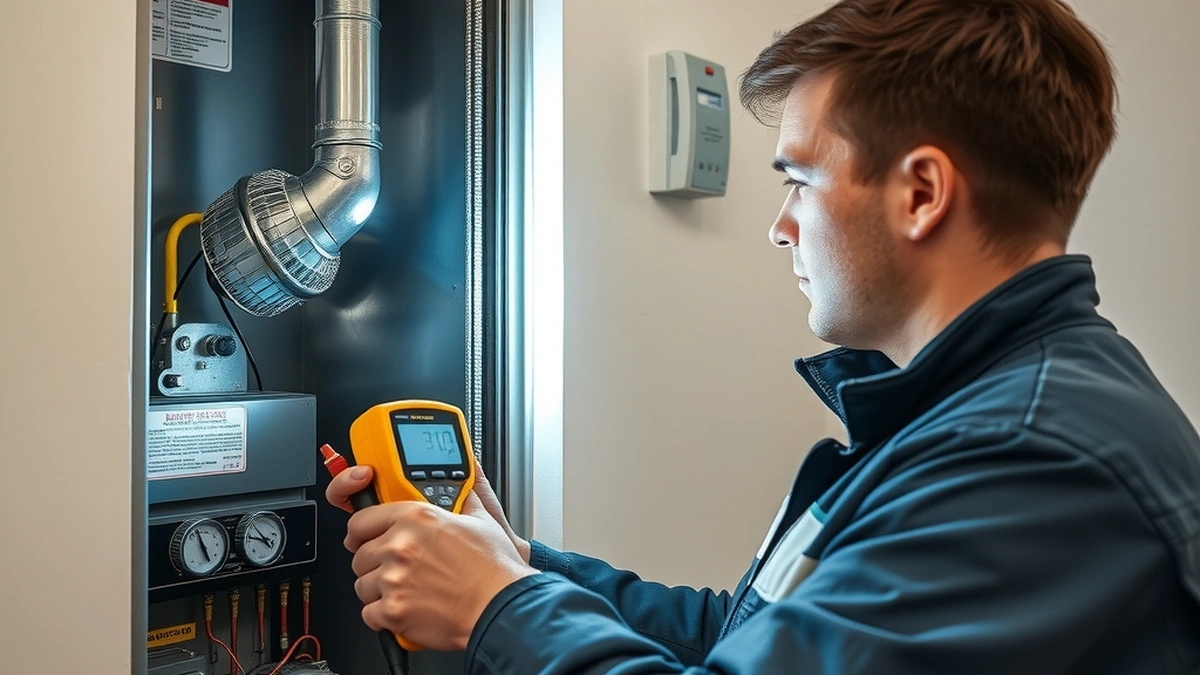
Furnaces burn fuel or move high voltage electricity. Both carry risk. A proper repair should include checking for gas leaks, verifying carbon monoxide venting, testing limit switches, and inspecting electrical connections. These safety checks take time and require specific tools, including combustion analyzers and multimeters.
Low quotes often omit this layer. A technician might replace a hot surface igniter and leave without confirming that the furnace is venting correctly. That is not necessarily negligence, but it is an incomplete job. If you want to understand what a safety-focused visit looks like, our electric furnace repair article covers electrical safety steps that apply across fuel types.
Parts Warranties and Labor Warranties Differ
A cheap quote might include a new part but no labor warranty. If the part fails in 30 days, you pay for the service call again. Some low-cost providers also use aftermarket or refurbished components without disclosing it. Those parts can work fine, but they may not carry the same warranty as original equipment, and they may void remaining factory coverage on a newer furnace.
Before accepting a bid, ask:
- Is the part new or refurbished?
- How long is the labor warranty?
- Is the diagnostic fee applied to the repair if I proceed?
- What happens if the same problem returns within 30 days?
If the contractor cannot answer clearly, that is a signal to get another quote.
When a Low Quote Makes Sense
Not every cheap quote is a trap. If your furnace is under warranty and the part is covered, your real cost may be only the service call or diagnostic fee. Similarly, a simple repair such as replacing a thermostat or air filter genuinely can fall near the low end of the $150–$600 range. The key is matching the price to the scope, not assuming the lowest number is the best deal.
You can compare typical repair pricing in our furnace repair cost breakdown to see where your quote fits.
The Replacement Trap
One of the most expensive things a low quote can miss is the bigger picture. If your furnace is 15 to 20 years old and needs a $500 repair, spending that money might make sense. If it needs a $1,200 repair on a 20-year-old unit, you may be better off putting that money toward replacement.
Full furnace replacement typically runs $3,000–$8,000 depending on the unit, ductwork modifications, and labor. Spending $1,200 on an old furnace can feel cheaper in the moment, but if the blower motor or heat exchanger fails next winter, you have thrown good money after bad. A trustworthy technician will tell you when a repair no longer makes financial sense rather than selling you repeated band-aids.
Other Services That Get Confused With Repair
Homeowners sometimes bundle unrelated services into a furnace visit. Duct cleaning, for example, usually costs $300–$800 and is a separate service from furnace repair. A technician might recommend it if they see excessive debris, but it is not required to fix a broken igniter or control board. Likewise, a heat pump installation runs $5,000–$12,000 and is a completely different project from repairing an existing gas furnace.
Emergency service also carries a premium. An after-hours or weekend call-out typically costs $200–$500 on top of repair labor. If your furnace stops working at 10 p.m. in January, that fee may be unavoidable. If it stops at 2 p.m. on a Tuesday, waiting for a standard appointment can save you hundreds.
How to Compare Quotes Properly
When you receive multiple estimates, lay them out side by side and compare scope, not just the total. A complete quote should list:
- The specific problem diagnosed
- The parts to be replaced
- Whether parts are new or refurbished
- Labor warranty length
- Whether diagnostic fees apply to the final bill
- Any safety tests included
If one quote is $190 and another is $320, but the $320 quote includes a full diagnostic, a 90-day labor warranty, and combustion testing, the higher price may be the better value.
Get a Second Opinion When the Price Seems Too Low
If a quote seems too good to be true, it usually is. Call another licensed technician for a second opinion. You do not need to commit to the first company that answers the phone. A reputable contractor will not pressure you into an immediate decision on a non-emergency repair.
For ongoing care, our furnace repair maintenance overview explains how seasonal upkeep can reduce the likelihood of emergency repairs altogether. If you are weighing repair against replacement, our furnace repair vs heat pump comparison looks at long-term costs. And if you are ready to book a full-service visit, our furnace repair installation page outlines what to expect from start to finish.
The bottom line: cheap furnace repair is only cheap if it fixes the problem safely and completely. Compare what is included, ask about warranties, and never let a low price talk you out of a proper diagnosis.
Frequently asked questions
Is cheap furnace repair safe?
It can be, but only if the technician still performs proper diagnostics and safety checks. A low price that skips combustion testing or electrical verification can miss real hazards.
What does a $150 furnace repair usually cover?
At the low end of the $150–$600 range, that often covers a single part and basic labor, such as a thermostat replacement or igniter swap, not a full system diagnosis.
Should I accept the lowest quote?
Not automatically. Compare what each quote includes—diagnostics, parts warranty, labor warranty, and safety checks—rather than choosing on price alone.
How much does furnace replacement cost?
Full replacement typically runs $3,000–$8,000 depending on unit size, efficiency, and labor, so a repair quote should be weighed against that long-term figure.
Does a tune-up count as a repair?
No. A tune-up and safety check usually costs $100–$250 and is preventive maintenance, while repair addresses a specific broken component.
When is an emergency call-out justified?
If the furnace won’t start in freezing weather or you suspect a gas leak, the $200–$500 emergency call-out may be worth it; otherwise, schedule a standard visit.
Sources
Some links are affiliate links.If you buy through them we may earn a commission at no extra cost to you. We do not accept payment for rankings. Read the full disclosure.