Furnace repair installation: what it involves
A furnace repair installation means removing a failed part, refitting it, and proving the unit runs safely. Here is the sequence, the hours, and the cost.
A furnace repair installation removes the failed component, refits a replacement, and commissions the unit with combustion and temperature-rise tests. Most jobs take one to four hours and cost $150 to $600.
- Typical repair installation cost
- $150–$600
- On-site time for most jobs
- 1–4 hours
- Tune-up and safety check
- $100–$250
- Full replacement alternative
- $3,000–$8,000
Some links on this page are affiliate links.If you buy through them we may earn a commission at no extra cost to you. We do not accept payment for rankings. Read the full disclosure.
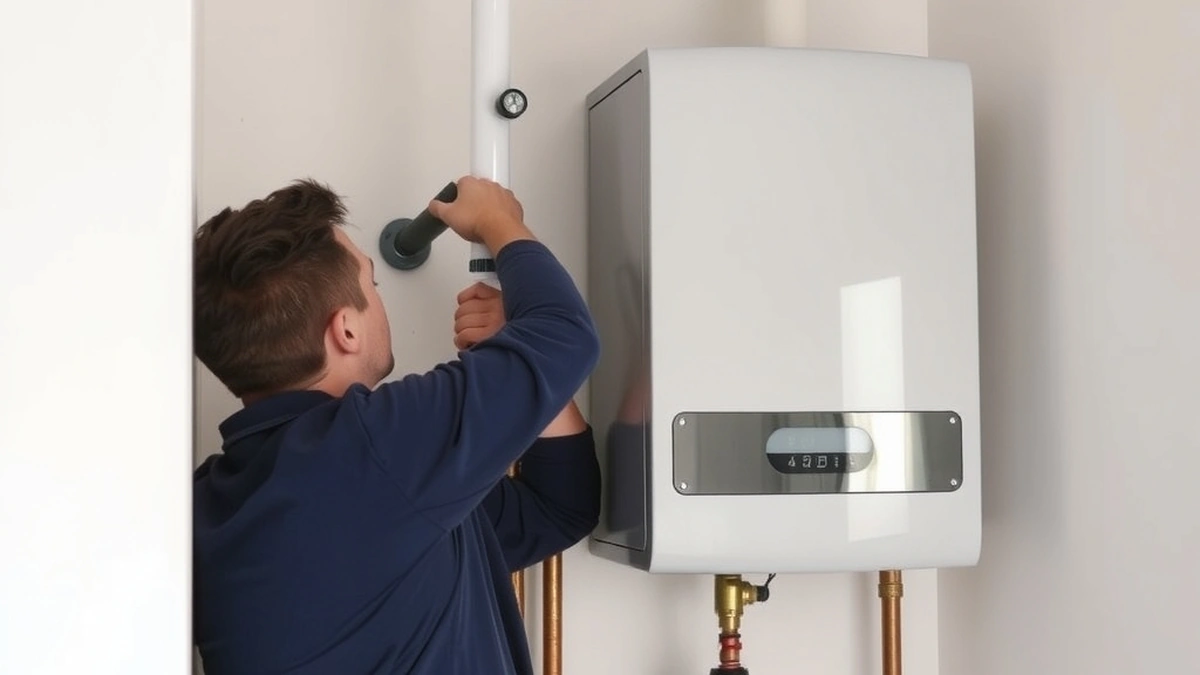
A furnace repair installation is the removal and refitting of a failed component, followed by testing that proves the whole unit runs within spec. It is the physical middle of a repair visit: diagnosis comes before it, commissioning comes after. Most jobs take one to four hours on site and land between $150 and $600 in total.
Where the term comes from
Contractors use “installation” for two different things. One is a new furnace going into a house. The other is a part being installed into an existing furnace, which is what this page covers. The distinction matters because the price, the paperwork, and the risk are nothing alike.
A repair installation is defined by three things: a failed component is identified and removed, a replacement is fitted to the manufacturer’s spec, and the appliance is verified safe and functional before the technician leaves. Skip the third step and you have swapped a part without repairing a furnace.
The sequence, step by step
- Lock out and isolate. Gas is shut at the valve, power is killed at the disconnect, and the technician confirms dead voltage at the board before touching anything.
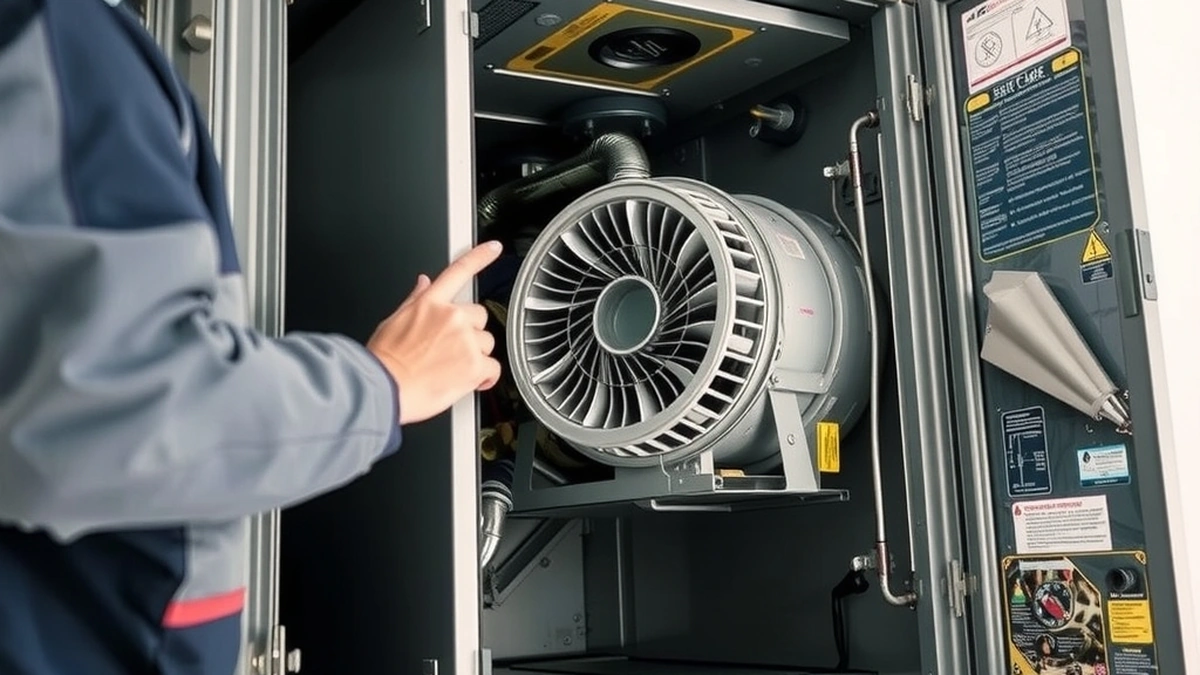
- Open the cabinet and remove the failed part. The blower assembly slides out the front on most upflow units. A control board comes off with labeled connectors. An inducer unbolts from the collector box.
- Inspect the cavity. This is where a good technician earns the fee. Rust in the collector box, a cracked hose, scorched wiring, or a nest in the flue collar changes the job.
- Fit the replacement and reconnect. Gaskets go on dry, screws go back in pattern, and wiring is re-terminated to the same terminals it came off.
- Commission the unit. Gas pressure is set, the burners are observed through a full ignition cycle, temperature rise is measured against the data plate, and the drainage on a condensing unit is checked.
Which repairs need a real teardown
| Component | Access | Typical total |
|---|---|---|
| Flame sensor | Front panel, 15 min | $150–$200 |
| Hot surface igniter | Burner compartment | $200–$350 |
| Pressure switch | Front panel, hose runs | $200–$350 |
| Control board | Front panel, connectors | $350–$600 |
| Draft inducer | Collector box, 4–8 bolts | $350–$600 |
| Blower motor | Slides out as an assembly | $400–$600 |
| Heat exchanger | Plenum and cabinet | Above the repair range |
The first six rows sit inside the normal $150–$600 band. Heat exchanger replacement is the exception: it requires opening the supply plenum, and the labor alone can run five hours. On a unit older than 15 years, that quote is usually the moment to price replacement at $3,000 to $8,000 instead.
The arithmetic behind the invoice
Labor is billed by the hour or by a flat-rate book. A flat-rate price for a blower motor might read $560 and break down as $260 for the part and three hours at $100 per hour. That is honest math, and you can ask to see it.
An hourly job looks like this: $180 igniter plus 1.25 hours at $120 per hour is $330. Add a $95 diagnostic fee that is not credited and the bill is $425. Add an after-hours fee of $200 to $500 and the same work crosses $600, which is why the time of day matters more than the part.
Repair installation versus full replacement
| Part installation | Full replacement | |
|---|---|---|
| Cost | $150–$600 | $3,000–$8,000 |
| Time on site | 1–4 hours | 6–10 hours |
| Permit | Usually none | Usually required |
| Disruption | Heat off for an afternoon | Heat off for a day, plus venting work |
| Warranty | Part only, 90 days to 5 years | Full unit, 5–10 years typical |
The comparison only becomes a real choice when the failed part is expensive to reach. A $400 blower on a 12-year-old furnace is a straightforward installation. A $1,400 heat exchanger job on an 18-year-old furnace is a down payment on a replacement.
What goes wrong when a unit is opened
The most common failure after a repair installation is a repeat of the same fault. A blower motor replaced without checking static pressure will fail again if the duct system is undersized or the filter slot is choked. A pressure switch swapped without clearing the condensate trap will trip again within a week.
The second most common problem is a disturbed connection. Old furnaces have brittle wire and stiff spade terminals, and a connector that was fine before the cabinet came apart can read open afterward. This is why the commissioning step is not optional: it catches what the teardown broke.
Third is paperwork. A part installed under a manufacturer warranty needs the model and serial recorded, or the claim is refused later. Ask for the part number and the warranty terms in writing.
What to check before you sign off
Ask the technician to show you three things before packing up: the temperature rise measured against the data plate, the flame pattern through a full cycle, and the old part. The last one matters more than it sounds, because a part that is genuinely dead looks dead.
Our furnace inspection guide covers the safety checks that should accompany any installation. For a full price breakdown by fault, see how much furnace repair costs. And if the technician recommends opening the cabinet twice in one season, the maintenance schedule is the place to start rather than booking a third visit.
One number to hold onto: a repair installation that costs more than half the price of a new furnace, on a unit past 15 years, is rarely the better buy.
Frequently asked questions
How long does a furnace repair installation take?
Most single-component jobs take one to four hours on site. Control boards, blower motors, and draft inducers sit at the top of that range because they need wiring and airflow verification afterward.
Does the technician have to remove the whole furnace?
Rarely. A blower or control board comes out through the front panel. Only heat exchanger work, and some A-coil jobs, require pulling the unit or opening the plenum.
Will I need a permit?
A like-for-like part swap normally does not need one. Replacing a heat exchanger, altering gas piping, or changing venting often does, and the contractor should know your local rule.
Does a repair installation include a safety test?
It should. A complete visit ends with a combustion check, a temperature-rise measurement, and verification that the limit and pressure switches function.
Can the same part fail again right away?
It happens when the root cause was not addressed. A blower that failed from a restricted duct system will fail again unless the static pressure problem is fixed at the same time.
Is it cheaper to replace than to install a new heat exchanger?
Often. Heat exchanger work is labor-heavy and pushes past the normal repair range, so on a unit over 15 years old the money is usually better spent on replacement at $3,000 to $8,000.
Sources
Some links are affiliate links.If you buy through them we may earn a commission at no extra cost to you. We do not accept payment for rankings. Read the full disclosure.