Types of furnace repair
Furnace repairs fall into six groups — ignition, airflow, gas and combustion, electrical, mechanical, and venting. Here is what each one involves.
Furnace repairs divide into six types — ignition, airflow, gas and combustion, electrical and controls, mechanical wear, and venting or condensate. Ignition and airflow faults account for most no-heat calls and cost $150 to $600 to fix.
- Typical repair cost
- $150–$600
- Ignition faults
- $200–$350
- Airflow faults
- $150–$600
- Full replacement
- $3,000–$8,000
Some links on this page are affiliate links.If you buy through them we may earn a commission at no extra cost to you. We do not accept payment for rankings. Read the full disclosure.
Furnace repair falls into six types: ignition, airflow, gas and combustion, electrical and controls, mechanical wear, and venting or condensate. Nearly every service call you will ever pay for is one of those, and knowing which one you have is most of the way to knowing what it should cost. Typical repairs run $150 to $600.
1. Ignition faults
The furnace calls for heat, the board opens the gas valve, and nothing lights — or it lights and goes out.
Common causes: dirty flame sensor, failed hot surface igniter, weak spark electrode on an older unit, pressure switch not proving.
Symptoms: clicking without ignition, burners lighting for a few seconds then dropping out, a fault code for “no flame sensed.”
Cost: $150 to $350, because the parts are inexpensive and the job is quick. A flame sensor cleaning is often the cheapest real repair on the list.
This is the most common category by volume. If your furnace has stopped entirely and there is no other clue, ignition is the first thing a technician checks.
2. Airflow faults
The furnace lights, runs, and then shuts down on a limit switch. Or it runs constantly and the house never quite warms up.
Common causes: clogged filter, blocked return, dirty blower wheel, failing blower motor, undersized ductwork, wrong blower speed tap.
Symptoms: short cycling, a hot cabinet, weak airflow at the registers, a limit switch trip after ten to fifteen minutes of run time.
Cost: $150 for a filter and a check, $400 to $600 for a blower motor, more if ductwork is the cause.
Airflow is the category homeowners can partly handle themselves. A filter change costs $10 to $30 and resolves a real share of these calls. Our DIY furnace repair guide covers what is safe to touch.
3. Gas and combustion faults
The furnace lights but burns wrong, or the gas train will not deliver fuel.
Common causes: low manifold pressure, dirty burners, blocked orifices, a sticking gas valve, incorrect orifice sizing after a fuel conversion.
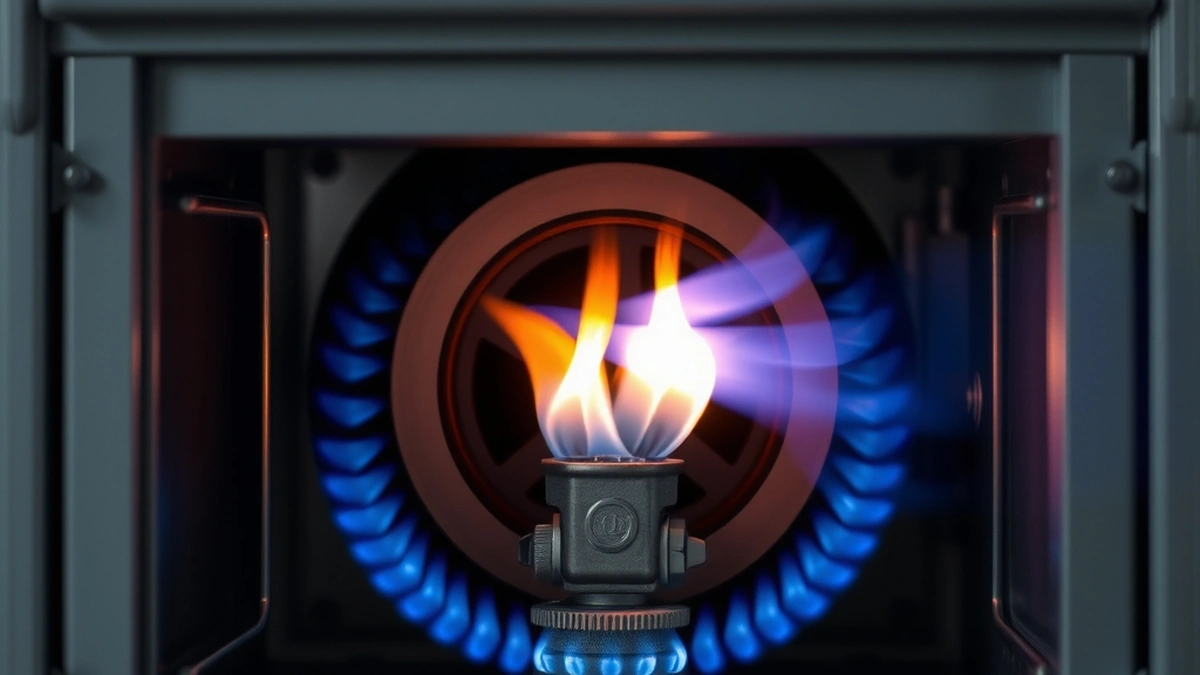
Symptoms: yellow or lifting flames instead of blue, soot on the burners, a rumbling light-off, high carbon monoxide readings.
Cost: $200 to $600 for cleaning and adjustment, more if the gas valve is replaced.
This is the category where combustion analysis stops being optional. A burner adjusted by eye is a burner adjusted wrong, and the instrument is the only way to know. Never accept a gas-side repair that ends without a CO reading.
4. Electrical and control faults
The board is not sending voltage where it should, or a safety circuit is open.
Common causes: failed control board, bad transformer, open limit or rollout switch, broken wire, corroded terminal, failed capacitor.
Symptoms: dead furnace with no display, a blower that runs with no heat, a fault code that will not clear, intermittent operation that comes and goes with weather.
Cost: $350 to $600 for a board, $150 to $300 for a capacitor or transformer, and $100 to $200 for a trace-and-repair on a broken wire.
Electrical faults are the hardest to price from the phone because the labor is diagnosis. A short that takes three hours to find is a $330 labor bill before any part.
5. Mechanical wear
Bearings, motors, and moving parts reach the end of their design life.
| Component | Typical life | Repair cost |
|---|---|---|
| Blower motor | 10–15 years | $400–$600 |
| Draft inducer | 8–12 years | $350–$600 |
| Blower wheel | 10–15 years | $300–$500 |
| Heat exchanger | 15–20 years | Above the repair range |
The heat exchanger row is the one that changes the decision. Replacing one requires opening the supply plenum, and on a unit past 15 years the labor usually pushes the bill toward replacement at $3,000 to $8,000. Our guide to when furnace repair is worth it covers how that math works.
6. Venting and condensate
High-efficiency furnaces produce water, and all furnaces need to move exhaust safely.
Common causes: blocked condensate trap, frozen drain line, disconnected flue, blocked intake, incorrect slope on PVC venting, deteriorated metal flue on older units.
Symptoms: a pressure switch fault that returns after resetting, water on the floor, ice at the exterior termination, exhaust smell indoors.
Cost: $150 to $400 for a condensate or venting repair, more if the flue itself needs rework.
A blocked condensate line is worth knowing about because it shuts the furnace down completely while looking like a much more expensive failure. It is also one of the few repairs a careful homeowner can prevent with a seasonal check.
The price summary
| Repair type | Typical cost | Urgency |
|---|---|---|
| Ignition | $150–$350 | Same day in winter |
| Airflow | $150–$600 | Same day if no heat |
| Gas and combustion | $200–$600 | Same day, safety |
| Electrical and controls | $150–$600 | Same day if no heat |
| Mechanical | $300–$600 | Scheduled |
| Venting and condensate | $150–$400 | Same day, safety |
Emergency call-outs add $200 to $500 to any of those. A tune-up, by contrast, is $100 to $250 and is not a repair at all.
Four steps to identify your type.
- Note the fault code from the LED on the control board. Count the flashes and look up the sequence in the door chart.
- Check the filter and the breaker before calling anyone. Those two account for a surprising share of “dead furnace” calls.
- Listen to the sequence. Inducer first, then igniter, then gas, then flame. Whichever step fails tells you the category.
- Describe the failure in sequence to the contractor. That description is worth $50 to $100 in diagnostic time.
Where these overlap
Real furnaces rarely fail in one clean category. A clogged filter causes airflow restriction, which causes overheating, which trips the limit switch, which reads on the board as a limit fault. The repair is a filter, not a switch.
That overlap is why diagnosis costs money and why a quote given before diagnosis is a guess. Our furnace inspection guide lists the checks that separate the cause from the symptom, and how much furnace repair costs puts a price on each fault.
Keep the filter clean, book the annual tune-up at $100 to $250, and know which of the six types you are dealing with before you approve a repair.
Frequently asked questions
What are the main types of furnace repair?
Ignition, airflow, gas and combustion, electrical and controls, mechanical wear, and venting or condensate. Most service calls fall into the first two.
Which furnace repair is most common?
Ignition faults, particularly a dirty flame sensor or a failed hot surface igniter. Between them they account for a large share of no-heat calls.
What does a furnace that short-cycles usually need?
An airflow or limit switch repair. Short cycling is usually caused by restricted airflow, an oversized unit, or a thermostat placed near a heat source.
How much do furnace repairs cost by type?
Ignition and sensor work runs $150 to $350, airflow work $150 to $600, control board replacement $350 to $600, and venting or condensate repairs $150 to $400.
Can a furnace repair fix a gas smell?
No. A gas smell is an emergency. Leave the building and call your gas utility before calling any contractor.
When is a furnace beyond repair?
When the heat exchanger is cracked on an older unit, when the control board is discontinued, or when the repair passes half the cost of a $3,000 to $8,000 replacement.
Sources
Some links are affiliate links.If you buy through them we may earn a commission at no extra cost to you. We do not accept payment for rankings. Read the full disclosure.