Gas furnace installation: the process, start to finish
A gas furnace installation takes one to two days: load calculation, venting, gas piping, duct transition, and commissioning. Here is the full sequence.
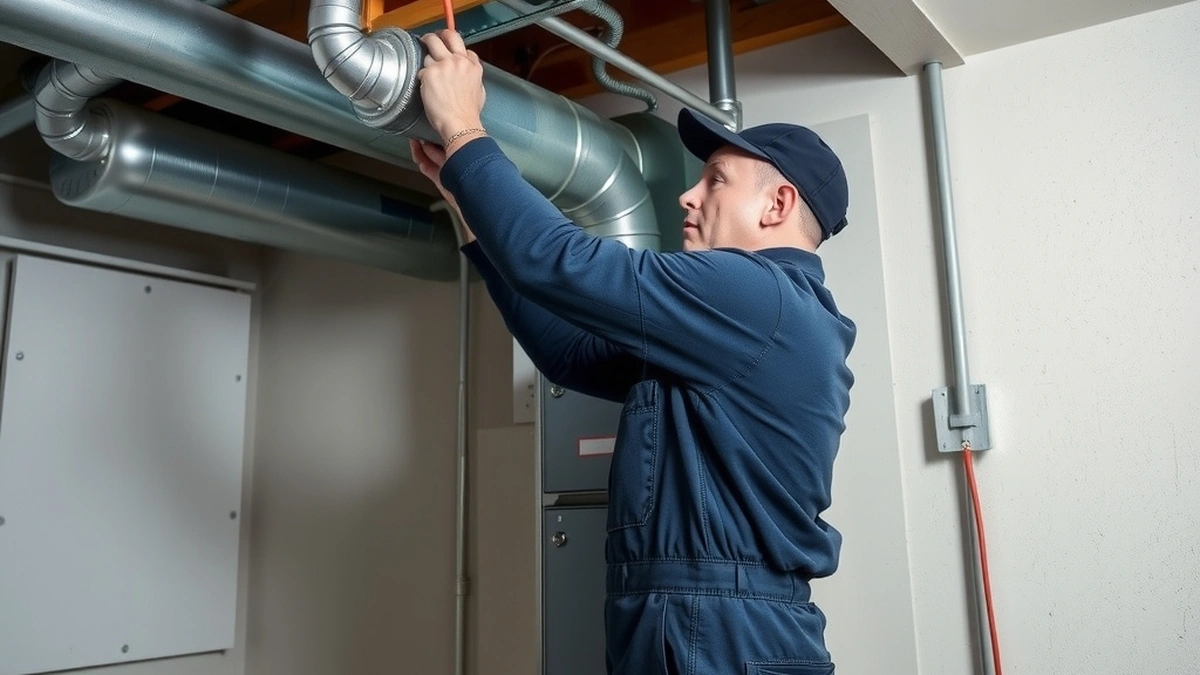
A gas furnace installation replaces the furnace, flue, gas connection, electrical supply, and plenum in one to two days. Expect $3,000 to $8,000 installed, a permit, a load calculation before anything is ordered, and a combustion test at the end.
- Typical duration
- 1 - 2 days
- Installed cost
- $3,000 - $8,000
- Crew size
- 2 technicians
- Final test
- Combustion analysis
Some links on this page are affiliate links.If you buy through them we may earn a commission at no extra cost to you. We do not accept payment for rankings. Read the full disclosure.
A gas furnace installation takes one to two days and costs $3,000 to $8,000 installed. The work is not one job but five: removing the old appliance, rebuilding the vent route, connecting gas and electrical, fitting the plenum to the existing ducts, and commissioning the result with instruments.
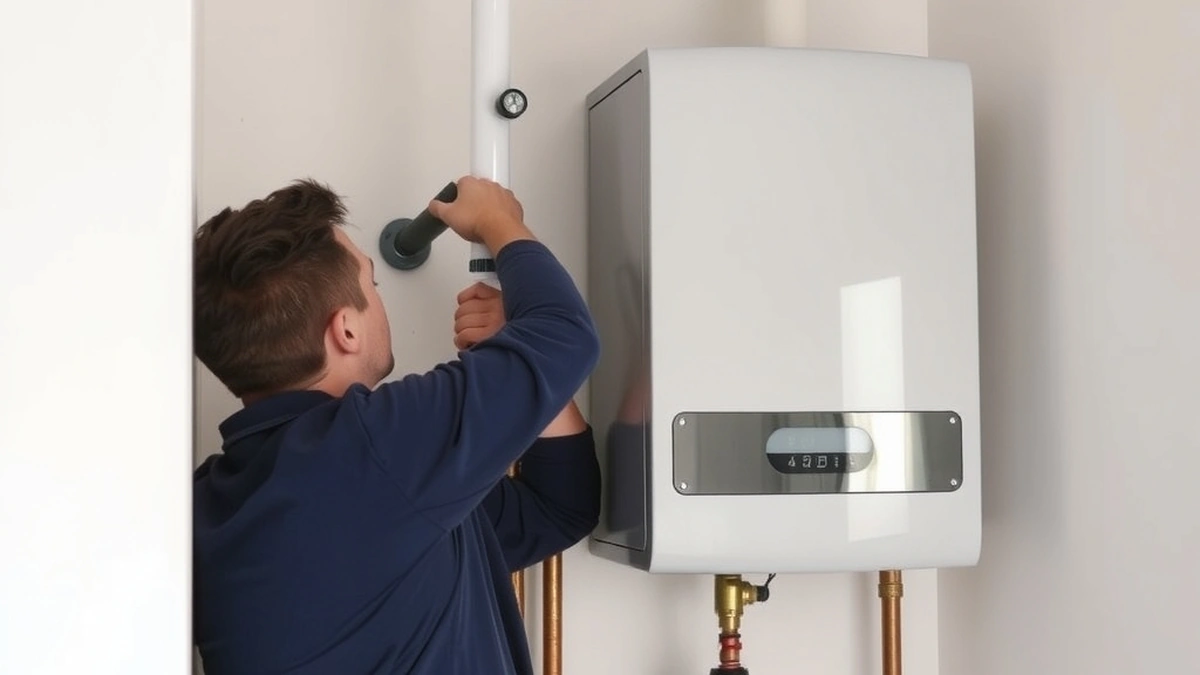
A gas furnace installation is the complete reconnection of a new furnace to the gas supply, the flue, the electrical supply, the condensate drain, and the duct system. The appliance is the easy part. The building around it is the job.
Before the truck arrives: the load calculation
No furnace should be ordered before someone measures the house. A Manual J calculation uses square footage, ceiling height, insulation values, window area and orientation, air leakage, and the local design temperature to produce a heat loss figure in BTU per hour.
The old furnace’s label is not a calculation. Fifty years of attic insulation, replacement windows, and an added room all change the number. A house that needed 100,000 BTU in 1985 may need 60,000 today, and an oversized furnace short cycles, wears its heat exchanger, and leaves cold rooms at the far end of the duct run.
Alongside the load calculation, the survey should record the flue type and condition, the gas meter capacity, the electrical circuit at the furnace, the duct sizes at the plenum, and the access route. Every one of those becomes a line on the quote.
Day one: removal, venting, and gas piping
The crew starts by isolating gas and power, then recovering the old unit. A basement furnace comes out in one piece. An attic or closet unit may have to be disassembled, which is a labor line rather than a parts line.
Venting is the part that decides the schedule. Three routes are common:
- Existing metal flue with a lined chimney, used by an 80 percent furnace.
- PVC sidewall vent for a condensing furnace, with intake and exhaust pipes through the rim joist.
- Chimney liner when the old masonry flue is too large or unlined for the new appliance.
Gas piping comes next: a shutoff within reach, a sediment trap, and a pipe size that can carry the appliance’s input at the available pressure. A long run from the meter can force a larger pipe, which is why “the gas line is already there” is not always true in practice.
Day two: setting the unit, the plenum, and duct static
The furnace goes on a level pad or hanging brackets with the clearances on its label. Then the plenum is fabricated to connect the new blower outlet to the existing duct trunk. This is sheet metal work, and it is where airflow is won or lost.
A transition that necks down from a 20-inch opening to a 12-inch trunk adds static pressure the blower was not selected for. The result is a noisy system with weak delivery at the last register. Good installers measure static pressure before and after and adjust the blower tap.
The condensate drain is also part of this day. A condensing furnace produces water, and it needs a trap, a slope, and somewhere legal to discharge. A condensate pump adds an electrical outlet and a failure point.
Commissioning: the tests that decide whether it works
Commissioning is not a formality. It is the difference between a furnace that runs and a furnace that runs correctly.
| Test | What it proves |
|---|---|
| Gas manifold pressure | The appliance receives its rated input |
| Combustion analysis | Carbon monoxide and oxygen are in range |
| Temperature rise | Airflow matches the blower setting |
| Static pressure | The duct system is within the blower’s curve |
| Draft and vent check | Flue gases leave the building |
| Thermostat cycle test | Stages and fan settings work |
Temperature rise is the one homeowners can ask about by name. The label states a range, often 35 to 65 degrees Fahrenheit. A rise above the top of that range means not enough air, and the fix is airflow, not a new furnace.
What the job costs
| Line item | Typical estimate |
|---|---|
| Furnace and materials | $1,500–$3,000 |
| Labor and commissioning | $800–$2,200 |
| Venting and flue work | $150–$800 |
| Gas piping and valve | $100–$500 |
| Plenum and duct transition | $250–$700 |
| Permit and inspection | $100–$400 |
| Removal and disposal | $100–$400 |
The low column sums to $1,500 + $800 + $150 + $100 + $250 + $100 + $100 = $3,000. The high column sums to $3,000 + $2,200 + $800 + $500 + $700 + $400 + $400 = $8,000. That matches the national replacement band, and the spread is scope, not brand.
A tune-up after the first year costs $100 to $250. Skipping it is how a warranty claim gets denied for lack of maintenance records.
Replacement against a first-time installation
A replacement reuses the flue, gas line, and duct trunk. A first-time installation in a house that never had forced air has to create all three, plus a condensate path and often a new circuit. That is why a “furnace installation” quote can double when the house has no ductwork: the furnace is no longer the project, the distribution system is.
Six checks before you pay
- Ask for the Manual J summary and confirm the output in BTU matches it.
- Confirm the venting route in writing — existing flue, liner, or sidewall PVC.
- Verify the thermostat supports the stages you are paying for.
- Ask for the commissioning printout, including temperature rise and combustion readings.
- Confirm the permit was pulled in the property owner’s name or the contractor’s, and that inspection is scheduled.
- Read the warranty registration deadline. Many manufacturers require registration within 60 days.
Our cost guide breaks down the price by line item, the maintenance guide covers what happens after the first heating season, and the problems guide maps a cold room or a short cycle back to its cause.
Frequently asked questions
How long does a gas furnace installation take?
One day for a straight swap with an existing flue and matching ductwork, two days when venting, gas piping, or the plenum needs rebuilding. Permit inspection may add a separate visit.
Do I need a permit to replace a gas furnace?
Almost always yes, because the work touches gas piping and venting. The permit fee usually runs one hundred to four hundred dollars and the inspection is the check that the venting and clearances are correct.
Can a furnace be installed in an attic or closet?
Yes, with the right clearances, a secondary drain pan, and a venting route. Attic and closet installations cost more because access is slower and condensate removal needs a pump.
What is a Manual J load calculation?
A room-by-room calculation of heat loss using insulation, window area, air leakage, and design temperature. It produces the BTU output the furnace must deliver, which is not the same as the old furnace's label.
Why does the installer run a combustion test?
To measure oxygen, carbon monoxide, and flue temperature after setup. It confirms the gas pressure, air adjustment, and venting are correct before the crew leaves, and the printout is your record.
Can I keep my old thermostat?
Often yes for a single-stage furnace. A two-stage or modulating unit needs a thermostat that supports the extra stages, or the upgrade runs as a single-stage machine and you paid for nothing.
Sources
Some links are affiliate links.If you buy through them we may earn a commission at no extra cost to you. We do not accept payment for rankings. Read the full disclosure.