Gas furnace problems: symptoms, causes, and fixes
A gas furnace that will not light, short cycles, or blows cold air usually has one of six faults. Here is how each symptom maps to a cause and a repair price.
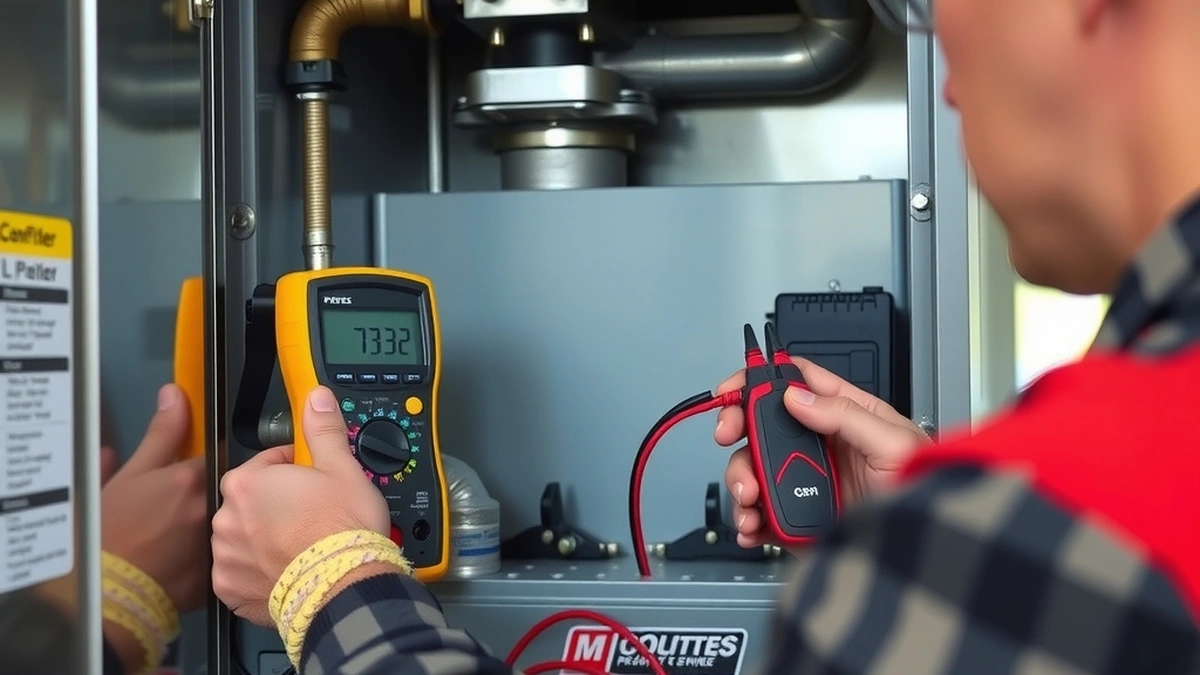
Most gas furnace problems trace to ignition, flame sensing, airflow, or a blocked flue. Repair runs $150 to $600 and an emergency call-out $200 to $500. A gas smell, a carbon monoxide alarm, or a cracked heat exchanger is a shutdown, not a DIY diagnosis.
- Typical repair
- $150 - $600
- Emergency call-out
- $200 - $500
- Replacement
- $3,000 - $8,000
- Tune-up
- $100 - $250
Some links on this page are affiliate links.If you buy through them we may earn a commission at no extra cost to you. We do not accept payment for rankings. Read the full disclosure.
A gas furnace that will not light, runs for two minutes and stops, or pushes air that never gets warm is usually showing one of six faults. Diagnosis runs from the thermostat call through ignition, flame proving, and airflow, in that order. Repair costs $150 to $600 for common faults; the safety exceptions are covered below.
A gas furnace problem is any fault in the chain that runs from the thermostat’s call for heat to the burner, the heat exchanger, and the blower that moves air into the rooms. The chain matters because the symptoms repeat: the same “no heat” complaint can be a $12 sensor or a failed control board.
The six faults behind most no-heat calls
| Symptom | Likely cause | Typical repair |
|---|---|---|
| Clicking, no flame | Failed hot-surface igniter | Igniter replacement |
| Lights, then shuts off after seconds | Dirty or failed flame sensor | Clean or replace sensor |
| Inducer runs, burner never lights | Blocked flue or failed pressure switch | Clear flue, replace switch |
| Blower runs, no heat, no error | Failed gas valve or control board | Valve or board replacement |
| Heats, then stops before the setpoint | Restricted airflow opening the high limit | Filter, return, or blower fix |
| Loud rumble or delayed ignition | Burner alignment, gas pressure, dirty burners | Burner service and adjustment |
The flame sensor is the most common cheap fix on the list. It is a metal rod that carries a tiny current through the flame; when it coats with oxide, the board decides there is no flame and closes the gas valve. Cleaning it takes minutes, and a replacement is inexpensive.
The igniter is the opposite failure: it cracks and stops glowing, so gas never lights. A technician should confirm the board is sending voltage before replacing it, because a failed board can mimic a failed igniter.
Safety faults that end the diagnosis
Three findings stop the troubleshooting and turn it into a shutdown:
- A sustained gas smell. Leave the building and call the gas utility from outside. Do not switch anything on or off, including a light.
- A carbon monoxide alarm. Get everyone out, ventilate only if it is safe to do so, and call the fire department or utility.
- A cracked heat exchanger. This is the barrier between combustion gas and room air. It is normally a replacement, not a repair.
A rollout switch that has tripped is also a stop sign. It means flame escaped the burner compartment, often from a blocked flue or a failed inducer, and resetting it without finding the cause is how a small fault becomes a dangerous one.
What each repair costs
| Repair | Typical estimate |
|---|---|
| Flame sensor clean or replace | $150–$280 |
| Hot-surface igniter | $180–$350 |
| Pressure switch | $200–$380 |
| Inducer motor | $350–$600 |
| Gas valve | $300–$600 |
| Control board | $400–$600 |
These sit inside the $150 to $600 repair band. An emergency visit at night or on a holiday adds $200 to $500 in many markets, and that charge is for access, not for a better repair.
Set the numbers against replacement. A $420 inducer motor on an 11-year-old furnace is 420 ÷ 3,000 = 14 percent of the cheapest replacement, which is an easy yes. The same repair on a 22-year-old unit with a cracked exchanger is money spent on a machine that is already condemned.
Gas against electric failure modes
Gas furnaces fail at the ignition and venting end: igniters, flame sensors, pressure switches, inducers, and heat exchangers. Electric furnaces have none of those parts, so their failures cluster at elements, sequencers, and breakers. That does not make one more reliable than the other; it changes what the repair bill looks like. A gas unit has more safety devices to fail, and an electric unit has a larger electrical load to manage.
If you are weighing the two, our electric furnace problems guide covers the other side of that comparison, and the electric versus gas comparison covers the running-cost difference.
A five-step check you can do safely
- Check the thermostat is set to heat and the batteries are not dead. A blank display is a power problem, not a furnace problem.
- Replace the filter if it is grey or light-blocking. Restricted return air is the most common cause of a high-limit shutdown.
- Confirm the breaker and the furnace switch are on. A service switch beside the unit looks like a light switch and gets flipped during other work.
- Read the fault code on the control board through the sight glass, and write it down before calling. It shortens the visit.
- Check the intake and exhaust terminations outside for snow, leaves, or a bird nest. A blocked sidewall vent will lock out a condensing furnace.
Do not open the burner compartment, bypass a safety switch, or test a gas valve with a flame. Those steps require a combustion analyzer and a licence in most states.
When to stop and call
Call a technician when the fault repeats after one reset, when the code points to a pressure switch or gas valve, when the furnace is over 15 years old and the repair passes a third of replacement, or when any safety symptom appears. A $100 to $250 tune-up is the cheaper path: most of the faults above are visible during a maintenance visit before they strand the house in January.
For pricing context on the replacement side, see the gas furnace cost guide. For the annual visit that prevents the repeat call, see the maintenance checklist.
Frequently asked questions
Why does my gas furnace run but not heat?
The blower is running without a flame, which usually means the igniter, flame sensor, gas valve, or pressure switch has stopped the burner. The control board is calling for heat and failing a safety check.
Why does my furnace short cycle?
A high-limit switch is opening because airflow is restricted or the furnace is oversized. A dirty filter, a blocked return, or a failed blower capacitor are the common causes, and each is cheaper than a new furnace.
Is a cracked heat exchanger an emergency?
Yes. It lets flue gas mix with the air supplied to the rooms. Stop using the furnace, shut the gas valve, and have it inspected; a cracked exchanger is normally a replacement rather than a repair.
Why does my furnace smell like gas?
A faint smell at startup can be residual gas in the burner area. A sustained smell, a hiss, or a smell near a pipe joint means leave the building and call the gas utility from outside before calling a contractor.
How much does a furnace repair cost?
One hundred and fifty to six hundred dollars for common faults, plus two hundred to five hundred dollars for an emergency call-out in many markets. Parts such as a control board or inducer motor sit at the top of the range.
Can I reset my furnace myself?
You can cycle the power at the switch once and check the filter. If it locks out again, the fault is repeating and the code on the board is the useful next step, not another reset.
Sources
Some links are affiliate links.If you buy through them we may earn a commission at no extra cost to you. We do not accept payment for rankings. Read the full disclosure.