Gas furnace vs boiler
Forced air at $3,000 to $8,000 against hydronic heat, with radiators, no ducts and different repair economics. How to choose, and what conversion costs.
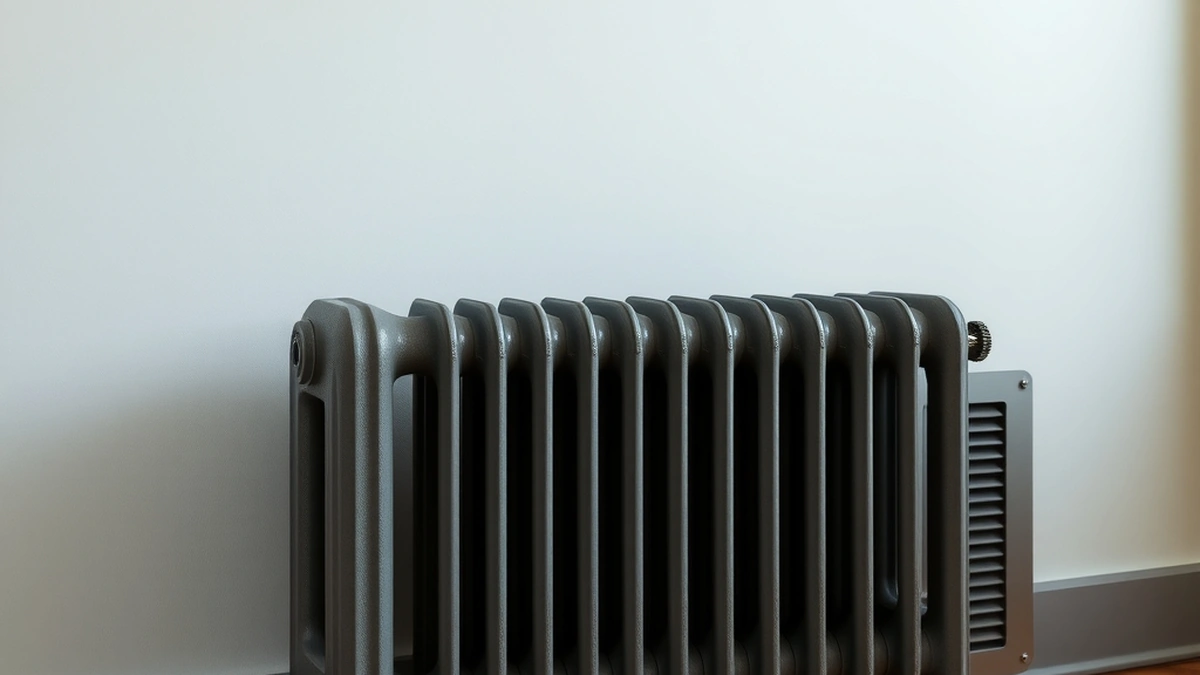
A gas furnace heats air and distributes it through ducts for $3,000 to $8,000 installed. A boiler heats water for radiators or radiant floors, typically $4,000 to $8,000. A furnace adds cooling easily; a boiler gives quieter, more even heat but needs a separate cooling system.
- Gas furnace
- $3,000 - $8,000
- Boiler
- $4,000 - $8,000
- Furnace repair
- $150 - $600
- Tune-up
- $100 - $250
Some links on this page are affiliate links.If you buy through them we may earn a commission at no extra cost to you. We do not accept payment for rankings. Read the full disclosure.
A gas furnace heats air and pushes it through ducts for $3,000 to $8,000 installed. A boiler heats water for radiators or radiant floors, typically $4,000 to $8,000. The choice is rarely made fresh: most houses already have one or the other, and the question is whether to convert. If you are replacing like for like, the decision is easier than the comparison suggests.
Two ways to move heat
A furnace is a forced-air appliance. It heats air in a plenum and a blower distributes it through ductwork to registers. The same ductwork can carry cooled air in summer.
A boiler is a hydronic appliance. It heats water and circulates it through pipes to radiators, baseboard convectors, or tubing in the floor. It does not move air, and it does not provide cooling.
The distribution medium is the whole difference. Water carries far more heat per unit volume than air, which is why hydronic systems can use smaller pipes and lower temperatures. Air is easier to route through a house and can be filtered, humidified and cooled.
Cost compared
| Item | Gas furnace | Boiler |
|---|---|---|
| Equipment | $1,500 - $4,500 | $2,500 - $6,000 |
| Labour | $800 - $2,000 | $1,200 - $2,500 |
| Distribution | Ducts, usually existing | Pipes and emitters, usually existing |
| Venting | $300 - $1,500 | $300 - $1,500 |
| Permit | $50 - $500 | $50 - $500 |
| Total | $3,000 - $8,000 | $4,000 - $8,000 |
Those totals assume the distribution already exists. A conversion is a different number: adding ducts to a hydronic house runs $4,000 to $12,000, and adding radiators or radiant tubing to a forced-air house runs $6,000 to $20,000 depending on how much of the house is opened up.
Comfort, honestly compared
Both systems heat a house. They feel different.
A furnace delivers warm air at a register, warms a room quickly, and can feel draughty if the ducts are poorly balanced. It dries the air slightly, which some people notice in winter. It can filter and humidify.
A boiler heats surfaces — radiators, baseboard, floors — and those surfaces warm the room by radiation and convection. The heat is quieter, has no airflow, and tends to be more even room to room. It responds slowly, because water has thermal mass.
Which is better is a preference, not a fact. People who grew up with radiators often find forced air draughty. People who grew up with forced air often find radiators slow.
Running cost
The running cost depends on the boiler’s efficiency and the emitters.
A modern condensing boiler at 92 to 95 percent efficiency is comparable to a 90-plus percent furnace in fuel terms. The advantage of hydronic systems is that they can run at lower water temperatures, which suits condensing operation and can pair with a heat pump or solar later.
There is no reliable rule that says one is cheaper. A well-insulated house with a condensing boiler and low-temperature emitters will beat a mid-efficiency furnace. A leaky house with a 30-year-old cast iron boiler will lose to a modern furnace.
The comparison that does hold: a boiler has no duct losses. Ductwork in an unconditioned attic or crawlspace can lose a meaningful share of the heat it carries. Hydronic pipes in the same space lose far less. In a house with ducts in a vented attic, that is a real penalty.
Where each one wins
Furnace:
- Cooling. Adding air conditioning to a ducted house is straightforward. Adding it to a hydronic house means a second system.
- Filtration and humidity control. Ducts can carry a filter, a humidifier and a dehumidifier.
- Fast recovery from a setback.
- Lower installation cost on a like-for-like replacement.
- Fewer freeze risks. Water in pipes can freeze; air cannot.
Boiler:
- Quiet operation. No blower, no airflow noise.
- Even heat, particularly with radiant floors.
- No duct losses where ducts would run through unconditioned space.
- Longevity. Cast iron boilers commonly reach 25 to 35 years.
- Allergy comfort, for people who react to air movement and duct dust.
Maintenance and repair
| Task | Furnace | Boiler |
|---|---|---|
| Annual service | $100 - $250 | $150 - $300 |
| Typical repair | $150 - $600 | $200 - $700 |
| Common failures | Igniter, inducer, board | Circulator, expansion tank, aquastat |
| Water treatment | None | pH and inhibitor checks |
| Freeze protection | Not required | Required if the house is vacant |
A boiler has water-side components that a furnace does not: circulator pumps, an expansion tank, a pressure relief valve, and in older systems a feed valve. Those add failure points, and they add repair cost.
The furnace side is priced in how much furnace repair costs, and the boiler side in boiler cost.
Converting from one to the other
Conversion is rarely worth it on cost alone.
- Forced air to hydronic: $6,000 to $20,000 for emitters and piping, plus the boiler. Justified mainly by comfort preference or by a historic house where ducts cannot be run.
- Hydronic to forced air: $4,000 to $12,000 for ductwork, plus the furnace, plus a cooling system if wanted. Justified mainly by a desire for central air.
In a house that already has one system working, replacing it in kind is almost always the cheaper decision. The conversion case is strongest when the existing distribution is being renovated anyway.
What to ask before deciding
- What distribution exists, and what condition is it in?
- Is cooling needed, now or later?
- What is the boiler or furnace efficiency, and what would a condensing unit save?
- Where do the ducts or pipes run, and are they inside the conditioned space?
- What is the emitter type, and can it run at low water temperature?
- What is the total installed cost, including any distribution work?
Question five matters for anyone planning a heat pump later. Low-temperature emitters — radiant floors, oversized radiators — make a future heat pump conversion much easier.
The heat pump alternative is covered in gas furnace vs heat pump, and the boiler comparison from the other direction is in boiler vs gas furnace.
A furnace is cheaper to install, adds cooling easily, and is the default in most US houses. A boiler is quieter, more even and longer lived, and it cannot cool.
If the house already has one, replace it in kind. If you are building or renovating, choose based on whether you want air conditioning and how much you value quiet, even heat.
Frequently asked questions
Is a boiler cheaper to run than a furnace?
It can be, because water carries heat more efficiently than air and hydronic systems often run at lower temperatures. The difference is usually modest and depends on the boiler's efficiency and the building's insulation.
Can a boiler heat a house with ducts?
Not directly. Ducts carry air, and a boiler carries water. Converting requires either adding a hydronic coil in an air handler or installing radiators or radiant floors throughout.
Which is better for allergies?
Hydronic heat is often preferred because it does not circulate air through ducts. A furnace with a good filter and clean ducts is also acceptable, but the duct is an additional place for dust to collect.
How much does boiler installation cost?
Typically $4,000 to $8,000 for a replacement in an existing system. A conversion from forced air adds the cost of radiators or radiant tubing, which can double the figure.
Do boilers last longer than furnaces?
Cast iron boilers commonly last 25 to 35 years; condensing boilers 15 to 20. Gas furnaces typically run 15 to 20 years. Longevity favours boilers, but repair costs are higher.
Can I add air conditioning to a boiler system?
Yes, but not through the boiler. You need a separate ducted system, ductless mini-splits, or a hydronic fan coil. That is the main practical drawback of hydronic heat.
Sources
Some links are affiliate links.If you buy through them we may earn a commission at no extra cost to you. We do not accept payment for rankings. Read the full disclosure.