Gas furnace vs gas furnace: which build you are buying
The label hides three machines: single-stage, two-stage, and modulating, plus 80 percent and condensing venting. Here is how the gas furnace variants differ.
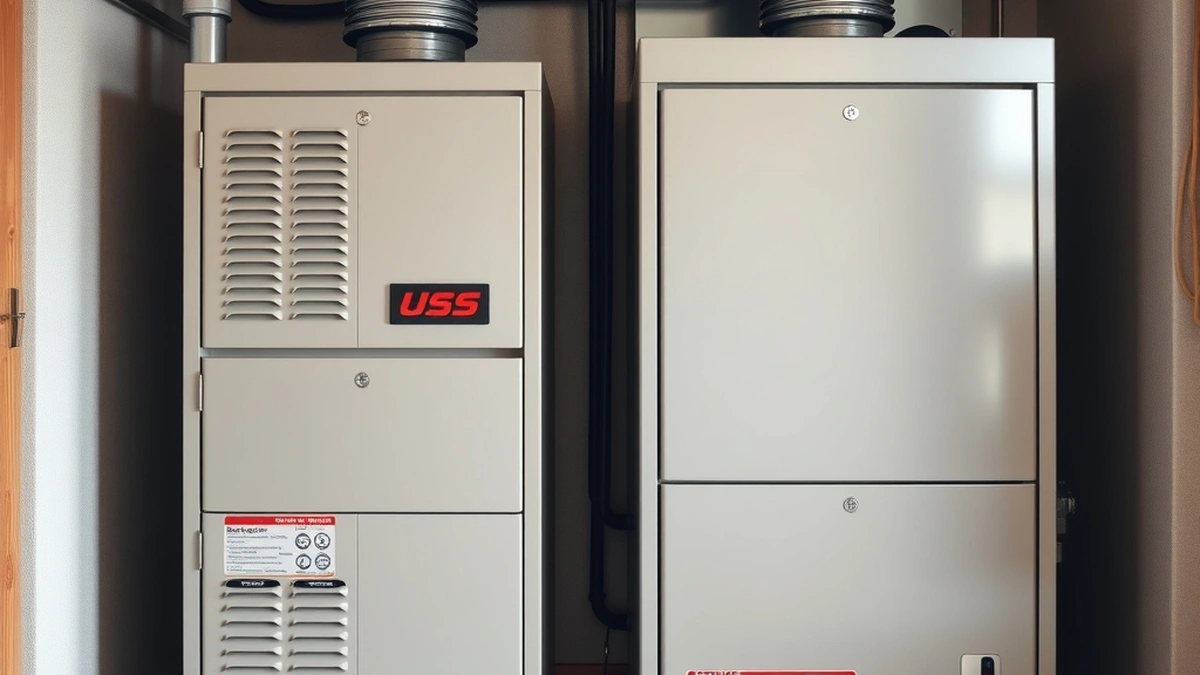
A gas furnace against a gas furnace is really single-stage against two-stage against modulating, and 80 percent against 90-plus condensing. Single-stage is cheapest, two-stage is the usual comfort pick, and modulating costs the most for the smallest gain.
- Single-stage
- $3,000 - $5,500
- Two-stage
- $4,000 - $7,000
- Modulating
- $5,500 - $8,000
- Efficiency premium
- $800 - $2,000
Some links on this page are affiliate links.If you buy through them we may earn a commission at no extra cost to you. We do not accept payment for rankings. Read the full disclosure.
A gas furnace and a gas furnace can differ by $3,000 or more installed, and the difference is not the badge on the door. It is the burner control: single-stage, two-stage, or modulating, plus the venting class that follows from efficiency. The “gas furnace vs gas furnace” question is really a question about which of those builds fits the house.
A gas furnace is a forced-air appliance that burns gas in a heat exchanger and delivers warm air through ducts. Within that definition sit three control strategies and two venting families, and they behave differently in the same house.
The label covers three different machines
A single-stage furnace has one firing rate. It runs at full input until the thermostat is satisfied, then stops. The room temperature swings a degree or two around the setpoint, and the blower cycles with the burner.
A two-stage furnace has a low fire and a high fire, usually around 65 percent and 100 percent of rated input. It spends most mild weather on low fire, which means longer run times, steadier air, and less on-off noise. On a design-cold day it steps to high fire.
A modulating furnace varies its input continuously, often across a range from about 35 percent to 100 percent. It holds the setpoint most tightly and is the quietest of the three when the ducts allow it. It also has the most parts, and the most that can fail.
Single-stage, two-stage, and modulating
| Single-stage | Two-stage | Modulating | |
|---|---|---|---|
| Firing rates | One | Two | Continuous range |
| Typical installed | $3,000–$5,500 | $4,000–$7,000 | $5,500–$8,000 |
| Comfort | Noticeable swing | Steady | Steadiest |
| Noise | On and off | Softer low fire | Quietest |
| Complexity | Fewest parts | Moderate | Most parts |
| Best fit | Mild climate, tight budget | Most houses | Uneven houses with good ducts |
The price steps are estimates, not list prices. A two-stage unit adds roughly $700 to $1,500 over a comparable single-stage model, and modulating adds another $1,000 or so. The install labor is similar; the equipment is not.
80 percent against 90-plus: the venting split
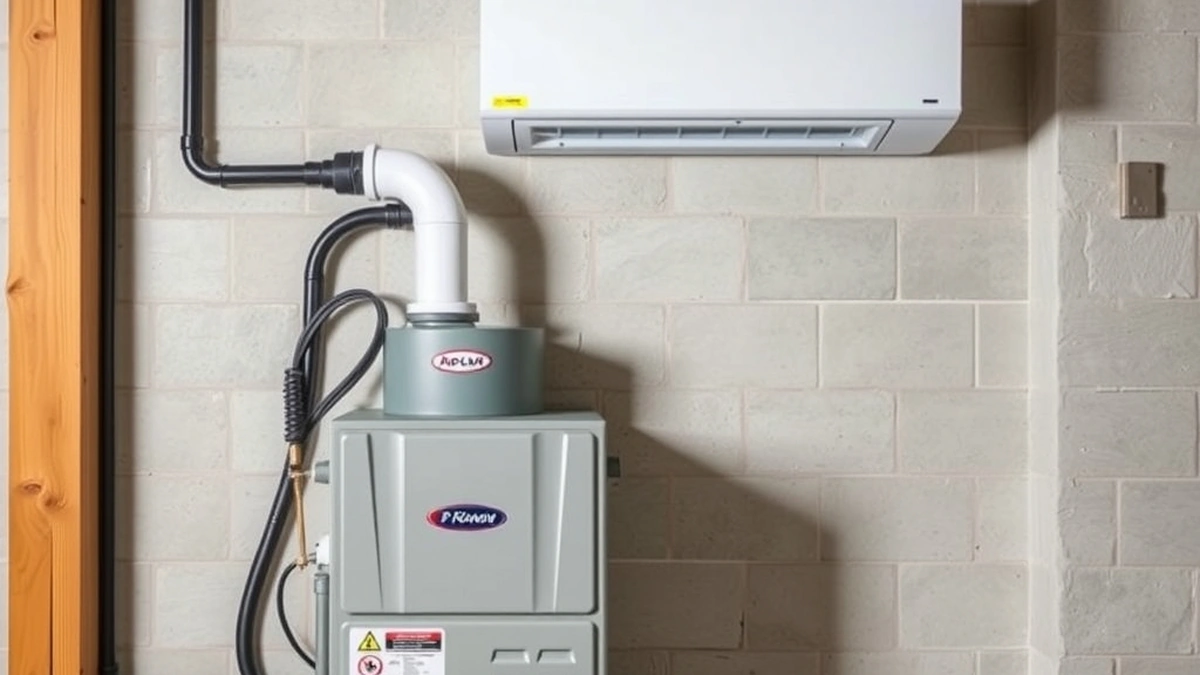
Efficiency cuts across those three builds. An 80 percent AFUE furnace vents into a metal flue, often a lined masonry chimney. A condensing furnace at 90 to 96 percent AFUE vents through PVC, produces acidic condensate, and needs a drain.
| 80 percent | 90-plus condensing | |
|---|---|---|
| Vent material | Metal flue or liner | PVC sidewall or roof |
| Condensate | None | Produces water, needs a drain |
| Typical premium | Baseline | $800–$2,000 |
| Fuel saving | Baseline | About 15 percent against 80 percent |
The fuel arithmetic: 80 ÷ 95 = 0.842, so a 95 percent unit uses 15.8 percent less gas for the same heat. On a $1,400 annual bill that is $1,400 × 0.158 = $221 a year. A $1,500 premium takes $1,500 ÷ $221 = 6.8 years to recover.
The venting decides whether that trade is available. A house with a sound chimney and no drain path may spend the condensing premium on a liner and a condensate pump instead. A house with a sidewall route and a floor drain gets the saving with less work.
What each step up costs
Take a 2,000-square-foot house replacing an 80 percent single-stage unit at $4,800 installed.
- Two-stage, same efficiency: add about $1,000, so $5,800.
- Two-stage condensing: add $1,000 for staging and $1,400 for the condensing premium, so $7,200.
- Modulating condensing: add another $900 for the modulating valve and controls, so $8,100.
Divide each by a 15-year life. Single-stage is $4,800 ÷ 15 = $320 a year. Two-stage condensing is $7,200 ÷ 15 = $480 a year, before the $221 fuel saving, which brings it to about $259 a year. That is the case for the middle option in one line.
Which build fits which house
- Check the ducts first. Measure static pressure or have it measured. A restrictive duct system punishes every upgrade above single-stage.
- Size the house, not the old furnace. A load calculation prevents paying for capacity the house cannot use.
- Choose the venting route. If a chimney liner or sidewall vent is needed, price it before comparing efficiency.
- Match the thermostat. A two-stage or modulating furnace needs a thermostat that controls the extra stages.
- Decide on comfort, not payback. If the house has one cold room, fix the duct before buying modulation; if the whole house swings, staging helps.
The sizing mistake that erases the upgrade
An oversized two-stage furnace runs on high fire most of the time, which makes it a loud single-stage furnace with extra parts. Oversizing is the most common way buyers pay for comfort they never receive.
The same logic applies to modulating units. Their advantage is long, low, steady runs. A unit that is 40 percent too large spends its life near the top of its range, and the bottom of the range goes unused.
Cabinet width is the second trap. A wider furnace with a larger blower can move more air, but only if the return duct and the filter grille can supply it. Buyers who upgrade the furnace without touching the return get a louder unit, a higher temperature rise, and no more heat in the far rooms. The duct is the constraint, and no burner control overcomes it.
For the full price breakdown, see the gas furnace cost guide. For what changes at installation, the installation guide covers venting and commissioning, and the electric versus gas comparison covers the fuel decision outside the gas category.
Frequently asked questions
What is the difference between a single-stage and a two-stage furnace?
A single-stage furnace runs at full output or not at all. A two-stage runs at roughly 65 percent on mild days and full output on cold ones, which means longer, quieter cycles and steadier room temperatures.
Is a modulating furnace worth the extra cost?
It is worth it where the ductwork is well designed and the house has uneven room temperatures. In a house with restrictive ducts, the extra modulation range cannot fix the distribution, so the premium buys less.
Should I choose an 80 percent or a 90 percent furnace?
Choose 90 percent where the flue and condensate drain can be routed without major work, and where winters are long. Choose 80 percent where the existing chimney is sound and the install would otherwise need a liner or a sidewall vent.
Can a two-stage furnace run on a single-stage thermostat?
It can, but it will behave like a single-stage furnace most of the time. The thermostat has to support the extra stage for the upgrade to deliver its benefit.
Do all gas furnaces use the same ductwork?
No. Output, blower size, and cabinet width vary, and a higher-stage furnace often needs more return air. The plenum transition and return capacity decide whether the new unit performs.
Why does the same house get different furnace quotes?
Because the quotes cover different work. Venting, gas piping, plenum rebuilds, and whether the unit is two-stage all change the price, and the appliance is only the middle of the range.
Sources
Some links are affiliate links.If you buy through them we may earn a commission at no extra cost to you. We do not accept payment for rankings. Read the full disclosure.