How long does furnace repair last?
A repair lasts as long as the part installed. Igniters go three to seven years, blower motors ten to fifteen. Here is the range and what shortens it.
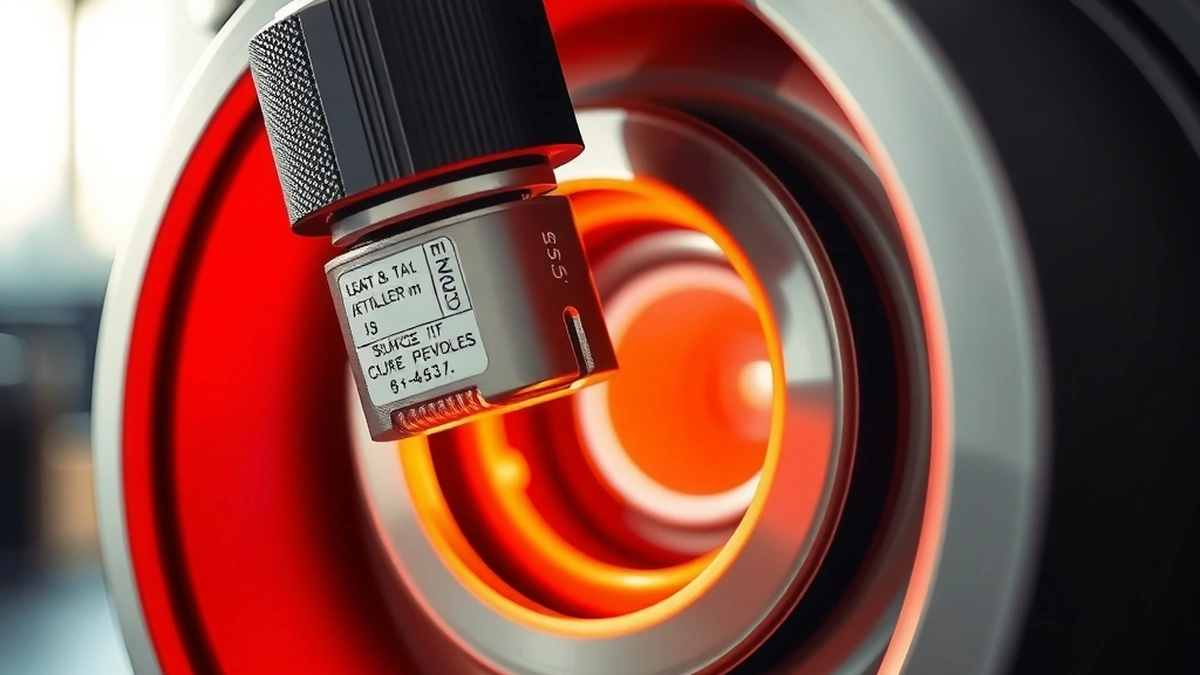
A furnace repair lasts as long as the part fitted. Igniters typically run three to seven years, blower and inducer motors eight to fifteen, and control boards ten to fifteen. A whole furnace lasts 15 to 20 years with annual service.
- Typical repair cost
- $150–$600
- Furnace service life
- 15–20 years
- Annual tune-up
- $100–$250
- Replacement cost
- $3,000–$8,000
Some links on this page are affiliate links.If you buy through them we may earn a commission at no extra cost to you. We do not accept payment for rankings. Read the full disclosure.
A furnace repair lasts exactly as long as the part that was installed. There is no single answer, because an igniter and a blower motor have very different design lives. Expect three to seven years from an igniter, eight to fifteen from a motor, and ten to fifteen from a control board. The furnace around them lasts 15 to 20 years.
The repair is the part
When a technician replaces a component, the expected life of the repair is the expected life of that component. Nothing more. The cabinet, the heat exchanger, the gas train, and the venting are untouched and continue aging at their own rate.
This is why a repair does not reset the clock on a furnace. It restores one function. A 16-year-old unit with a new blower motor is a 16-year-old unit with a new blower motor.
Typical service life by component
| Component | Typical life | Typical repair cost |
|---|---|---|
| Flame sensor (cleaned) | 1–2 years between cleans | $150–$250 |
| Flame sensor (replaced) | 3–5 years | $150–$250 |
| Hot surface igniter | 3–7 years | $200–$350 |
| Run or start capacitor | 5–10 years | $150–$300 |
| Pressure switch | 5–10 years | $200–$350 |
| Draft inducer motor | 8–12 years | $350–$600 |
| Blower motor | 10–15 years | $400–$600 |
| Control board | 10–15 years | $350–$600 |
| Thermostat | 10–15 years | $150–$300 |
| Heat exchanger | 15–20 years | Above the repair range |
Those ranges are industry norms for residential equipment, not test results, and a well-maintained unit often lands at the top of each range.
What shortens a repair’s life
Four conditions account for most premature failures.
Restricted airflow. A blower motor that runs against a clogged filter or an undersized duct system draws more current and runs hotter. It fails early, and the replacement fails early too if nothing changes.
High voltage and surges. Igniters and control boards are sensitive to voltage spikes. A board that fails twice in three years is usually reporting on the electrical supply, not on itself.
Short cycling. A furnace that starts and stops every few minutes wears its igniter, inducer, and board far faster than one that runs long cycles. Oversizing and thermostat placement both cause it.
Moisture. Condensing furnaces produce water by design. A blocked trap or a badly sloped drain puts that water where it does not belong, and boards and motors do not tolerate it.
The arithmetic of a short repair
Take a $350 repair on a part that lasts six years: $58 per year of service. Take the same $350 on a part that fails in two years: $175 per year.
That second number is the one that matters when you are deciding whether to keep repairing. If two consecutive repairs each deliver two years, you are paying $350 every other winter for a furnace that is also aging. Over six years that is $1,050 spent on a unit that will still need replacing — roughly a third of a $3,000 replacement.
This is the strongest argument for diagnosing the cause rather than swapping the part. Our guide to when furnace repair is worth it uses the same arithmetic on a full repair history.
How long the furnace itself lasts
A gas furnace typically lasts 15 to 20 years. Electric furnaces often reach 20 to 25 because they have no combustion side and no heat exchanger to corrode. Boilers and older standing-pilot units can run longer, but at lower efficiency.
The end of life usually arrives from one of three directions: a cracked heat exchanger, a control board that is no longer manufactured for the model, or a repair bill that exceeds half the replacement price.
Replacement runs $3,000 to $8,000. Spread over 15 years, that is $200 to $533 per year — a useful number to hold beside the annual cost of your repairs.
Four steps to get more years from a repair
- Fix the cause, not just the symptom. Ask what made the part fail, and get an answer that is not “wear.”
- Change the filter on schedule. This is the single cheapest thing that extends blower motor life.
- Book the annual tune-up at $100 to $250. Combustion analysis and amp-draw checks catch drift before it becomes a failure.
- Ask for OEM parts. Aftermarket igniters and boards are cheaper and shorter-lived, and the labour to fit them costs the same either way.
What the warranty covers, and for how long
A repair should carry two warranties: the manufacturer’s on the part, and the contractor’s on the labor. Labor warranties run 90 days to one year in most shops, and a year is worth asking for on a $600 job.
Keep the invoice with the part number on it. A manufacturer claim without the model and serial recorded is often refused, and the homeowner discovers that at the worst possible moment.
The honest expectation
If a technician replaces a part on a furnace with five years of design life left, the repair will probably outlive the furnace. If the same part goes into a 19-year-old unit, it may outlive the unit by a wide margin and never fail again.
That is not a reason to skip the repair. It is a reason to price it against replacement before you approve it. Our repair versus replacement guide and the cost per square foot breakdown both give you the comparison numbers.
For the schedule that keeps parts inside their design life, see furnace repair maintenance. For what a technician should be checking when they open the cabinet, see furnace inspection. And for the full list of faults and their costs, types of furnace repair is the reference.
Budget for a repair every three to five years, a tune-up every year, and a replacement at year 15 to 20. That is the realistic lifetime picture.
Frequently asked questions
How long does a furnace repair usually last?
It depends entirely on the part. An igniter typically lasts three to seven years, a blower motor eight to fifteen, and a control board ten to fifteen with clean power.
How long does a furnace last after repair?
The repair does not extend the furnace's service life. A 16-year-old furnace that receives a new motor is still a 16-year-old furnace with 15 to 20 years of design life mostly used up.
Why did my furnace break again a year after repair?
Usually the root cause was not addressed. A motor that failed from restricted airflow, or an igniter that failed from high voltage, will fail again unless that condition is corrected.
Do cheap parts fail sooner?
Often. Aftermarket igniters and sensors vary in quality, and refurbished boards carry a shorter warranty for a reason. Ask whether the part is OEM before approving.
Does annual maintenance make a repair last longer?
It makes the whole unit last longer by keeping the operating conditions within spec. It does not extend the life of a part already at the end of its design life.
When should I stop repairing and replace?
When repairs recur within a season, when the unit passes 15 years, or when a repair costs more than half of a replacement at $3,000 to $8,000.
Sources
Some links are affiliate links.If you buy through them we may earn a commission at no extra cost to you. We do not accept payment for rankings. Read the full disclosure.