How Often to Change Your Furnace Filter
Learn how often to change a furnace filter based on thickness, MERV rating, pets, and run time. Protect your airflow and prevent repairs.
Data checked November 2026 · Sources: manufacturer installation manuals; AHRI efficiency directory; NFPA 54 as locally adopted; local mechanical permit offices ·Methodology →
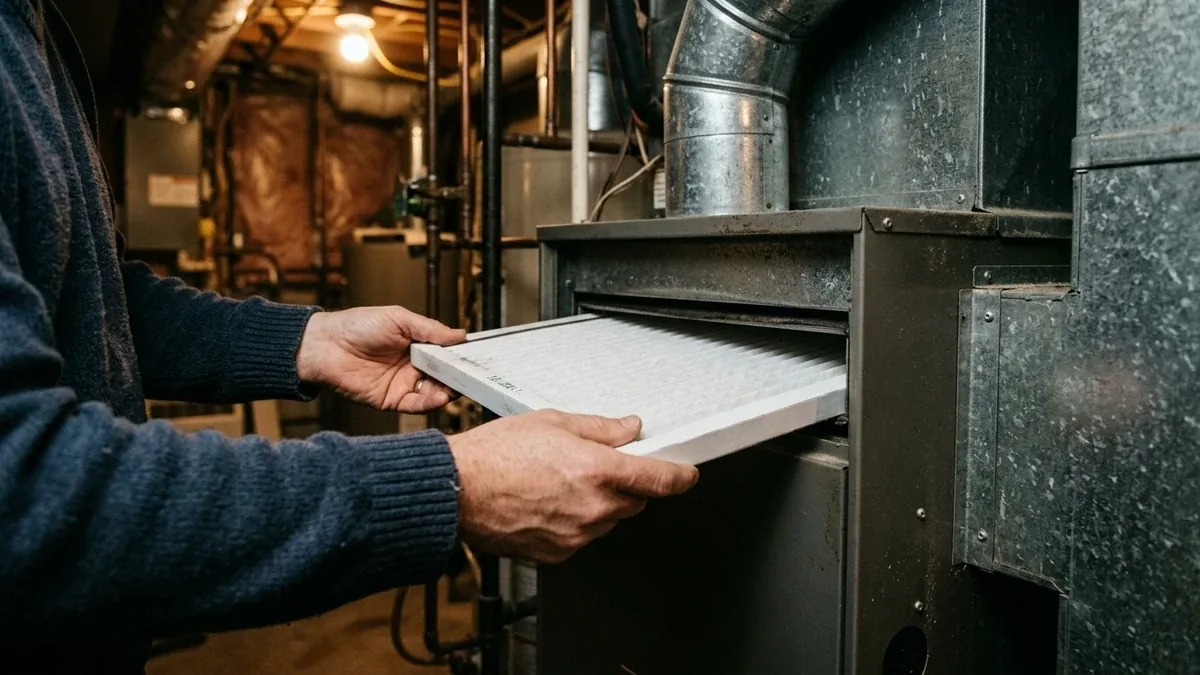
A 1-inch furnace filter should be checked monthly and replaced every 1 to 3 months. Thicker 4- to 5-inch media filters last 6 to 12 months. Energy Star recommends changing filters at least every 3 months, though pets, smoking, or continuous fan use shorten that interval.
- 1-inch filters
- Every 1 to 3 months
- 4- to 5-inch filters
- Every 6 to 12 months
- Inspection frequency
- Check once a month
- Recommended rating
- MERV 8 to 13
Some links on this page are affiliate links.If you buy through them we may earn a commission at no extra cost to you. We do not accept payment for rankings. Read the full disclosure.
| 1-inch filter | 4-5 inch media filter | |
|---|---|---|
| Change interval | Every 1-3 months | Every 6-12 months |
| Monthly check | Check the surface monthly | Inspect at the six-month mark |
| Airflow | Loads faster and restricts airflow sooner | More surface area, slower to load |
| Best for | Tight cabinets and light dust | Pets, allergy season, long runtime |
| Cost pattern | Lower unit price, more changes | Higher unit price, fewer changes |
A furnace filter is a porous barrier installed in the return air stream to capture airborne debris before it enters the air handler. Keeping this component clean protects the blower motor, burner assemblies, and heat exchanger from particulate accumulation. For most homes, standard 1-inch filters require replacement every 1 to 3 months, whereas thicker 4- to 5-inch media filters last 6 to 12 months. Checking the media monthly ensures that dust buildup never chokes the system.
Filter thickness and replacement intervals
Filter thickness determines total surface area and dictates how long a filter functions before airflow drops. Standard 1-inch filters must be checked monthly and replaced every 1 to 3 months. Deep pleated 4- to 5-inch media filters provide expanded collection area, extending the replacement interval to 6 to 12 months.
A thin 1-inch filter collects debris across a shallow plane, causing air pathways to clog quickly during continuous operation. In contrast, 4- to 5-inch media filters use deep accordion folds that spread dust across many square feet of material without impeding air circulation.
| Filter Type | Inspection Schedule | Replacement Frequency | Primary Operating Advantage |
|---|---|---|---|
| 1-inch fiberglass or pleated | Check monthly | 1 to 3 months | Low unit purchase cost and widespread retail availability |
| 4- to 5-inch deep-pleat media | Check every 3 months | 6 to 12 months | Greater surface area that preserves static pressure longer |
According to ENERGY STAR guidelines, every filter should be replaced at least every 3 months. If an inspection shows visible discoloration after a single month, immediate replacement prevents unnecessary mechanical strain.
How household factors shorten filter life
Household occupancy patterns, indoor pets, and heating runtime directly dictate how quickly airborne particulate collects on filter fibers. Homes with multiple shedding animals, indoor tobacco smoking, or ongoing drywall renovation accumulate debris rapidly, forcing 1-inch filters toward a strict 1-month replacement cycle rather than the typical 3-month lifespan.
Pet fur, dander, and dried skin flakes circulate through return registers whenever animals move through living spaces. A single cat or dog sheds constantly, but multiple pets can choke a 1-inch pleated filter within 30 days.
Smoking introduces microscopic tar and sticky chemical residues that cling to filter pleats, trapping surrounding dust into an impermeable mat. Wood-burning fireplaces, candle wicks, and remodeling dust produce a similar loading effect.
Thermostat settings also influence loading rates. Running the furnace fan continuously on the “On” setting pulls air through the filter 24 hours a day. While this circulates indoor air continuously, it cuts service life compared to systems operating on “Auto” mode.
Selecting between MERV 8 and MERV 13
Residential HVAC equipment operates reliably within a MERV 8 to 13 rating window. Filters rated MERV 8 stop dust, pollen, and carpet fibers, whereas MERV 13 captures fine smoke particles and bacteria. However, higher MERV ratings load faster and restrict airflow if ductwork is undersized for the blower.
Minimum Efficiency Reporting Value, or MERV, measures how effectively a filter traps particles between 0.3 and 10 microns. Many older duct systems were sized for basic fiberglass filters that offered almost no air resistance.
When homeowners install MERV 13 media into restrictive return ducts, the tight weave creates excessive drag. Dust settles into the tighter weave quickly, accelerating the pressure drop across the blower cabinet.
Balancing air cleanliness with mechanical safety requires matching media to duct capacity. A MERV 8 or MERV 11 filter offers dependable dust capture without risking sudden equipment shutdowns. Homeowners planning upgrades should review our guide on gas furnace maintenance to verify system airflow requirements before buying high-density filters.
Warning signs of a clogged furnace filter
Visual inspection and changes in household comfort reveal when a filter has reached capacity. A gray, fuzzy crust across the pleats, reduced discharge velocity at supply vents, extended heating cycles, and burning dust odors indicate severe airflow choking that demands an immediate filter change before equipment shuts down.
A clean filter is white or light off-white, with sharp, distinct pleats. When dust, hair, and lint fill the valleys between pleats, the filter turns dark slate gray. Holding the media up to a bright flashlight provides a rapid check: if light cannot pass through the fibers, air cannot move freely either.
Physical indicators throughout the home also point to restricted airflow. Dust may accumulate faster on furniture surfaces near supply grilles as return velocity drops. Rooms located farthest from the air handler often remain chilly because the blower cannot push conditioned air through choked duct runs. Unusual clicking or whirring from the furnace cabinet suggests the blower motor is working against elevated resistance.
Airflow restriction and equipment strain
A loaded filter raises static pressure inside ductwork, choking supply air and trapping heat inside the exchanger cabinet. This restriction causes high-limit safety switches to trip, shutting down burners repeatedly. In cooling mode, restricted airflow prevents heat transfer across the evaporator, causing the indoor coil to freeze into solid ice.
Furnace heat exchangers depend on constant airflow to transfer thermal energy safely into ductwork. When a dirty filter strangles intake air, internal cabinet temperatures climb rapidly past safe operating thresholds.
The primary high-limit switch detects this overheating and cuts fuel flow to the burners to prevent metal deformation or cracking. When the blower cools the cabinet, the switch resets and ignition restarts. This rapid short-cycling causes thermal stress that damages heat exchangers over time.
In combined heating and cooling systems, restricted return airflow during humid summer months drops refrigerant temperatures below freezing. Ice blankets the evaporator coil, blocking air completely. Addressing chronic airflow failures often starts with scheduling a professional furnace inspection to evaluate heat exchanger condition and blower performance.
Step-by-step filter inspection and replacement
Replacing a furnace filter requires shutting off power, removing the old media, verifying air directional arrows, and seating the fresh filter squarely in the cabinet track. Completing this five-step sequence every 1 to 3 months protects blower components and maintains proper static pressure across the entire duct network.
Follow this standard maintenance protocol whenever servicing the filter:
- Switch off power to the heating system using the nearby electrical service switch or by adjusting the wall thermostat to “Off.”
- Slide the existing filter out of the return air drop or blower cabinet slot, noting its orientation.
- Inspect the cabinet frame for loose debris or gaps, wiping the inner track clean with a dry cloth.
- Write the install date on the filter edge using a permanent marker to track elapsed calendar days accurately.
- Align the printed airflow arrow toward the furnace blower and slide the new filter completely into place before securing the access door.
Inspect the outer cardboard frame after insertion. If the filter fits loosely, air will bypass the media, carrying unfiltered dust directly into the blower wheel.
Maintenance costs and repair prevention
Regular filter changes prevent unnecessary wear on electrical controls, blower motors, and heat exchangers. An annual professional tune-up and safety check costs $100 to $250, while common furnace repairs run $150 to $600. Replacing disposable filters on time avoids emergency service calls caused by tripped high-limit switches or burned blower motors.
Neglecting a basic filter swap creates cascading mechanical failures. When a blower motor pulls against a choked filter, its internal windings overheat, causing premature capacitor and motor failure.
Bypassing routine maintenance leads to expensive diagnostic visits. Paying a technician to reset locked controls or replace an overheated limit switch generates bills ranging from $150 to $600. In comparison, maintaining fresh 1-inch filters every 1 to 3 months costs only a few dollars per unit.
Over time, severe heat exchanger cracking caused by chronic overheating forces premature furnace replacement. Homeowners balancing repair quotes against long-term reliability can examine overall gas furnace cost to understand how simple preventative steps protect a multi-thousand-dollar heating asset.
Establishing a reliable seasonal filter routine
Building a consistent maintenance routine requires matching filter checks to seasonal transitions and monthly calendar reminders. Check 1-inch filters at the start of each month and replace them whenever dust layers appear. For 4- to 5-inch media filters, check every 3 months and replace them every 6 to 12 months.
Automating your schedule eliminates guesswork. Setting a recurring monthly smartphone alert or checking the filter alongside monthly utility billing ensures steady oversight.
Seasonal changes bring distinct operating loads. Autumn marks the start of closed-window heating, winter increases continuous burner runtime, spring introduces airborne tree pollen, and summer demands sustained blower operation for cooling. At each transition, inspect the filter edge to confirm how many weeks remain before replacement is due.
Marking the install date directly on the cardboard frame eliminates uncertainty about filter age. Pairing regular monthly checks with annual professional service ensures your heating system delivers steady warmth, balanced airflow, and dependable operation year after year.
How to do it
- Switch off the furnaceTurn off power at the furnace service switch or thermostat before opening the filter cabinet.
- Remove the old filterSlide the existing filter out and hold it up to the light. A clogged filter blocks most of the light.
- Check the track and arrowLook for gaps in the cabinet track and confirm the airflow arrow points toward the blower.
- Date the new frameWrite the install date on the cardboard edge so the next change is a calendar decision, not a guess.
- Seat the filter fullySlide the replacement in until it seats, close the cabinet door and restore power at the service switch.
- Set the next checkPut a monthly reminder on the phone and shorten it if pets, smoke or construction dust are present.
Frequently asked questions
How often should you really change your furnace filter?
Standard 1-inch filters require replacement every 1 to 3 months. Thicker 4- to 5-inch filters last 6 to 12 months depending on household dust levels.
What happens if you never change a furnace filter?
A loaded filter raises static pressure, reduces airflow across the heat exchanger, and can trip a high-limit switch or freeze an air conditioning coil.
Does having pets shorten the furnace filter lifespan?
Yes. Pet hair and dander load the filter media much faster, requiring 1-inch filters to be swapped closer to the 1-month mark rather than waiting 3 months.
What MERV rating should a residential furnace use?
The standard residential range is MERV 8 to 13. Higher ratings capture smaller particles but load faster and can restrict airflow on undersized ducts.
How do you know when a filter is too dirty?
Pull the filter and inspect it under good light. If a solid gray blanket covers the pleats or airflow drops at the registers, change it immediately.
Can a dirty filter lead to expensive furnace repairs?
Yes. Restricting airflow causes overheating that trips safety switches. Common furnace repairs run $150 to $600, whereas annual tune-ups cost $100 to $250.
Sources
Some links are affiliate links.If you buy through them we may earn a commission at no extra cost to you. We do not accept payment for rankings. Read the full disclosure.