Thermostat not responding: warning signs
Seven early signs a thermostat is failing, how to read them against furnace symptoms, and the free checks to make before booking a $100 to $250 visit.
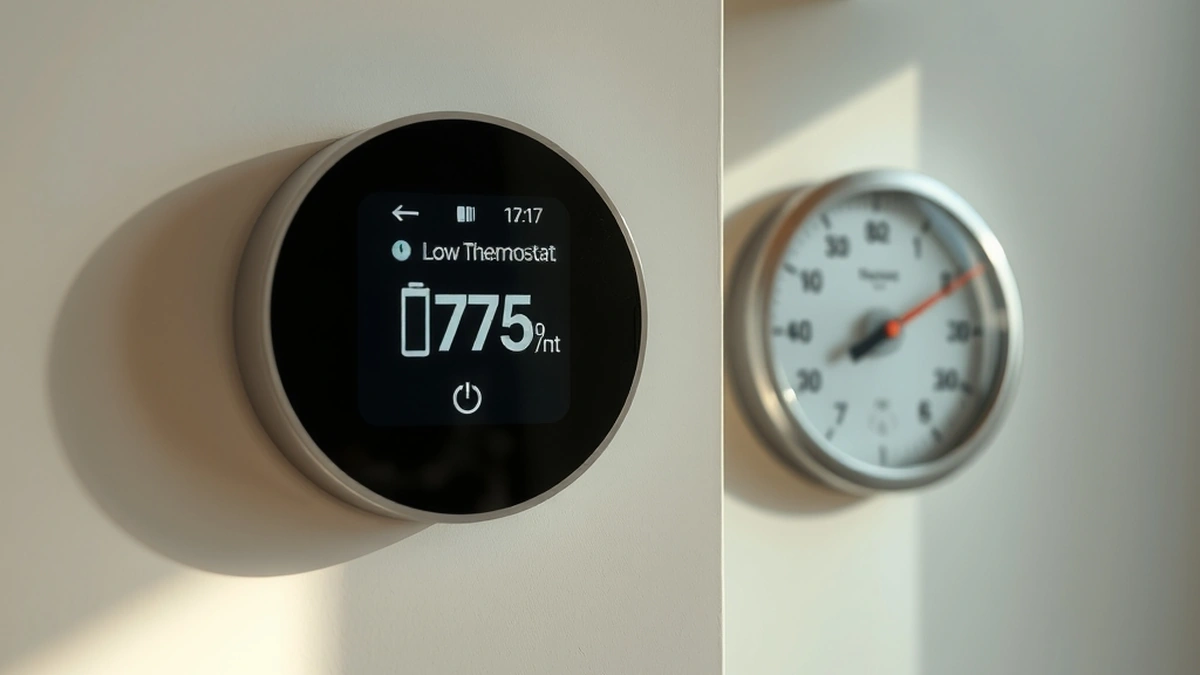
Thermostat warning signs include a dim or flickering display, a schedule that resets, delayed response to setpoint changes, clicking without a furnace response, and readings that disagree with a room thermometer. Batteries and the furnace switch are free to check first.
- Diagnostic
- $100 - $250
- Thermostat fitted
- $150 - $400
- Batteries
- $5 - $15
- Wiring repair
- $150 - $400
Some links on this page are affiliate links.If you buy through them we may earn a commission at no extra cost to you. We do not accept payment for rankings. Read the full disclosure.
Thermostats fail quietly. The display dims, the schedule resets after a power cut, the unit takes longer to respond, and the house drifts a degree or two from the setpoint. None of those is dramatic, and all of them are cheaper to address than the service call they eventually cause. A diagnostic is $100 to $250, a replacement $150 to $400, and the first two checks are free.
The seven signs
1. A dim or flickering display. On a battery unit, the cells are going. On a hard-wired unit, the 24-volt supply is low.
2. The schedule resets after a power blip. The backup battery is dead, so the clock and programme clear every time the power flickers.
3. Slow response to a setpoint change. You raise the temperature and nothing happens for several minutes, or the furnace starts and stops immediately.
4. Clicking with no furnace response. The relay is closing. The furnace is not answering.
5. Readings that disagree with a room thermometer. More than a degree or two of offset means the sensor or the location is wrong.
6. The furnace runs past the setpoint. A stuck relay or a welded contact keeps the call open. This one is worth switching off at the breaker.
7. A smart unit dropping offline. Usually a missing C-wire rather than a network problem, especially if it happens when the furnace cycles.
Reading the sign against the furnace
The most useful diagnostic step is deciding which side of the wire the fault is on.
| Thermostat behaviour | Furnace behaviour | Likely fault |
|---|---|---|
| Blank | Silent | Power to thermostat |
| Display works | Silent | Furnace switch, fuse or board |
| Clicks on call | Silent | Downstream of thermostat |
| Clicks on call | Starts and stops | Airflow or limit, not thermostat |
| Display works | Runs constantly | Stuck relay or board contact |
| Dim, intermittent | Intermittent | Low voltage or loose wire |
The fourth row is the one people get wrong. A thermostat that clicks and a furnace that starts and then stops is not a thermostat fault — it is a furnace fault, and the thermostat is doing exactly what it was asked.
The free checks
Three checks cost nothing and resolve a meaningful share of cases.
Batteries. Replace them. A few dollars, two minutes.
The furnace switch. A toggle on or near the unit. Check it, and check that the door panel is seated — many furnaces have a safety switch on the door.
The breaker. Reset once. If it trips again, stop and call an electrician rather than resetting repeatedly.
If the thermostat comes back after those three, no service call is needed. If it does not, you have eliminated the cheapest causes and the diagnostic is more focused.
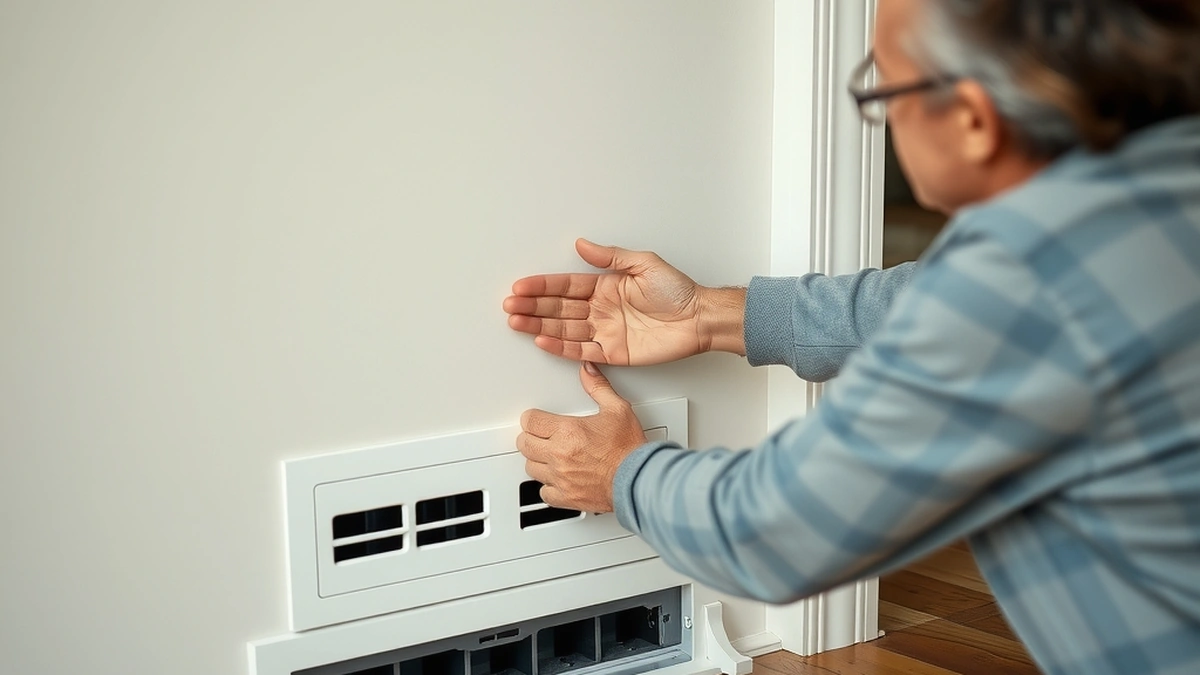
Placement and false readings
A thermostat that reads the wrong temperature behaves like a failing one, and the fix is location rather than parts.
Signs of a placement problem:
- The room is comfortable when the thermostat says it is cold.
- The system short cycles on sunny afternoons.
- The far end of the house is always colder than the thermostat room.
- The furnace runs long after the room feels warm.
Common causes are direct sun, proximity to a supply register, an exterior wall, or a hallway isolated by a closed door. Relocation at $150 to $300 is cheaper than the short cycling it causes, which wears the blower and the heat exchanger.
Smart thermostat specifics
Smart units fail in ways basic ones do not.
Dropping offline is usually power, not Wi-Fi. Without a C-wire, the unit steals power through the call signal during the furnace off-cycle, and reboots when the battery drains.
Firmware faults can leave the display frozen. A power cycle at the breaker resolves some; a factory reset resolves others; a replacement resolves the rest.
App-only control failures are usually account or network issues rather than hardware. Test at the wall before assuming the unit has failed.
The C-wire question is covered in thermostat not responding prevention.
What the diagnostic measures
At $100 to $250, a proper visit should include:
- 24-volt reading at the thermostat terminals.
- Continuity of each conductor in the cable.
- Thermostat output on a call, by jumper or meter.
- Furnace response at the board.
- Battery and backup condition.
Items one and three separate a thermostat fault from a wiring fault from a furnace fault. Without them, a replacement is a guess.
What to do now
- Replace the batteries and check the display.
- Check the furnace switch, door panel and breaker.
- Compare the reading with a separate thermometer.
- Note whether it clicks when it calls.
- Book a diagnostic at $100 to $250 if the problem persists.
- Ask for the 24-volt reading on the invoice.
The repair options are in thermostat not responding repair, the costs are in thermostat not responding cost, and the prevention routine is in thermostat not responding prevention. If the thermostat is clearly calling and the furnace is silent, no heat warning signs covers what to check next.
The short version
A dim display is batteries or voltage. A reset schedule is the backup cell. Clicking with no response is downstream. A drifting reading is placement.
Only the last of those needs a technician to fix, and only when relocation is beyond a simple swap. A practical note on testing: when you raise the setpoint to check response, give it a full five minutes before concluding anything. Some furnaces have a built-in blower delay and a purge cycle, and a thermostat that appears unresponsive for two minutes may simply be waiting on the equipment. Note the delay, then judge — a repeatable two-minute lag is normal, a twenty-minute one is not.
Frequently asked questions
What are the early signs of a failing thermostat?
A dim or flickering display, a schedule that resets after a power blip, slow response to setpoint changes, and readings that disagree with a separate thermometer by more than a degree or two.
Why does my thermostat click but the furnace stays off?
The click is the relay closing, so the thermostat is calling. If nothing happens, the fault is downstream — the furnace switch, a limit switch, the board fuse or the control board.
Is a dim display always a battery problem?
On a battery-powered unit, usually. On a hard-wired unit, a dim display points to low 24-volt supply from the furnace transformer, which is a service call rather than a battery change.
How accurate should a thermostat be?
Within about one degree Fahrenheit of a reliable room thermometer. A larger offset causes short cycling or long runs, and it usually means the unit is in the wrong place rather than broken.
Can a thermostat cause short cycling?
Yes. A thermostat in direct sun, near a register or with a drifting sensor will end the call early, and the furnace will cycle. The prevention is relocation or replacement, not a furnace repair.
When should I replace rather than repair?
When the unit is over ten years old, when the display or sensor is failing, or when it cannot hold a schedule. A basic replacement is $150 to $300 fitted.
Sources
Some links are affiliate links.If you buy through them we may earn a commission at no extra cost to you. We do not accept payment for rankings. Read the full disclosure.